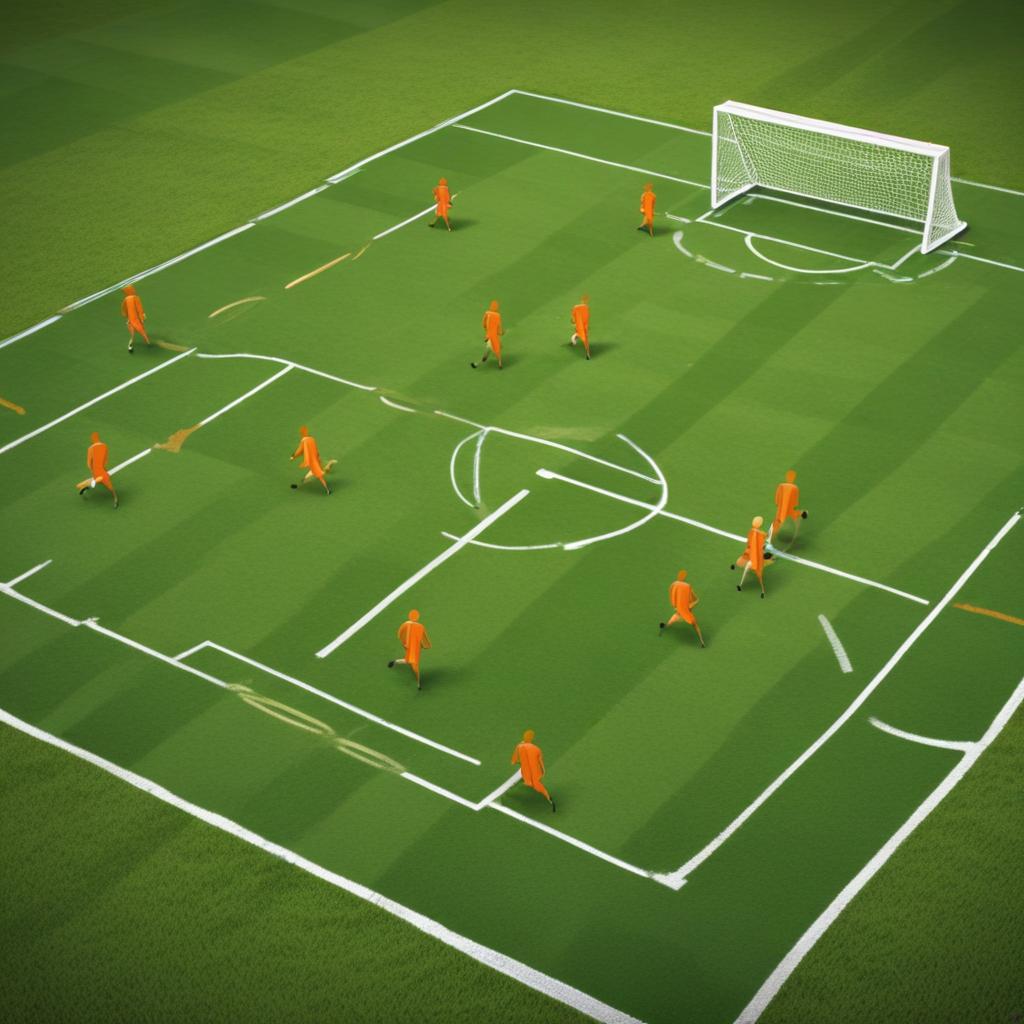
Introduction to Football Tactics
Football tactics play a crucial role in the success of any team on the pitch. These tactics, often referred to as soccer strategy, guide players’ movements, positioning, and decision-making during a match. Understanding football tactics gives teams a competitive edge by enabling them to effectively organize both their attacking and defensive efforts. Tactical approaches are designed to exploit the opponent’s weaknesses while maximizing the team’s strengths, creating a cohesive game plan that all players follow.
Tactical awareness is essential not only for coaches but also for players, as it influences how they interact on the field and adapt to different phases of play. Common football tactics include formations such as 4-4-2, 4-3-3, and 3-5-2, each offering distinct strategic benefits. For instance, a 4-4-2 formation provides balance between defense and attack, making it suitable for teams seeking stability. Meanwhile, a 4-3-3 emphasizes wing play and aggressive offense, ideal for teams with strong forwards and wingers.
Defensively, teams may adopt tactics like pressing, where players aggressively challenge opponents high up the pitch to regain possession quickly. Alternatively, some prefer a more conservative approach, such as parking the bus, which involves concentrating many players in their defensive third to limit scoring opportunities for the opposition. Each tactic requires not only individual skill but also excellent teamwork and communication to execute effectively.
In summary, a tactical overview of soccer strategy reveals that football tactics are foundational to the sport. They influence every aspect of play, from formation choice and player roles to how teams respond to different game situations. A well-thought-out tactical plan allows teams to optimize their performance, respond dynamically to opponents, and ultimately increase their chances of winning matches.
Historical Development of Football Tactics
The history of football tactics reveals a fascinating journey of evolution, illustrating how strategies on the pitch have transformed over the decades. Early football history was marked by very basic formations, such as the 2-3-5, which prioritized attack but left defenses vulnerable. As the game evolved, teams began to recognize the importance of balance between defense and attack. This led to the development of formations like the WM in the 1920s and 1930s, introduced by Arsenal’s Herbert Chapman, which brought a more structured defensive approach.
The tactical evolution continued through the mid-20th century with the emergence of the 4-2-4 and later the 4-4-2 formation, which became widely popular for its flexibility and balance between midfield control and attacking options. The 1970s saw the rise of total football, pioneered by Dutch teams, which emphasized fluid positions and player versatility. This was a key milestone in football history, showing how dynamic and adaptable formations could be.
More recently, soccer formations have become even more specialized with the use of pressing systems, false nines, and complex midfield setups, reflecting a deep analytical approach to the game. Each decade has built upon the last, highlighting the continuous tactical evolution that defines modern football. Understanding these key milestones enhances appreciation of how football tactics shape the sport’s ever-changing landscape.
Fundamental Tactical Principles
At the core of effective football tactics lie several fundamental principles that shape the way a team approaches the game. Positioning is crucial, as it dictates how players align themselves on the pitch to maintain optimal team shape. A well-structured shape enables teams to control space effectively, limiting the opponent’s options and creating passing lanes for their own team. This control of space allows a team to implement their game plan with precision and adapt fluidly to the evolving phases of play.
Pressure is another vital principle that influences tactical planning. Teams must decide when and how to apply pressure to regain possession or prevent the opposition from advancing. Effective pressing disrupts the opponent’s rhythm and can create turnovers in dangerous areas. Coordinated pressure requires players to be in sync, understanding their roles within the team shape to close down spaces and force errors.
Transitions between attack and defense are often decisive moments in any game plan. Quick and well-organized transitions enable a team to exploit space left by the opposition or to regroup defensively to prevent counterattacks. Mastering these moments demands tactical discipline and awareness from every player, ensuring the team maintains its structural integrity during rapid changes in possession.
Overall, these principles—positioning, controlling space, applying pressure, and managing transitions—form the backbone of tactical planning in football. A team’s success depends on how well these elements are understood and executed collectively to support the overarching game plan.
Common Football Formations and Their Roles
Football formations are the backbone of team strategy, dictating how players are positioned and how roles are distributed across the pitch. Understanding popular football formations like the 4-4-2 and 3-5-2 is essential for appreciating the tactical depth of the game and how each player contributes within these systems.
The 4-4-2 formation is traditionally one of the most balanced setups in football. It consists of four defenders, four midfielders, and two forwards. The defensive line typically includes two center-backs who focus on marking opposing strikers, and two full-backs who provide width and support both defense and attack. The midfield line is usually composed of two central midfielders responsible for controlling play and distributing the ball, flanked by two wide midfielders or wingers who offer width, deliver crosses, and track back to support the defense. The two forwards have defined roles: one often acts as a target man, holding up the ball and winning aerial duels, while the other plays off the target man, making runs behind defenders and capitalizing on scoring opportunities.
In contrast, the 3-5-2 formation emphasizes midfield dominance and wing play, using three central defenders to secure the backline. These defenders must be highly skilled at reading the game and covering wide areas, as full-back duties are replaced by wing-backs in this system. Wing-backs operate almost like additional wingers, providing width in attack and tracking back rigorously in defense. The five midfielders include a mix of defensive midfielders, creative playmakers, and wide runners. This line’s complexity allows for flexible transitions between attack and defense. Two forwards in the 3-5-2 usually consist of a physically strong striker paired with a second forward who drops deeper to link play and exploit spaces.
Each formation inherently assigns specific team roles that focus on both individual skills and collective responsibilities. In any setup, defenders concentrate on maintaining structure and thwarting attacks, midfielders act as the engine, connecting defense with offense, while forwards focus on goal scoring and pressing opponents. Coaches often select football formations based on their players’ strengths and the opposition’s style, ensuring each role complements the overall team strategy.
Defensive Formations and Strategies
Defensive tactics are crucial for maintaining a solid backline and preventing the opposition from scoring. One of the most popular defensive formations is the 5-4-1, which consists of five defenders, four midfielders, and a lone striker. This setup provides a strong defensive structure, allowing the team to crowd their own half and limit the attacking options of their opponents. The five defenders create a robust backline that helps absorb pressure and cover wide areas effectively.
In addition to formations, implementing defensive strategies such as pressing and zonal marking is essential to disrupt the opposing team’s play. Pressing involves putting immediate pressure on the player with the ball, forcing them to make quick decisions often leading to mistakes or turnovers. Teams may adopt high pressing to win the ball back quickly or a more reserved pressing style to maintain defensive shape.
Zonal marking is another key defensive strategy where players cover specific areas of the pitch rather than marking individual opponents. This method allows defenders to work collectively, passing on threats from one zone to another and maintaining overall team shape. Combining zonal marking with pressing creates a dynamic and flexible defensive approach, enhancing the team’s ability to counter various attacking threats while keeping a strong and organized backline.
Attacking Formations and Approaches
Attacking tactics in football heavily rely on formations that prioritize offensive play, with the 4-3-3 formation being a prime example. This setup consists of four defenders, three midfielders, and three forwards, creating a balanced yet aggressive structure aimed at maintaining pressure on the opponent’s defense. The 4-3-3 allows for fluid movement among the front three attackers, promoting width and depth in attack, which creates multiple avenues for goal-scoring opportunities.
Another crucial element of attacking tactics is the utilization of wide players and overlapping fullbacks, which stretch the defensive lines and create space in the final third. The midfield trio often includes one defensive midfielder to shield the defense and two more advanced players who support the forwards by supplying decisive passes and making forward runs. This coordinated approach encourages quick transitions and sustained offensive pressure.
To maximize goal-scoring chances, teams employing attacking formations focus on varied offensive play strategies. These include quick one-twos, through balls behind defenders, and exploiting mismatches through individual skill or pace. Moreover, set-pieces become vital opportunities, with well-rehearsed routines designed to confuse defenses and create shooting chances. Overall, the 4-3-3 and similar attacking formations empower teams to dominate possession and consistently threaten the opponent’s goal.
Advanced Tactical Concepts in Modern Football
Modern tactics in football have evolved significantly, with teams increasingly emphasizing positional play as a cornerstone of their strategic approach. Positional play focuses on maintaining optimal spacing and positioning to create passing lanes, control the tempo, and manipulate the opposition’s defensive structure. This method requires players to understand not only their individual roles but also the collective movement patterns that enhance team cohesion and fluidity on the pitch.
Another key aspect of modern football tactics is tactical flexibility. Coaches now design game plans that can be adapted dynamically during matches to respond to different scenarios and opponent strategies. Tactical flexibility allows teams to switch formations, adjust pressing intensity, or alter defensive lines seamlessly, making it harder for opponents to predict and counter their play. This adaptability is crucial in high-level competitions where marginal advantages can decide outcomes.
The integration of game analysis has also transformed how tactics are developed and executed. By utilizing data analytics, teams gain insights into player performance, opposition tendencies, and situational probabilities. This data-driven approach enables coaches to make informed decisions about squad selection, in-game adjustments, and long-term tactical planning. Metrics such as expected goals (xG), pressing efficiency, and pass success rates provide a quantitative foundation for evaluating strategies.
Together, modern tactics, positional play, tactical flexibility, and game analysis form a comprehensive framework that clubs use to gain competitive advantages. These concepts require not only technical and physical skills from players but also high levels of tactical intelligence and communication. As football continues to evolve, the synergy between traditional skills and advanced tactical concepts will remain critical for success at the highest levels.
Positional Play Explained
Positional play is a crucial tactic in football that emphasizes controlling space and orchestrating team movements to gain a strategic advantage. It involves players maintaining specific positions on the field, optimizing spacing to create passing lanes and exploit gaps in the opponent’s defense. By managing space effectively, a team can dictate the tempo of the game and reduce the risk of being caught out of position.
At the core of positional play is space management, where each player’s role is clearly defined to cover key zones on the pitch. This reduces the moments of confusion and overlap, ensuring that the team remains balanced both offensively and defensively. When players adhere to their positions, they help to compress the play vertically and horizontally, limiting the opposition’s options and increasing their own team’s control over the ball.
Team coordination is essential in positional play, requiring constant communication and awareness. Players must synchronize their movements, adjusting their positions fluidly in response to the unfolding dynamics of the match. This coordination allows for quick transitions between attack and defense, maintaining structural integrity while applying pressure or exploiting space to create scoring opportunities.
Ultimately, positional play transforms the football field into a carefully managed area where every player knows their role in space management and team coordination, creating a cohesive unit geared towards consistent strategic dominance.
The Role of Tactical Flexibility
Tactical flexibility is a crucial aspect of modern football, allowing teams to adapt their formation changes and in-game adjustments seamlessly to counter opponents’ strategies. Coaches and players who master this art can shift tactics dynamically during matches to exploit weaknesses, maintain control, and respond to game developments effectively.
Teams with flexible tactical systems have several advantages. First, they can switch formations smoothly—such as moving from a defensive 4-4-2 to a more attacking 3-5-2—to better suit the flow of the game. This adaptability creates unpredictability and can unsettle opposing teams, forcing them to rethink their approach continuously. Second, in-game adjustments allow coaches to address unforeseen challenges such as injuries, tactical shut-downs, or a change in the opponent’s playstyle without losing momentum.
Furthermore, tactical flexibility fosters a collective understanding among players, who must be capable of performing different roles and responsibilities on the pitch. This versatility helps in controlling key moments of the match, managing energy levels, and creating scoring opportunities. Ultimately, teams that embrace tactical flexibility tend to maintain a competitive edge, as they can adapt quickly and confidently regardless of circumstances.

I have been a dedicated student of the game for as long as I can remember, always looking to uncover the stories behind the stats. My weekends revolve around analyzing tactical shifts and emerging talent across various leagues. I write to share that passion and provide a fresh perspective on the sport I love.