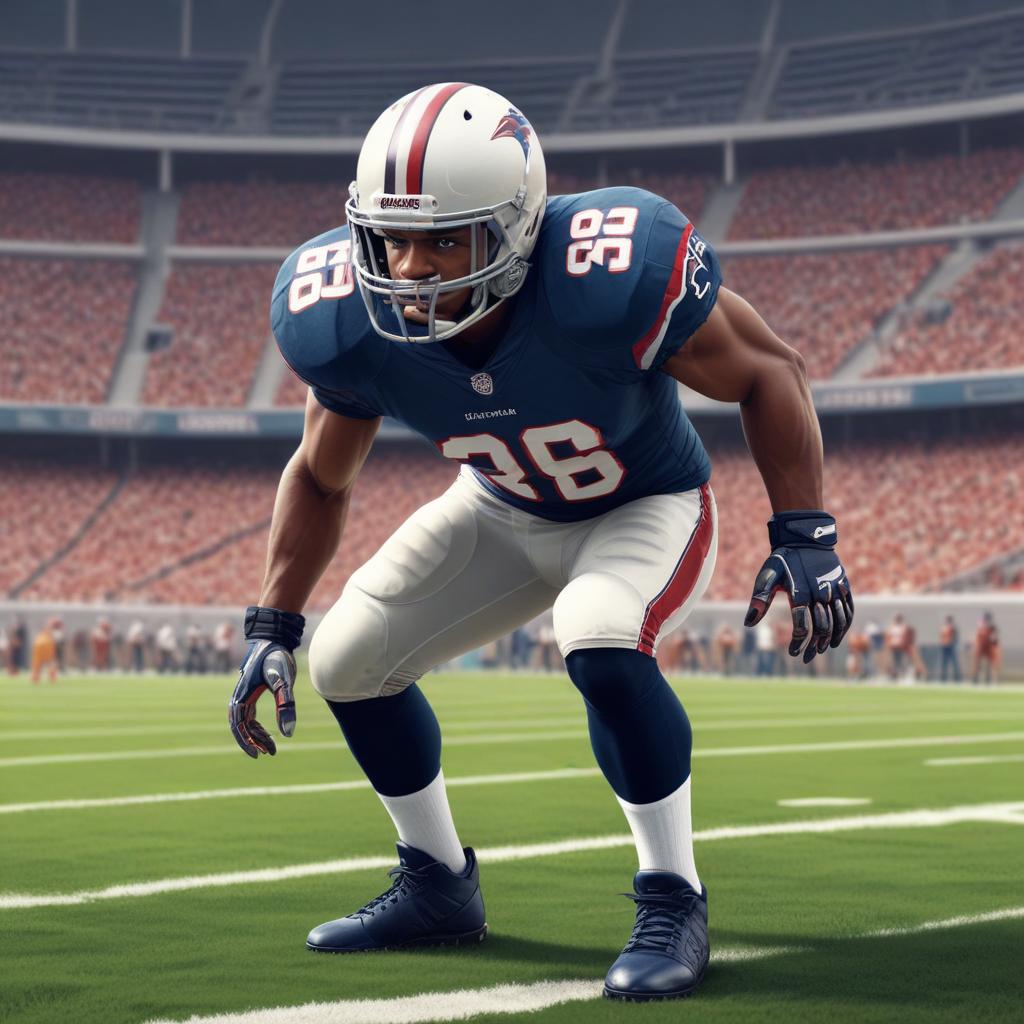
During the game, coaches monitor offensive tendencies such as formations, play-calling patterns, and key player movements. Based on these observations, defensive adjustments might include shifting coverage schemes, altering blitz frequency, or modifying linebacker and secondary alignments. These changes can help neutralize star players or counter specific offensive strategies that are proving successful.
Halftime provides a critical window for more extensive analysis and strategy revision. Defensive coordinators review first-half footage and statistics to identify vulnerabilities and areas for improvement. They use this data to implement halftime changes that sharpen defensive focus, address gaps, and optimize personnel usage. This ability to adjust dynamically reflects a team’s resilience and tactical intelligence.
Ultimately, successful defensive adjustments hinge on communication and execution. Players must quickly understand and implement new directives without losing cohesion. In this way, a defense can pivot from a weakened position to one of control, leveraging in-game insights to achieve a competitive edge.
Reading Offensive Formations and Plays
Defenders and coaches rely heavily on offense reading to gain an advantage before the ball is snapped. Pre-snap reads are vital in this process as they allow the defense to assess the offensive formation, player alignment, and potential routes or blocking schemes. By carefully studying offensive tendencies—such as how a team lines up in specific down-and-distance situations—defensive players can anticipate plays more accurately. This anticipation enables them to position themselves strategically to disrupt the offense’s plan.
Analyzing formations involves recognizing patterns in offensive setups and adjusting defensive coverage accordingly. For example, if a team frequently uses a spread formation indicating a passing play, defenders might shift into a nickel or dime package to apply extra coverage. Conversely, if the offense lines up in a heavy formation with multiple tight ends, the defense might prepare for a run by stacking the box with additional linebackers.
Coaches play a crucial role in teaching players these offensive reading skills by reviewing game film to identify opponent tendencies and successful strategies. Encouraging defenders to make pre-snap reads sharpens their ability to anticipate plays and react quickly. This proactive approach improves overall defensive effectiveness, leading to more stops, turnovers, and a stronger defensive presence on the field.
Adaptive defensive strategies rely heavily on communication and situational awareness. Defensive players must stay alert to shifts in the offense’s tactics, such as changes in personnel, tempo, or play-calling tendencies. Effective communication allows the defense to adjust coverage, blitzes, and assignments in real-time, maintaining pressure on the offense and minimizing vulnerabilities. Practicing these adjustments enables a defense to be flexible without sacrificing discipline or structure.
Game strategy in defense is also about understanding the opponent’s strengths and weaknesses. Tailoring defensive schemes to exploit an opponent’s vulnerabilities requires thorough pre-game preparation and ongoing analysis during the game. For instance, if an offense shows a weakness in short passing, defenses might focus on tighter coverage in those zones. Conversely, if an opponent relies heavily on the run game, defenses might prioritize stacking the box with additional blockers and linebackers.
Overall, advanced defensive strategies combine knowledge, anticipation, and adaptability. The best defenses rigorously study their opponents, make precise in-game adjustments, and communicate effectively to continuously disrupt the offense. Employing these advanced concepts allows teams to elevate their game strategy, maintain control under pressure, and increase their chances of winning by preventing the offense from executing smoothly.
Adjusting Defensive Strategies Mid-Game
In football, defensive adjustments are crucial components of an effective in-game strategy. Defensive coordinators must be adept at reading the offensive team’s performance and adapting their approach to counteract evolving threats. These mid-game changes often determine the outcome of the match by disrupting offensive rhythms and exploiting weaknesses revealed during play.
During the game, coaches monitor offensive tendencies such as formations, play-calling patterns, and key player movements. Based on these observations, defensive adjustments might include shifting coverage schemes, altering blitz frequency, or modifying linebacker and secondary alignments. These changes can help neutralize star players or counter specific offensive strategies that are proving successful.
Halftime provides a critical window for more extensive analysis and strategy revision. Defensive coordinators review first-half footage and statistics to identify vulnerabilities and areas for improvement. They use this data to implement halftime changes that sharpen defensive focus, address gaps, and optimize personnel usage. This ability to adjust dynamically reflects a team’s resilience and tactical intelligence.
Ultimately, successful defensive adjustments hinge on communication and execution. Players must quickly understand and implement new directives without losing cohesion. In this way, a defense can pivot from a weakened position to one of control, leveraging in-game insights to achieve a competitive edge.
Reading Offensive Formations and Plays
Defenders and coaches rely heavily on offense reading to gain an advantage before the ball is snapped. Pre-snap reads are vital in this process as they allow the defense to assess the offensive formation, player alignment, and potential routes or blocking schemes. By carefully studying offensive tendencies—such as how a team lines up in specific down-and-distance situations—defensive players can anticipate plays more accurately. This anticipation enables them to position themselves strategically to disrupt the offense’s plan.
Analyzing formations involves recognizing patterns in offensive setups and adjusting defensive coverage accordingly. For example, if a team frequently uses a spread formation indicating a passing play, defenders might shift into a nickel or dime package to apply extra coverage. Conversely, if the offense lines up in a heavy formation with multiple tight ends, the defense might prepare for a run by stacking the box with additional linebackers.
Coaches play a crucial role in teaching players these offensive reading skills by reviewing game film to identify opponent tendencies and successful strategies. Encouraging defenders to make pre-snap reads sharpens their ability to anticipate plays and react quickly. This proactive approach improves overall defensive effectiveness, leading to more stops, turnovers, and a stronger defensive presence on the field.
Adaptive defensive strategies rely heavily on communication and situational awareness. Defensive players must stay alert to shifts in the offense’s tactics, such as changes in personnel, tempo, or play-calling tendencies. Effective communication allows the defense to adjust coverage, blitzes, and assignments in real-time, maintaining pressure on the offense and minimizing vulnerabilities. Practicing these adjustments enables a defense to be flexible without sacrificing discipline or structure.
Game strategy in defense is also about understanding the opponent’s strengths and weaknesses. Tailoring defensive schemes to exploit an opponent’s vulnerabilities requires thorough pre-game preparation and ongoing analysis during the game. For instance, if an offense shows a weakness in short passing, defenses might focus on tighter coverage in those zones. Conversely, if an opponent relies heavily on the run game, defenses might prioritize stacking the box with additional blockers and linebackers.
Overall, advanced defensive strategies combine knowledge, anticipation, and adaptability. The best defenses rigorously study their opponents, make precise in-game adjustments, and communicate effectively to continuously disrupt the offense. Employing these advanced concepts allows teams to elevate their game strategy, maintain control under pressure, and increase their chances of winning by preventing the offense from executing smoothly.
Adjusting Defensive Strategies Mid-Game
In football, defensive adjustments are crucial components of an effective in-game strategy. Defensive coordinators must be adept at reading the offensive team’s performance and adapting their approach to counteract evolving threats. These mid-game changes often determine the outcome of the match by disrupting offensive rhythms and exploiting weaknesses revealed during play.
During the game, coaches monitor offensive tendencies such as formations, play-calling patterns, and key player movements. Based on these observations, defensive adjustments might include shifting coverage schemes, altering blitz frequency, or modifying linebacker and secondary alignments. These changes can help neutralize star players or counter specific offensive strategies that are proving successful.
Halftime provides a critical window for more extensive analysis and strategy revision. Defensive coordinators review first-half footage and statistics to identify vulnerabilities and areas for improvement. They use this data to implement halftime changes that sharpen defensive focus, address gaps, and optimize personnel usage. This ability to adjust dynamically reflects a team’s resilience and tactical intelligence.
Ultimately, successful defensive adjustments hinge on communication and execution. Players must quickly understand and implement new directives without losing cohesion. In this way, a defense can pivot from a weakened position to one of control, leveraging in-game insights to achieve a competitive edge.
Reading Offensive Formations and Plays
Defenders and coaches rely heavily on offense reading to gain an advantage before the ball is snapped. Pre-snap reads are vital in this process as they allow the defense to assess the offensive formation, player alignment, and potential routes or blocking schemes. By carefully studying offensive tendencies—such as how a team lines up in specific down-and-distance situations—defensive players can anticipate plays more accurately. This anticipation enables them to position themselves strategically to disrupt the offense’s plan.
Analyzing formations involves recognizing patterns in offensive setups and adjusting defensive coverage accordingly. For example, if a team frequently uses a spread formation indicating a passing play, defenders might shift into a nickel or dime package to apply extra coverage. Conversely, if the offense lines up in a heavy formation with multiple tight ends, the defense might prepare for a run by stacking the box with additional linebackers.
Coaches play a crucial role in teaching players these offensive reading skills by reviewing game film to identify opponent tendencies and successful strategies. Encouraging defenders to make pre-snap reads sharpens their ability to anticipate plays and react quickly. This proactive approach improves overall defensive effectiveness, leading to more stops, turnovers, and a stronger defensive presence on the field.
In contrast, the 3-4 defense deploys three linemen and four linebackers. The extra linebacker adds flexibility in pass coverage and blitz packages. It is particularly effective in confusing the offense with unpredictable blitzes. On the downside, the 3-4 can be vulnerable to powerful running games as it has one less lineman to clog running lanes.
The nickel defense introduces a fifth defensive back in place of a linebacker, improving pass coverage against multiple wide receiver sets. This formation is ideal in obvious passing situations, providing better speed and coverage in the secondary. However, it can be susceptible to strong running plays due to fewer players in the box.
Understanding these defensive formations helps teams select the right approach based on their opponent’s offensive tendencies, balancing strength against the run and effectiveness in pass defense.
Key Defensive Roles and Responsibilities
In football, understanding linebacker roles is essential for a strong defensive strategy. Linebackers serve as versatile players who combine the responsibilities of both defending against the run and covering short to intermediate passes. They are often seen as the defense’s quarterback, reading the offense and adjusting tactics accordingly. Their ability to quickly react and tackle is vital for stopping plays before they gain significant yardage.
Defensive back responsibilities focus primarily on pass defense. These players must cover wide receivers, prevent receptions, and support the run defense when necessary. Defensive backs include cornerbacks and safeties who specialize in man-to-man or zone coverage, ensuring that receivers are tightly marked while also providing a last line of defense against breakaway plays. Their agility and speed are crucial for countering fast offensive threats.
The defensive line duties center around pressuring the quarterback and controlling the line of scrimmage. Defensive linemen aim to disrupt offensive plays early by penetrating the offensive line, tackling ball carriers, and collapsing pockets to force hurried throws or mistakes. Their physicality and strength set the tone for the defense, often dictating the pace of the game and providing essential support to linebackers and defensive backs.
Together, these key defensive positions form a cohesive unit, each contributing unique skills and responsibilities. Coordinated efforts between linebackers, defensive backs, and defensive linemen help create an adaptable and resilient defense able to thwart various offensive strategies efficiently.
Common Defensive Tactics and Techniques
Defensive tactics are crucial in football, providing teams with various methods to thwart offensive plays and regain control of the game. Among the most widely used defensive tactics are blitzing, zone coverage, and man-to-man defense, each with distinct strengths and scenarios where they excel.
Blitzing is an aggressive defensive tactic where additional players, usually linebackers or defensive backs, rush the quarterback to apply pressure and disrupt the play. It is most effective when the defense anticipates a pass, and can force hurried throws or sacks. Blitzing can overwhelm the offensive line, but comes with the risk of leaving vulnerable coverage areas if the rush is not successful.
Zone coverage, on the other hand, assigns defenders to cover specific areas of the field rather than individual opponents. This tactic is especially effective against teams that rely heavily on passing, as it can clog passing lanes and prevent receivers from finding open space easily. Zone coverage works well in situations where the defense expects quick passes or multiple receiver sets, allowing defenders to read the quarterback’s eyes and react accordingly.
Man-to-man defense involves defenders matching up with specific offensive players, shadowing them closely throughout the play. This tactic is ideal when a defense wants to neutralize a key receiver or when the offense is known for precise route running. Man-to-man defense demands high levels of speed and endurance from defenders, as it requires consistent pressure and physicality. It is particularly effective in short yardage or red zone scenarios where limiting a single threat can stifle scoring opportunities.
Each of these defensive tactics—blitzing, zone coverage, and man-to-man defense—plays a vital role in football strategies. Teams often blend these techniques during games to keep offenses guessing and to adapt to different in-game situations. Understanding when and how to deploy these tactics can dramatically improve a team’s defensive performance and overall success on the field.
Blitzing and Its Variations
Blitzing is a key defensive strategy designed to overwhelm the offensive line and apply intense pressure on the quarterback. By sending additional defenders beyond the usual pass rushers, the defense aims to disrupt the quarterback’s timing and force hurried decisions. There are several blitzing techniques that can vary the approach and increase unpredictability.
One of the most common forms is the linebacker blitz. In this strategy, linebackers sprint through openings or gaps in the offensive line, targeting the quarterback directly or disrupting the pocket. Linebacker blitzes are effective because they can combine speed and surprise, catching the offense off guard and collapsing the protection quickly.
Defensive back blitzes add another layer of complexity. Here, defensive backs such as cornerbacks or safeties abandon their typical coverage roles to rush the quarterback. This variation can confuse the quarterback’s reads, forcing him to adjust post-snap and potentially creating opportunities for interceptions or sacks.
Overall, the art of blitzing techniques lies in coordination and timing. Defensive coordinators mix and match linebacker blitzes with defensive back blitzes to apply relentless defensive pressure. This aggressive approach aims not only to sack the quarterback but also to disrupt offensive plays, create turnovers, and shift the momentum in favor of the defense.
Zone vs Man-to-Man Coverage
Zone coverage and man-to-man coverage are two fundamental defensive strategies in football, each with distinct advantages and ideal applications. Zone coverage involves defenders covering specific areas of the field, allowing them to react to the movements of multiple offensive players within their assigned zones. This technique offers the advantage of flexibility, helping teams defend against passing plays by providing broader field awareness and preventing receivers from finding open spaces easily.
On the other hand, man-to-man coverage assigns defenders to cover specific offensive players directly. This allows for close, personal defense and is particularly effective when defending against key playmakers or in situations where matching speed and agility is crucial. Man-to-man coverage excels in pressuring receivers, disrupting routes, and limiting quick completions, but it requires defenders to have strong individual skills and endurance.
When comparing zone coverage and man-to-man coverage, the choice depends on the defensive strategy and game situation. Zone coverage works best against teams that use quick passes and multiple receiver sets, as it minimizes gaps and reduces the risk of big plays. Meanwhile, man-to-man coverage is ideal for teams looking to aggressively challenge receivers and create turnovers through tight coverage. Overall, understanding the coverage comparison helps teams adapt their defensive approach to maximize effectiveness based on the opponent’s offensive style.
Advanced Defensive Strategy Concepts
In football, mastering advanced defense strategies is essential for teams aiming to outperform their opponents consistently. One of the key elements of an effective defense is the ability to make in-game adjustments. Coaches and players must be able to quickly analyze the offense’s current tactics and alter their defensive alignments and assignments accordingly. This dynamic approach allows defenses to stay one step ahead, disrupting the offensive flow and creating opportunities for turnovers.
A critical skill in advanced defense is the ability to read the offense’s formation and tendencies. Teams spend significant time studying their opponents to anticipate what plays are likely based on the offensive setup. By recognizing patterns and key indicators in the offense’s formation, defenders can position themselves optimally and prepare for the most probable plays. This insight provides a strategic advantage, as defenses can preemptively counter the offense’s intentions rather than reacting after the play begins.
Adaptive defensive strategies rely heavily on communication and situational awareness. Defensive players must stay alert to shifts in the offense’s tactics, such as changes in personnel, tempo, or play-calling tendencies. Effective communication allows the defense to adjust coverage, blitzes, and assignments in real-time, maintaining pressure on the offense and minimizing vulnerabilities. Practicing these adjustments enables a defense to be flexible without sacrificing discipline or structure.
Game strategy in defense is also about understanding the opponent’s strengths and weaknesses. Tailoring defensive schemes to exploit an opponent’s vulnerabilities requires thorough pre-game preparation and ongoing analysis during the game. For instance, if an offense shows a weakness in short passing, defenses might focus on tighter coverage in those zones. Conversely, if an opponent relies heavily on the run game, defenses might prioritize stacking the box with additional blockers and linebackers.
Overall, advanced defensive strategies combine knowledge, anticipation, and adaptability. The best defenses rigorously study their opponents, make precise in-game adjustments, and communicate effectively to continuously disrupt the offense. Employing these advanced concepts allows teams to elevate their game strategy, maintain control under pressure, and increase their chances of winning by preventing the offense from executing smoothly.
Adjusting Defensive Strategies Mid-Game
In football, defensive adjustments are crucial components of an effective in-game strategy. Defensive coordinators must be adept at reading the offensive team’s performance and adapting their approach to counteract evolving threats. These mid-game changes often determine the outcome of the match by disrupting offensive rhythms and exploiting weaknesses revealed during play.
During the game, coaches monitor offensive tendencies such as formations, play-calling patterns, and key player movements. Based on these observations, defensive adjustments might include shifting coverage schemes, altering blitz frequency, or modifying linebacker and secondary alignments. These changes can help neutralize star players or counter specific offensive strategies that are proving successful.
Halftime provides a critical window for more extensive analysis and strategy revision. Defensive coordinators review first-half footage and statistics to identify vulnerabilities and areas for improvement. They use this data to implement halftime changes that sharpen defensive focus, address gaps, and optimize personnel usage. This ability to adjust dynamically reflects a team’s resilience and tactical intelligence.
Ultimately, successful defensive adjustments hinge on communication and execution. Players must quickly understand and implement new directives without losing cohesion. In this way, a defense can pivot from a weakened position to one of control, leveraging in-game insights to achieve a competitive edge.
Reading Offensive Formations and Plays
Defenders and coaches rely heavily on offense reading to gain an advantage before the ball is snapped. Pre-snap reads are vital in this process as they allow the defense to assess the offensive formation, player alignment, and potential routes or blocking schemes. By carefully studying offensive tendencies—such as how a team lines up in specific down-and-distance situations—defensive players can anticipate plays more accurately. This anticipation enables them to position themselves strategically to disrupt the offense’s plan.
Analyzing formations involves recognizing patterns in offensive setups and adjusting defensive coverage accordingly. For example, if a team frequently uses a spread formation indicating a passing play, defenders might shift into a nickel or dime package to apply extra coverage. Conversely, if the offense lines up in a heavy formation with multiple tight ends, the defense might prepare for a run by stacking the box with additional linebackers.
Coaches play a crucial role in teaching players these offensive reading skills by reviewing game film to identify opponent tendencies and successful strategies. Encouraging defenders to make pre-snap reads sharpens their ability to anticipate plays and react quickly. This proactive approach improves overall defensive effectiveness, leading to more stops, turnovers, and a stronger defensive presence on the field.
In contrast, the 3-4 defense deploys three linemen and four linebackers. The extra linebacker adds flexibility in pass coverage and blitz packages. It is particularly effective in confusing the offense with unpredictable blitzes. On the downside, the 3-4 can be vulnerable to powerful running games as it has one less lineman to clog running lanes.
The nickel defense introduces a fifth defensive back in place of a linebacker, improving pass coverage against multiple wide receiver sets. This formation is ideal in obvious passing situations, providing better speed and coverage in the secondary. However, it can be susceptible to strong running plays due to fewer players in the box.
Understanding these defensive formations helps teams select the right approach based on their opponent’s offensive tendencies, balancing strength against the run and effectiveness in pass defense.
Key Defensive Roles and Responsibilities
In football, understanding linebacker roles is essential for a strong defensive strategy. Linebackers serve as versatile players who combine the responsibilities of both defending against the run and covering short to intermediate passes. They are often seen as the defense’s quarterback, reading the offense and adjusting tactics accordingly. Their ability to quickly react and tackle is vital for stopping plays before they gain significant yardage.
Defensive back responsibilities focus primarily on pass defense. These players must cover wide receivers, prevent receptions, and support the run defense when necessary. Defensive backs include cornerbacks and safeties who specialize in man-to-man or zone coverage, ensuring that receivers are tightly marked while also providing a last line of defense against breakaway plays. Their agility and speed are crucial for countering fast offensive threats.
The defensive line duties center around pressuring the quarterback and controlling the line of scrimmage. Defensive linemen aim to disrupt offensive plays early by penetrating the offensive line, tackling ball carriers, and collapsing pockets to force hurried throws or mistakes. Their physicality and strength set the tone for the defense, often dictating the pace of the game and providing essential support to linebackers and defensive backs.
Together, these key defensive positions form a cohesive unit, each contributing unique skills and responsibilities. Coordinated efforts between linebackers, defensive backs, and defensive linemen help create an adaptable and resilient defense able to thwart various offensive strategies efficiently.
Common Defensive Tactics and Techniques
Defensive tactics are crucial in football, providing teams with various methods to thwart offensive plays and regain control of the game. Among the most widely used defensive tactics are blitzing, zone coverage, and man-to-man defense, each with distinct strengths and scenarios where they excel.
Blitzing is an aggressive defensive tactic where additional players, usually linebackers or defensive backs, rush the quarterback to apply pressure and disrupt the play. It is most effective when the defense anticipates a pass, and can force hurried throws or sacks. Blitzing can overwhelm the offensive line, but comes with the risk of leaving vulnerable coverage areas if the rush is not successful.
Zone coverage, on the other hand, assigns defenders to cover specific areas of the field rather than individual opponents. This tactic is especially effective against teams that rely heavily on passing, as it can clog passing lanes and prevent receivers from finding open space easily. Zone coverage works well in situations where the defense expects quick passes or multiple receiver sets, allowing defenders to read the quarterback’s eyes and react accordingly.
Man-to-man defense involves defenders matching up with specific offensive players, shadowing them closely throughout the play. This tactic is ideal when a defense wants to neutralize a key receiver or when the offense is known for precise route running. Man-to-man defense demands high levels of speed and endurance from defenders, as it requires consistent pressure and physicality. It is particularly effective in short yardage or red zone scenarios where limiting a single threat can stifle scoring opportunities.
Each of these defensive tactics—blitzing, zone coverage, and man-to-man defense—plays a vital role in football strategies. Teams often blend these techniques during games to keep offenses guessing and to adapt to different in-game situations. Understanding when and how to deploy these tactics can dramatically improve a team’s defensive performance and overall success on the field.
Blitzing and Its Variations
Blitzing is a key defensive strategy designed to overwhelm the offensive line and apply intense pressure on the quarterback. By sending additional defenders beyond the usual pass rushers, the defense aims to disrupt the quarterback’s timing and force hurried decisions. There are several blitzing techniques that can vary the approach and increase unpredictability.
One of the most common forms is the linebacker blitz. In this strategy, linebackers sprint through openings or gaps in the offensive line, targeting the quarterback directly or disrupting the pocket. Linebacker blitzes are effective because they can combine speed and surprise, catching the offense off guard and collapsing the protection quickly.
Defensive back blitzes add another layer of complexity. Here, defensive backs such as cornerbacks or safeties abandon their typical coverage roles to rush the quarterback. This variation can confuse the quarterback’s reads, forcing him to adjust post-snap and potentially creating opportunities for interceptions or sacks.
Overall, the art of blitzing techniques lies in coordination and timing. Defensive coordinators mix and match linebacker blitzes with defensive back blitzes to apply relentless defensive pressure. This aggressive approach aims not only to sack the quarterback but also to disrupt offensive plays, create turnovers, and shift the momentum in favor of the defense.
Zone vs Man-to-Man Coverage
Zone coverage and man-to-man coverage are two fundamental defensive strategies in football, each with distinct advantages and ideal applications. Zone coverage involves defenders covering specific areas of the field, allowing them to react to the movements of multiple offensive players within their assigned zones. This technique offers the advantage of flexibility, helping teams defend against passing plays by providing broader field awareness and preventing receivers from finding open spaces easily.
On the other hand, man-to-man coverage assigns defenders to cover specific offensive players directly. This allows for close, personal defense and is particularly effective when defending against key playmakers or in situations where matching speed and agility is crucial. Man-to-man coverage excels in pressuring receivers, disrupting routes, and limiting quick completions, but it requires defenders to have strong individual skills and endurance.
When comparing zone coverage and man-to-man coverage, the choice depends on the defensive strategy and game situation. Zone coverage works best against teams that use quick passes and multiple receiver sets, as it minimizes gaps and reduces the risk of big plays. Meanwhile, man-to-man coverage is ideal for teams looking to aggressively challenge receivers and create turnovers through tight coverage. Overall, understanding the coverage comparison helps teams adapt their defensive approach to maximize effectiveness based on the opponent’s offensive style.
Advanced Defensive Strategy Concepts
In football, mastering advanced defense strategies is essential for teams aiming to outperform their opponents consistently. One of the key elements of an effective defense is the ability to make in-game adjustments. Coaches and players must be able to quickly analyze the offense’s current tactics and alter their defensive alignments and assignments accordingly. This dynamic approach allows defenses to stay one step ahead, disrupting the offensive flow and creating opportunities for turnovers.
A critical skill in advanced defense is the ability to read the offense’s formation and tendencies. Teams spend significant time studying their opponents to anticipate what plays are likely based on the offensive setup. By recognizing patterns and key indicators in the offense’s formation, defenders can position themselves optimally and prepare for the most probable plays. This insight provides a strategic advantage, as defenses can preemptively counter the offense’s intentions rather than reacting after the play begins.
Adaptive defensive strategies rely heavily on communication and situational awareness. Defensive players must stay alert to shifts in the offense’s tactics, such as changes in personnel, tempo, or play-calling tendencies. Effective communication allows the defense to adjust coverage, blitzes, and assignments in real-time, maintaining pressure on the offense and minimizing vulnerabilities. Practicing these adjustments enables a defense to be flexible without sacrificing discipline or structure.
Game strategy in defense is also about understanding the opponent’s strengths and weaknesses. Tailoring defensive schemes to exploit an opponent’s vulnerabilities requires thorough pre-game preparation and ongoing analysis during the game. For instance, if an offense shows a weakness in short passing, defenses might focus on tighter coverage in those zones. Conversely, if an opponent relies heavily on the run game, defenses might prioritize stacking the box with additional blockers and linebackers.
Overall, advanced defensive strategies combine knowledge, anticipation, and adaptability. The best defenses rigorously study their opponents, make precise in-game adjustments, and communicate effectively to continuously disrupt the offense. Employing these advanced concepts allows teams to elevate their game strategy, maintain control under pressure, and increase their chances of winning by preventing the offense from executing smoothly.
Adjusting Defensive Strategies Mid-Game
In football, defensive adjustments are crucial components of an effective in-game strategy. Defensive coordinators must be adept at reading the offensive team’s performance and adapting their approach to counteract evolving threats. These mid-game changes often determine the outcome of the match by disrupting offensive rhythms and exploiting weaknesses revealed during play.
During the game, coaches monitor offensive tendencies such as formations, play-calling patterns, and key player movements. Based on these observations, defensive adjustments might include shifting coverage schemes, altering blitz frequency, or modifying linebacker and secondary alignments. These changes can help neutralize star players or counter specific offensive strategies that are proving successful.
Halftime provides a critical window for more extensive analysis and strategy revision. Defensive coordinators review first-half footage and statistics to identify vulnerabilities and areas for improvement. They use this data to implement halftime changes that sharpen defensive focus, address gaps, and optimize personnel usage. This ability to adjust dynamically reflects a team’s resilience and tactical intelligence.
Ultimately, successful defensive adjustments hinge on communication and execution. Players must quickly understand and implement new directives without losing cohesion. In this way, a defense can pivot from a weakened position to one of control, leveraging in-game insights to achieve a competitive edge.
Reading Offensive Formations and Plays
Defenders and coaches rely heavily on offense reading to gain an advantage before the ball is snapped. Pre-snap reads are vital in this process as they allow the defense to assess the offensive formation, player alignment, and potential routes or blocking schemes. By carefully studying offensive tendencies—such as how a team lines up in specific down-and-distance situations—defensive players can anticipate plays more accurately. This anticipation enables them to position themselves strategically to disrupt the offense’s plan.
Analyzing formations involves recognizing patterns in offensive setups and adjusting defensive coverage accordingly. For example, if a team frequently uses a spread formation indicating a passing play, defenders might shift into a nickel or dime package to apply extra coverage. Conversely, if the offense lines up in a heavy formation with multiple tight ends, the defense might prepare for a run by stacking the box with additional linebackers.
Coaches play a crucial role in teaching players these offensive reading skills by reviewing game film to identify opponent tendencies and successful strategies. Encouraging defenders to make pre-snap reads sharpens their ability to anticipate plays and react quickly. This proactive approach improves overall defensive effectiveness, leading to more stops, turnovers, and a stronger defensive presence on the field.
Fundamentals of Defensive Football Strategies
Defensive football basics are grounded in a clear understanding of the core objectives and principles that guide the team’s efforts to prevent the opposing side from scoring. The primary goal of any football defense is to stop or limit the opponent’s offensive progress by controlling space, anticipating plays, and forcing turnovers. This requires a cohesive approach to defensive strategies, where each player understands their role within the larger defensive framework.
At the heart of football defense principles is the concept of positioning. Defensive players must be strategically placed on the field to cover key areas, restrict the opponent’s options, and react quickly to unfolding plays. Effective positioning allows defenders to maintain balance between pressuring the ball carrier and providing support to teammates, ensuring that there are no weak spots in the defensive line. Different formations and alignments are used to handle varying offensive tactics, but all defensive strategies share this fundamental positioning goal.
General positioning concepts involve placing defenders in a way that maximizes their ability to respond swiftly, whether that means rushing the passer, covering receivers, or stepping up to tackle running backs. An essential aspect of defensive strategies is zone coverage, where players defend assigned areas of the field, as opposed to man-to-man coverage, where each defender is responsible for a specific offensive player. These approaches are chosen based on the opponent’s tendencies, the situation in the game, and the strengths of the defensive roster.
Understanding defensive football basics also entails recognizing the importance of communication among players. Effective communication ensures the defense remains organized, can adjust to offensive shifts, and executes complex strategies with precision. Leaders on the defense often call out formations and changes to keep the team synchronized and ready for any offensive challenge.
In summary, defensive strategies in football revolve around the principles of controlling space, anticipating the opponent’s moves, maintaining strong positioning, and coordinating team efforts. By mastering these football defense principles, teams can create a resilient defense capable of disrupting the opposing offense and ultimately securing victory.
Types of Defensive Formations
Defensive formations are crucial in shaping a football team’s strategy to counter their opponent’s offense. Among the most popular are the 4-3 defense, 3-4 defense, and nickel defense, each offering unique strengths and weaknesses.
The 4-3 defense features four defensive linemen and three linebackers. This formation is well-balanced, excelling in run defense due to the strong front line presence. It also provides decent pass coverage, making it versatile against both runs and passes. However, it may struggle against teams that use quick passing or spread offenses, as it has fewer defensive backs on the field.
In contrast, the 3-4 defense deploys three linemen and four linebackers. The extra linebacker adds flexibility in pass coverage and blitz packages. It is particularly effective in confusing the offense with unpredictable blitzes. On the downside, the 3-4 can be vulnerable to powerful running games as it has one less lineman to clog running lanes.
The nickel defense introduces a fifth defensive back in place of a linebacker, improving pass coverage against multiple wide receiver sets. This formation is ideal in obvious passing situations, providing better speed and coverage in the secondary. However, it can be susceptible to strong running plays due to fewer players in the box.
Understanding these defensive formations helps teams select the right approach based on their opponent’s offensive tendencies, balancing strength against the run and effectiveness in pass defense.
Key Defensive Roles and Responsibilities
In football, understanding linebacker roles is essential for a strong defensive strategy. Linebackers serve as versatile players who combine the responsibilities of both defending against the run and covering short to intermediate passes. They are often seen as the defense’s quarterback, reading the offense and adjusting tactics accordingly. Their ability to quickly react and tackle is vital for stopping plays before they gain significant yardage.
Defensive back responsibilities focus primarily on pass defense. These players must cover wide receivers, prevent receptions, and support the run defense when necessary. Defensive backs include cornerbacks and safeties who specialize in man-to-man or zone coverage, ensuring that receivers are tightly marked while also providing a last line of defense against breakaway plays. Their agility and speed are crucial for countering fast offensive threats.
The defensive line duties center around pressuring the quarterback and controlling the line of scrimmage. Defensive linemen aim to disrupt offensive plays early by penetrating the offensive line, tackling ball carriers, and collapsing pockets to force hurried throws or mistakes. Their physicality and strength set the tone for the defense, often dictating the pace of the game and providing essential support to linebackers and defensive backs.
Together, these key defensive positions form a cohesive unit, each contributing unique skills and responsibilities. Coordinated efforts between linebackers, defensive backs, and defensive linemen help create an adaptable and resilient defense able to thwart various offensive strategies efficiently.
Common Defensive Tactics and Techniques
Defensive tactics are crucial in football, providing teams with various methods to thwart offensive plays and regain control of the game. Among the most widely used defensive tactics are blitzing, zone coverage, and man-to-man defense, each with distinct strengths and scenarios where they excel.
Blitzing is an aggressive defensive tactic where additional players, usually linebackers or defensive backs, rush the quarterback to apply pressure and disrupt the play. It is most effective when the defense anticipates a pass, and can force hurried throws or sacks. Blitzing can overwhelm the offensive line, but comes with the risk of leaving vulnerable coverage areas if the rush is not successful.
Zone coverage, on the other hand, assigns defenders to cover specific areas of the field rather than individual opponents. This tactic is especially effective against teams that rely heavily on passing, as it can clog passing lanes and prevent receivers from finding open space easily. Zone coverage works well in situations where the defense expects quick passes or multiple receiver sets, allowing defenders to read the quarterback’s eyes and react accordingly.
Man-to-man defense involves defenders matching up with specific offensive players, shadowing them closely throughout the play. This tactic is ideal when a defense wants to neutralize a key receiver or when the offense is known for precise route running. Man-to-man defense demands high levels of speed and endurance from defenders, as it requires consistent pressure and physicality. It is particularly effective in short yardage or red zone scenarios where limiting a single threat can stifle scoring opportunities.
Each of these defensive tactics—blitzing, zone coverage, and man-to-man defense—plays a vital role in football strategies. Teams often blend these techniques during games to keep offenses guessing and to adapt to different in-game situations. Understanding when and how to deploy these tactics can dramatically improve a team’s defensive performance and overall success on the field.
Blitzing and Its Variations
Blitzing is a key defensive strategy designed to overwhelm the offensive line and apply intense pressure on the quarterback. By sending additional defenders beyond the usual pass rushers, the defense aims to disrupt the quarterback’s timing and force hurried decisions. There are several blitzing techniques that can vary the approach and increase unpredictability.
One of the most common forms is the linebacker blitz. In this strategy, linebackers sprint through openings or gaps in the offensive line, targeting the quarterback directly or disrupting the pocket. Linebacker blitzes are effective because they can combine speed and surprise, catching the offense off guard and collapsing the protection quickly.
Defensive back blitzes add another layer of complexity. Here, defensive backs such as cornerbacks or safeties abandon their typical coverage roles to rush the quarterback. This variation can confuse the quarterback’s reads, forcing him to adjust post-snap and potentially creating opportunities for interceptions or sacks.
Overall, the art of blitzing techniques lies in coordination and timing. Defensive coordinators mix and match linebacker blitzes with defensive back blitzes to apply relentless defensive pressure. This aggressive approach aims not only to sack the quarterback but also to disrupt offensive plays, create turnovers, and shift the momentum in favor of the defense.
Zone vs Man-to-Man Coverage
Zone coverage and man-to-man coverage are two fundamental defensive strategies in football, each with distinct advantages and ideal applications. Zone coverage involves defenders covering specific areas of the field, allowing them to react to the movements of multiple offensive players within their assigned zones. This technique offers the advantage of flexibility, helping teams defend against passing plays by providing broader field awareness and preventing receivers from finding open spaces easily.
On the other hand, man-to-man coverage assigns defenders to cover specific offensive players directly. This allows for close, personal defense and is particularly effective when defending against key playmakers or in situations where matching speed and agility is crucial. Man-to-man coverage excels in pressuring receivers, disrupting routes, and limiting quick completions, but it requires defenders to have strong individual skills and endurance.
When comparing zone coverage and man-to-man coverage, the choice depends on the defensive strategy and game situation. Zone coverage works best against teams that use quick passes and multiple receiver sets, as it minimizes gaps and reduces the risk of big plays. Meanwhile, man-to-man coverage is ideal for teams looking to aggressively challenge receivers and create turnovers through tight coverage. Overall, understanding the coverage comparison helps teams adapt their defensive approach to maximize effectiveness based on the opponent’s offensive style.
Advanced Defensive Strategy Concepts
In football, mastering advanced defense strategies is essential for teams aiming to outperform their opponents consistently. One of the key elements of an effective defense is the ability to make in-game adjustments. Coaches and players must be able to quickly analyze the offense’s current tactics and alter their defensive alignments and assignments accordingly. This dynamic approach allows defenses to stay one step ahead, disrupting the offensive flow and creating opportunities for turnovers.
A critical skill in advanced defense is the ability to read the offense’s formation and tendencies. Teams spend significant time studying their opponents to anticipate what plays are likely based on the offensive setup. By recognizing patterns and key indicators in the offense’s formation, defenders can position themselves optimally and prepare for the most probable plays. This insight provides a strategic advantage, as defenses can preemptively counter the offense’s intentions rather than reacting after the play begins.
Adaptive defensive strategies rely heavily on communication and situational awareness. Defensive players must stay alert to shifts in the offense’s tactics, such as changes in personnel, tempo, or play-calling tendencies. Effective communication allows the defense to adjust coverage, blitzes, and assignments in real-time, maintaining pressure on the offense and minimizing vulnerabilities. Practicing these adjustments enables a defense to be flexible without sacrificing discipline or structure.
Game strategy in defense is also about understanding the opponent’s strengths and weaknesses. Tailoring defensive schemes to exploit an opponent’s vulnerabilities requires thorough pre-game preparation and ongoing analysis during the game. For instance, if an offense shows a weakness in short passing, defenses might focus on tighter coverage in those zones. Conversely, if an opponent relies heavily on the run game, defenses might prioritize stacking the box with additional blockers and linebackers.
Overall, advanced defensive strategies combine knowledge, anticipation, and adaptability. The best defenses rigorously study their opponents, make precise in-game adjustments, and communicate effectively to continuously disrupt the offense. Employing these advanced concepts allows teams to elevate their game strategy, maintain control under pressure, and increase their chances of winning by preventing the offense from executing smoothly.
Adjusting Defensive Strategies Mid-Game
In football, defensive adjustments are crucial components of an effective in-game strategy. Defensive coordinators must be adept at reading the offensive team’s performance and adapting their approach to counteract evolving threats. These mid-game changes often determine the outcome of the match by disrupting offensive rhythms and exploiting weaknesses revealed during play.
During the game, coaches monitor offensive tendencies such as formations, play-calling patterns, and key player movements. Based on these observations, defensive adjustments might include shifting coverage schemes, altering blitz frequency, or modifying linebacker and secondary alignments. These changes can help neutralize star players or counter specific offensive strategies that are proving successful.
Halftime provides a critical window for more extensive analysis and strategy revision. Defensive coordinators review first-half footage and statistics to identify vulnerabilities and areas for improvement. They use this data to implement halftime changes that sharpen defensive focus, address gaps, and optimize personnel usage. This ability to adjust dynamically reflects a team’s resilience and tactical intelligence.
Ultimately, successful defensive adjustments hinge on communication and execution. Players must quickly understand and implement new directives without losing cohesion. In this way, a defense can pivot from a weakened position to one of control, leveraging in-game insights to achieve a competitive edge.
Reading Offensive Formations and Plays
Defenders and coaches rely heavily on offense reading to gain an advantage before the ball is snapped. Pre-snap reads are vital in this process as they allow the defense to assess the offensive formation, player alignment, and potential routes or blocking schemes. By carefully studying offensive tendencies—such as how a team lines up in specific down-and-distance situations—defensive players can anticipate plays more accurately. This anticipation enables them to position themselves strategically to disrupt the offense’s plan.
Analyzing formations involves recognizing patterns in offensive setups and adjusting defensive coverage accordingly. For example, if a team frequently uses a spread formation indicating a passing play, defenders might shift into a nickel or dime package to apply extra coverage. Conversely, if the offense lines up in a heavy formation with multiple tight ends, the defense might prepare for a run by stacking the box with additional linebackers.
Coaches play a crucial role in teaching players these offensive reading skills by reviewing game film to identify opponent tendencies and successful strategies. Encouraging defenders to make pre-snap reads sharpens their ability to anticipate plays and react quickly. This proactive approach improves overall defensive effectiveness, leading to more stops, turnovers, and a stronger defensive presence on the field.
Adaptive defensive strategies rely heavily on communication and situational awareness. Defensive players must stay alert to shifts in the offense’s tactics, such as changes in personnel, tempo, or play-calling tendencies. Effective communication allows the defense to adjust coverage, blitzes, and assignments in real-time, maintaining pressure on the offense and minimizing vulnerabilities. Practicing these adjustments enables a defense to be flexible without sacrificing discipline or structure.
Game strategy in defense is also about understanding the opponent’s strengths and weaknesses. Tailoring defensive schemes to exploit an opponent’s vulnerabilities requires thorough pre-game preparation and ongoing analysis during the game. For instance, if an offense shows a weakness in short passing, defenses might focus on tighter coverage in those zones. Conversely, if an opponent relies heavily on the run game, defenses might prioritize stacking the box with additional blockers and linebackers.
Overall, advanced defensive strategies combine knowledge, anticipation, and adaptability. The best defenses rigorously study their opponents, make precise in-game adjustments, and communicate effectively to continuously disrupt the offense. Employing these advanced concepts allows teams to elevate their game strategy, maintain control under pressure, and increase their chances of winning by preventing the offense from executing smoothly.
Adjusting Defensive Strategies Mid-Game
In football, defensive adjustments are crucial components of an effective in-game strategy. Defensive coordinators must be adept at reading the offensive team’s performance and adapting their approach to counteract evolving threats. These mid-game changes often determine the outcome of the match by disrupting offensive rhythms and exploiting weaknesses revealed during play.
During the game, coaches monitor offensive tendencies such as formations, play-calling patterns, and key player movements. Based on these observations, defensive adjustments might include shifting coverage schemes, altering blitz frequency, or modifying linebacker and secondary alignments. These changes can help neutralize star players or counter specific offensive strategies that are proving successful.
Halftime provides a critical window for more extensive analysis and strategy revision. Defensive coordinators review first-half footage and statistics to identify vulnerabilities and areas for improvement. They use this data to implement halftime changes that sharpen defensive focus, address gaps, and optimize personnel usage. This ability to adjust dynamically reflects a team’s resilience and tactical intelligence.
Ultimately, successful defensive adjustments hinge on communication and execution. Players must quickly understand and implement new directives without losing cohesion. In this way, a defense can pivot from a weakened position to one of control, leveraging in-game insights to achieve a competitive edge.
Reading Offensive Formations and Plays
Defenders and coaches rely heavily on offense reading to gain an advantage before the ball is snapped. Pre-snap reads are vital in this process as they allow the defense to assess the offensive formation, player alignment, and potential routes or blocking schemes. By carefully studying offensive tendencies—such as how a team lines up in specific down-and-distance situations—defensive players can anticipate plays more accurately. This anticipation enables them to position themselves strategically to disrupt the offense’s plan.
Analyzing formations involves recognizing patterns in offensive setups and adjusting defensive coverage accordingly. For example, if a team frequently uses a spread formation indicating a passing play, defenders might shift into a nickel or dime package to apply extra coverage. Conversely, if the offense lines up in a heavy formation with multiple tight ends, the defense might prepare for a run by stacking the box with additional linebackers.
Coaches play a crucial role in teaching players these offensive reading skills by reviewing game film to identify opponent tendencies and successful strategies. Encouraging defenders to make pre-snap reads sharpens their ability to anticipate plays and react quickly. This proactive approach improves overall defensive effectiveness, leading to more stops, turnovers, and a stronger defensive presence on the field.
Fundamentals of Defensive Football Strategies
Defensive football basics are grounded in a clear understanding of the core objectives and principles that guide the team’s efforts to prevent the opposing side from scoring. The primary goal of any football defense is to stop or limit the opponent’s offensive progress by controlling space, anticipating plays, and forcing turnovers. This requires a cohesive approach to defensive strategies, where each player understands their role within the larger defensive framework.
At the heart of football defense principles is the concept of positioning. Defensive players must be strategically placed on the field to cover key areas, restrict the opponent’s options, and react quickly to unfolding plays. Effective positioning allows defenders to maintain balance between pressuring the ball carrier and providing support to teammates, ensuring that there are no weak spots in the defensive line. Different formations and alignments are used to handle varying offensive tactics, but all defensive strategies share this fundamental positioning goal.
General positioning concepts involve placing defenders in a way that maximizes their ability to respond swiftly, whether that means rushing the passer, covering receivers, or stepping up to tackle running backs. An essential aspect of defensive strategies is zone coverage, where players defend assigned areas of the field, as opposed to man-to-man coverage, where each defender is responsible for a specific offensive player. These approaches are chosen based on the opponent’s tendencies, the situation in the game, and the strengths of the defensive roster.
Understanding defensive football basics also entails recognizing the importance of communication among players. Effective communication ensures the defense remains organized, can adjust to offensive shifts, and executes complex strategies with precision. Leaders on the defense often call out formations and changes to keep the team synchronized and ready for any offensive challenge.
In summary, defensive strategies in football revolve around the principles of controlling space, anticipating the opponent’s moves, maintaining strong positioning, and coordinating team efforts. By mastering these football defense principles, teams can create a resilient defense capable of disrupting the opposing offense and ultimately securing victory.
Types of Defensive Formations
Defensive formations are crucial in shaping a football team’s strategy to counter their opponent’s offense. Among the most popular are the 4-3 defense, 3-4 defense, and nickel defense, each offering unique strengths and weaknesses.
The 4-3 defense features four defensive linemen and three linebackers. This formation is well-balanced, excelling in run defense due to the strong front line presence. It also provides decent pass coverage, making it versatile against both runs and passes. However, it may struggle against teams that use quick passing or spread offenses, as it has fewer defensive backs on the field.
In contrast, the 3-4 defense deploys three linemen and four linebackers. The extra linebacker adds flexibility in pass coverage and blitz packages. It is particularly effective in confusing the offense with unpredictable blitzes. On the downside, the 3-4 can be vulnerable to powerful running games as it has one less lineman to clog running lanes.
The nickel defense introduces a fifth defensive back in place of a linebacker, improving pass coverage against multiple wide receiver sets. This formation is ideal in obvious passing situations, providing better speed and coverage in the secondary. However, it can be susceptible to strong running plays due to fewer players in the box.
Understanding these defensive formations helps teams select the right approach based on their opponent’s offensive tendencies, balancing strength against the run and effectiveness in pass defense.
Key Defensive Roles and Responsibilities
In football, understanding linebacker roles is essential for a strong defensive strategy. Linebackers serve as versatile players who combine the responsibilities of both defending against the run and covering short to intermediate passes. They are often seen as the defense’s quarterback, reading the offense and adjusting tactics accordingly. Their ability to quickly react and tackle is vital for stopping plays before they gain significant yardage.
Defensive back responsibilities focus primarily on pass defense. These players must cover wide receivers, prevent receptions, and support the run defense when necessary. Defensive backs include cornerbacks and safeties who specialize in man-to-man or zone coverage, ensuring that receivers are tightly marked while also providing a last line of defense against breakaway plays. Their agility and speed are crucial for countering fast offensive threats.
The defensive line duties center around pressuring the quarterback and controlling the line of scrimmage. Defensive linemen aim to disrupt offensive plays early by penetrating the offensive line, tackling ball carriers, and collapsing pockets to force hurried throws or mistakes. Their physicality and strength set the tone for the defense, often dictating the pace of the game and providing essential support to linebackers and defensive backs.
Together, these key defensive positions form a cohesive unit, each contributing unique skills and responsibilities. Coordinated efforts between linebackers, defensive backs, and defensive linemen help create an adaptable and resilient defense able to thwart various offensive strategies efficiently.
Common Defensive Tactics and Techniques
Defensive tactics are crucial in football, providing teams with various methods to thwart offensive plays and regain control of the game. Among the most widely used defensive tactics are blitzing, zone coverage, and man-to-man defense, each with distinct strengths and scenarios where they excel.
Blitzing is an aggressive defensive tactic where additional players, usually linebackers or defensive backs, rush the quarterback to apply pressure and disrupt the play. It is most effective when the defense anticipates a pass, and can force hurried throws or sacks. Blitzing can overwhelm the offensive line, but comes with the risk of leaving vulnerable coverage areas if the rush is not successful.
Zone coverage, on the other hand, assigns defenders to cover specific areas of the field rather than individual opponents. This tactic is especially effective against teams that rely heavily on passing, as it can clog passing lanes and prevent receivers from finding open space easily. Zone coverage works well in situations where the defense expects quick passes or multiple receiver sets, allowing defenders to read the quarterback’s eyes and react accordingly.
Man-to-man defense involves defenders matching up with specific offensive players, shadowing them closely throughout the play. This tactic is ideal when a defense wants to neutralize a key receiver or when the offense is known for precise route running. Man-to-man defense demands high levels of speed and endurance from defenders, as it requires consistent pressure and physicality. It is particularly effective in short yardage or red zone scenarios where limiting a single threat can stifle scoring opportunities.
Each of these defensive tactics—blitzing, zone coverage, and man-to-man defense—plays a vital role in football strategies. Teams often blend these techniques during games to keep offenses guessing and to adapt to different in-game situations. Understanding when and how to deploy these tactics can dramatically improve a team’s defensive performance and overall success on the field.
Blitzing and Its Variations
Blitzing is a key defensive strategy designed to overwhelm the offensive line and apply intense pressure on the quarterback. By sending additional defenders beyond the usual pass rushers, the defense aims to disrupt the quarterback’s timing and force hurried decisions. There are several blitzing techniques that can vary the approach and increase unpredictability.
One of the most common forms is the linebacker blitz. In this strategy, linebackers sprint through openings or gaps in the offensive line, targeting the quarterback directly or disrupting the pocket. Linebacker blitzes are effective because they can combine speed and surprise, catching the offense off guard and collapsing the protection quickly.
Defensive back blitzes add another layer of complexity. Here, defensive backs such as cornerbacks or safeties abandon their typical coverage roles to rush the quarterback. This variation can confuse the quarterback’s reads, forcing him to adjust post-snap and potentially creating opportunities for interceptions or sacks.
Overall, the art of blitzing techniques lies in coordination and timing. Defensive coordinators mix and match linebacker blitzes with defensive back blitzes to apply relentless defensive pressure. This aggressive approach aims not only to sack the quarterback but also to disrupt offensive plays, create turnovers, and shift the momentum in favor of the defense.
Zone vs Man-to-Man Coverage
Zone coverage and man-to-man coverage are two fundamental defensive strategies in football, each with distinct advantages and ideal applications. Zone coverage involves defenders covering specific areas of the field, allowing them to react to the movements of multiple offensive players within their assigned zones. This technique offers the advantage of flexibility, helping teams defend against passing plays by providing broader field awareness and preventing receivers from finding open spaces easily.
On the other hand, man-to-man coverage assigns defenders to cover specific offensive players directly. This allows for close, personal defense and is particularly effective when defending against key playmakers or in situations where matching speed and agility is crucial. Man-to-man coverage excels in pressuring receivers, disrupting routes, and limiting quick completions, but it requires defenders to have strong individual skills and endurance.
When comparing zone coverage and man-to-man coverage, the choice depends on the defensive strategy and game situation. Zone coverage works best against teams that use quick passes and multiple receiver sets, as it minimizes gaps and reduces the risk of big plays. Meanwhile, man-to-man coverage is ideal for teams looking to aggressively challenge receivers and create turnovers through tight coverage. Overall, understanding the coverage comparison helps teams adapt their defensive approach to maximize effectiveness based on the opponent’s offensive style.
Advanced Defensive Strategy Concepts
In football, mastering advanced defense strategies is essential for teams aiming to outperform their opponents consistently. One of the key elements of an effective defense is the ability to make in-game adjustments. Coaches and players must be able to quickly analyze the offense’s current tactics and alter their defensive alignments and assignments accordingly. This dynamic approach allows defenses to stay one step ahead, disrupting the offensive flow and creating opportunities for turnovers.
A critical skill in advanced defense is the ability to read the offense’s formation and tendencies. Teams spend significant time studying their opponents to anticipate what plays are likely based on the offensive setup. By recognizing patterns and key indicators in the offense’s formation, defenders can position themselves optimally and prepare for the most probable plays. This insight provides a strategic advantage, as defenses can preemptively counter the offense’s intentions rather than reacting after the play begins.
Adaptive defensive strategies rely heavily on communication and situational awareness. Defensive players must stay alert to shifts in the offense’s tactics, such as changes in personnel, tempo, or play-calling tendencies. Effective communication allows the defense to adjust coverage, blitzes, and assignments in real-time, maintaining pressure on the offense and minimizing vulnerabilities. Practicing these adjustments enables a defense to be flexible without sacrificing discipline or structure.
Game strategy in defense is also about understanding the opponent’s strengths and weaknesses. Tailoring defensive schemes to exploit an opponent’s vulnerabilities requires thorough pre-game preparation and ongoing analysis during the game. For instance, if an offense shows a weakness in short passing, defenses might focus on tighter coverage in those zones. Conversely, if an opponent relies heavily on the run game, defenses might prioritize stacking the box with additional blockers and linebackers.
Overall, advanced defensive strategies combine knowledge, anticipation, and adaptability. The best defenses rigorously study their opponents, make precise in-game adjustments, and communicate effectively to continuously disrupt the offense. Employing these advanced concepts allows teams to elevate their game strategy, maintain control under pressure, and increase their chances of winning by preventing the offense from executing smoothly.
Adjusting Defensive Strategies Mid-Game
In football, defensive adjustments are crucial components of an effective in-game strategy. Defensive coordinators must be adept at reading the offensive team’s performance and adapting their approach to counteract evolving threats. These mid-game changes often determine the outcome of the match by disrupting offensive rhythms and exploiting weaknesses revealed during play.
During the game, coaches monitor offensive tendencies such as formations, play-calling patterns, and key player movements. Based on these observations, defensive adjustments might include shifting coverage schemes, altering blitz frequency, or modifying linebacker and secondary alignments. These changes can help neutralize star players or counter specific offensive strategies that are proving successful.
Halftime provides a critical window for more extensive analysis and strategy revision. Defensive coordinators review first-half footage and statistics to identify vulnerabilities and areas for improvement. They use this data to implement halftime changes that sharpen defensive focus, address gaps, and optimize personnel usage. This ability to adjust dynamically reflects a team’s resilience and tactical intelligence.
Ultimately, successful defensive adjustments hinge on communication and execution. Players must quickly understand and implement new directives without losing cohesion. In this way, a defense can pivot from a weakened position to one of control, leveraging in-game insights to achieve a competitive edge.
Reading Offensive Formations and Plays
Defenders and coaches rely heavily on offense reading to gain an advantage before the ball is snapped. Pre-snap reads are vital in this process as they allow the defense to assess the offensive formation, player alignment, and potential routes or blocking schemes. By carefully studying offensive tendencies—such as how a team lines up in specific down-and-distance situations—defensive players can anticipate plays more accurately. This anticipation enables them to position themselves strategically to disrupt the offense’s plan.
Analyzing formations involves recognizing patterns in offensive setups and adjusting defensive coverage accordingly. For example, if a team frequently uses a spread formation indicating a passing play, defenders might shift into a nickel or dime package to apply extra coverage. Conversely, if the offense lines up in a heavy formation with multiple tight ends, the defense might prepare for a run by stacking the box with additional linebackers.
Coaches play a crucial role in teaching players these offensive reading skills by reviewing game film to identify opponent tendencies and successful strategies. Encouraging defenders to make pre-snap reads sharpens their ability to anticipate plays and react quickly. This proactive approach improves overall defensive effectiveness, leading to more stops, turnovers, and a stronger defensive presence on the field.
Adaptive defensive strategies rely heavily on communication and situational awareness. Defensive players must stay alert to shifts in the offense’s tactics, such as changes in personnel, tempo, or play-calling tendencies. Effective communication allows the defense to adjust coverage, blitzes, and assignments in real-time, maintaining pressure on the offense and minimizing vulnerabilities. Practicing these adjustments enables a defense to be flexible without sacrificing discipline or structure.
Game strategy in defense is also about understanding the opponent’s strengths and weaknesses. Tailoring defensive schemes to exploit an opponent’s vulnerabilities requires thorough pre-game preparation and ongoing analysis during the game. For instance, if an offense shows a weakness in short passing, defenses might focus on tighter coverage in those zones. Conversely, if an opponent relies heavily on the run game, defenses might prioritize stacking the box with additional blockers and linebackers.
Overall, advanced defensive strategies combine knowledge, anticipation, and adaptability. The best defenses rigorously study their opponents, make precise in-game adjustments, and communicate effectively to continuously disrupt the offense. Employing these advanced concepts allows teams to elevate their game strategy, maintain control under pressure, and increase their chances of winning by preventing the offense from executing smoothly.
Adjusting Defensive Strategies Mid-Game
In football, defensive adjustments are crucial components of an effective in-game strategy. Defensive coordinators must be adept at reading the offensive team’s performance and adapting their approach to counteract evolving threats. These mid-game changes often determine the outcome of the match by disrupting offensive rhythms and exploiting weaknesses revealed during play.
During the game, coaches monitor offensive tendencies such as formations, play-calling patterns, and key player movements. Based on these observations, defensive adjustments might include shifting coverage schemes, altering blitz frequency, or modifying linebacker and secondary alignments. These changes can help neutralize star players or counter specific offensive strategies that are proving successful.
Halftime provides a critical window for more extensive analysis and strategy revision. Defensive coordinators review first-half footage and statistics to identify vulnerabilities and areas for improvement. They use this data to implement halftime changes that sharpen defensive focus, address gaps, and optimize personnel usage. This ability to adjust dynamically reflects a team’s resilience and tactical intelligence.
Ultimately, successful defensive adjustments hinge on communication and execution. Players must quickly understand and implement new directives without losing cohesion. In this way, a defense can pivot from a weakened position to one of control, leveraging in-game insights to achieve a competitive edge.
Reading Offensive Formations and Plays
Defenders and coaches rely heavily on offense reading to gain an advantage before the ball is snapped. Pre-snap reads are vital in this process as they allow the defense to assess the offensive formation, player alignment, and potential routes or blocking schemes. By carefully studying offensive tendencies—such as how a team lines up in specific down-and-distance situations—defensive players can anticipate plays more accurately. This anticipation enables them to position themselves strategically to disrupt the offense’s plan.
Analyzing formations involves recognizing patterns in offensive setups and adjusting defensive coverage accordingly. For example, if a team frequently uses a spread formation indicating a passing play, defenders might shift into a nickel or dime package to apply extra coverage. Conversely, if the offense lines up in a heavy formation with multiple tight ends, the defense might prepare for a run by stacking the box with additional linebackers.
Coaches play a crucial role in teaching players these offensive reading skills by reviewing game film to identify opponent tendencies and successful strategies. Encouraging defenders to make pre-snap reads sharpens their ability to anticipate plays and react quickly. This proactive approach improves overall defensive effectiveness, leading to more stops, turnovers, and a stronger defensive presence on the field.
Fundamentals of Defensive Football Strategies
Defensive football basics are grounded in a clear understanding of the core objectives and principles that guide the team’s efforts to prevent the opposing side from scoring. The primary goal of any football defense is to stop or limit the opponent’s offensive progress by controlling space, anticipating plays, and forcing turnovers. This requires a cohesive approach to defensive strategies, where each player understands their role within the larger defensive framework.
At the heart of football defense principles is the concept of positioning. Defensive players must be strategically placed on the field to cover key areas, restrict the opponent’s options, and react quickly to unfolding plays. Effective positioning allows defenders to maintain balance between pressuring the ball carrier and providing support to teammates, ensuring that there are no weak spots in the defensive line. Different formations and alignments are used to handle varying offensive tactics, but all defensive strategies share this fundamental positioning goal.
General positioning concepts involve placing defenders in a way that maximizes their ability to respond swiftly, whether that means rushing the passer, covering receivers, or stepping up to tackle running backs. An essential aspect of defensive strategies is zone coverage, where players defend assigned areas of the field, as opposed to man-to-man coverage, where each defender is responsible for a specific offensive player. These approaches are chosen based on the opponent’s tendencies, the situation in the game, and the strengths of the defensive roster.
Understanding defensive football basics also entails recognizing the importance of communication among players. Effective communication ensures the defense remains organized, can adjust to offensive shifts, and executes complex strategies with precision. Leaders on the defense often call out formations and changes to keep the team synchronized and ready for any offensive challenge.
In summary, defensive strategies in football revolve around the principles of controlling space, anticipating the opponent’s moves, maintaining strong positioning, and coordinating team efforts. By mastering these football defense principles, teams can create a resilient defense capable of disrupting the opposing offense and ultimately securing victory.
Types of Defensive Formations
Defensive formations are crucial in shaping a football team’s strategy to counter their opponent’s offense. Among the most popular are the 4-3 defense, 3-4 defense, and nickel defense, each offering unique strengths and weaknesses.
The 4-3 defense features four defensive linemen and three linebackers. This formation is well-balanced, excelling in run defense due to the strong front line presence. It also provides decent pass coverage, making it versatile against both runs and passes. However, it may struggle against teams that use quick passing or spread offenses, as it has fewer defensive backs on the field.
In contrast, the 3-4 defense deploys three linemen and four linebackers. The extra linebacker adds flexibility in pass coverage and blitz packages. It is particularly effective in confusing the offense with unpredictable blitzes. On the downside, the 3-4 can be vulnerable to powerful running games as it has one less lineman to clog running lanes.
The nickel defense introduces a fifth defensive back in place of a linebacker, improving pass coverage against multiple wide receiver sets. This formation is ideal in obvious passing situations, providing better speed and coverage in the secondary. However, it can be susceptible to strong running plays due to fewer players in the box.
Understanding these defensive formations helps teams select the right approach based on their opponent’s offensive tendencies, balancing strength against the run and effectiveness in pass defense.
Key Defensive Roles and Responsibilities
In football, understanding linebacker roles is essential for a strong defensive strategy. Linebackers serve as versatile players who combine the responsibilities of both defending against the run and covering short to intermediate passes. They are often seen as the defense’s quarterback, reading the offense and adjusting tactics accordingly. Their ability to quickly react and tackle is vital for stopping plays before they gain significant yardage.
Defensive back responsibilities focus primarily on pass defense. These players must cover wide receivers, prevent receptions, and support the run defense when necessary. Defensive backs include cornerbacks and safeties who specialize in man-to-man or zone coverage, ensuring that receivers are tightly marked while also providing a last line of defense against breakaway plays. Their agility and speed are crucial for countering fast offensive threats.
The defensive line duties center around pressuring the quarterback and controlling the line of scrimmage. Defensive linemen aim to disrupt offensive plays early by penetrating the offensive line, tackling ball carriers, and collapsing pockets to force hurried throws or mistakes. Their physicality and strength set the tone for the defense, often dictating the pace of the game and providing essential support to linebackers and defensive backs.
Together, these key defensive positions form a cohesive unit, each contributing unique skills and responsibilities. Coordinated efforts between linebackers, defensive backs, and defensive linemen help create an adaptable and resilient defense able to thwart various offensive strategies efficiently.
Common Defensive Tactics and Techniques
Defensive tactics are crucial in football, providing teams with various methods to thwart offensive plays and regain control of the game. Among the most widely used defensive tactics are blitzing, zone coverage, and man-to-man defense, each with distinct strengths and scenarios where they excel.
Blitzing is an aggressive defensive tactic where additional players, usually linebackers or defensive backs, rush the quarterback to apply pressure and disrupt the play. It is most effective when the defense anticipates a pass, and can force hurried throws or sacks. Blitzing can overwhelm the offensive line, but comes with the risk of leaving vulnerable coverage areas if the rush is not successful.
Zone coverage, on the other hand, assigns defenders to cover specific areas of the field rather than individual opponents. This tactic is especially effective against teams that rely heavily on passing, as it can clog passing lanes and prevent receivers from finding open space easily. Zone coverage works well in situations where the defense expects quick passes or multiple receiver sets, allowing defenders to read the quarterback’s eyes and react accordingly.
Man-to-man defense involves defenders matching up with specific offensive players, shadowing them closely throughout the play. This tactic is ideal when a defense wants to neutralize a key receiver or when the offense is known for precise route running. Man-to-man defense demands high levels of speed and endurance from defenders, as it requires consistent pressure and physicality. It is particularly effective in short yardage or red zone scenarios where limiting a single threat can stifle scoring opportunities.
Each of these defensive tactics—blitzing, zone coverage, and man-to-man defense—plays a vital role in football strategies. Teams often blend these techniques during games to keep offenses guessing and to adapt to different in-game situations. Understanding when and how to deploy these tactics can dramatically improve a team’s defensive performance and overall success on the field.
Blitzing and Its Variations
Blitzing is a key defensive strategy designed to overwhelm the offensive line and apply intense pressure on the quarterback. By sending additional defenders beyond the usual pass rushers, the defense aims to disrupt the quarterback’s timing and force hurried decisions. There are several blitzing techniques that can vary the approach and increase unpredictability.
One of the most common forms is the linebacker blitz. In this strategy, linebackers sprint through openings or gaps in the offensive line, targeting the quarterback directly or disrupting the pocket. Linebacker blitzes are effective because they can combine speed and surprise, catching the offense off guard and collapsing the protection quickly.
Defensive back blitzes add another layer of complexity. Here, defensive backs such as cornerbacks or safeties abandon their typical coverage roles to rush the quarterback. This variation can confuse the quarterback’s reads, forcing him to adjust post-snap and potentially creating opportunities for interceptions or sacks.
Overall, the art of blitzing techniques lies in coordination and timing. Defensive coordinators mix and match linebacker blitzes with defensive back blitzes to apply relentless defensive pressure. This aggressive approach aims not only to sack the quarterback but also to disrupt offensive plays, create turnovers, and shift the momentum in favor of the defense.
Zone vs Man-to-Man Coverage
Zone coverage and man-to-man coverage are two fundamental defensive strategies in football, each with distinct advantages and ideal applications. Zone coverage involves defenders covering specific areas of the field, allowing them to react to the movements of multiple offensive players within their assigned zones. This technique offers the advantage of flexibility, helping teams defend against passing plays by providing broader field awareness and preventing receivers from finding open spaces easily.
On the other hand, man-to-man coverage assigns defenders to cover specific offensive players directly. This allows for close, personal defense and is particularly effective when defending against key playmakers or in situations where matching speed and agility is crucial. Man-to-man coverage excels in pressuring receivers, disrupting routes, and limiting quick completions, but it requires defenders to have strong individual skills and endurance.
When comparing zone coverage and man-to-man coverage, the choice depends on the defensive strategy and game situation. Zone coverage works best against teams that use quick passes and multiple receiver sets, as it minimizes gaps and reduces the risk of big plays. Meanwhile, man-to-man coverage is ideal for teams looking to aggressively challenge receivers and create turnovers through tight coverage. Overall, understanding the coverage comparison helps teams adapt their defensive approach to maximize effectiveness based on the opponent’s offensive style.
Advanced Defensive Strategy Concepts
In football, mastering advanced defense strategies is essential for teams aiming to outperform their opponents consistently. One of the key elements of an effective defense is the ability to make in-game adjustments. Coaches and players must be able to quickly analyze the offense’s current tactics and alter their defensive alignments and assignments accordingly. This dynamic approach allows defenses to stay one step ahead, disrupting the offensive flow and creating opportunities for turnovers.
A critical skill in advanced defense is the ability to read the offense’s formation and tendencies. Teams spend significant time studying their opponents to anticipate what plays are likely based on the offensive setup. By recognizing patterns and key indicators in the offense’s formation, defenders can position themselves optimally and prepare for the most probable plays. This insight provides a strategic advantage, as defenses can preemptively counter the offense’s intentions rather than reacting after the play begins.
Adaptive defensive strategies rely heavily on communication and situational awareness. Defensive players must stay alert to shifts in the offense’s tactics, such as changes in personnel, tempo, or play-calling tendencies. Effective communication allows the defense to adjust coverage, blitzes, and assignments in real-time, maintaining pressure on the offense and minimizing vulnerabilities. Practicing these adjustments enables a defense to be flexible without sacrificing discipline or structure.
Game strategy in defense is also about understanding the opponent’s strengths and weaknesses. Tailoring defensive schemes to exploit an opponent’s vulnerabilities requires thorough pre-game preparation and ongoing analysis during the game. For instance, if an offense shows a weakness in short passing, defenses might focus on tighter coverage in those zones. Conversely, if an opponent relies heavily on the run game, defenses might prioritize stacking the box with additional blockers and linebackers.
Overall, advanced defensive strategies combine knowledge, anticipation, and adaptability. The best defenses rigorously study their opponents, make precise in-game adjustments, and communicate effectively to continuously disrupt the offense. Employing these advanced concepts allows teams to elevate their game strategy, maintain control under pressure, and increase their chances of winning by preventing the offense from executing smoothly.
Adjusting Defensive Strategies Mid-Game
In football, defensive adjustments are crucial components of an effective in-game strategy. Defensive coordinators must be adept at reading the offensive team’s performance and adapting their approach to counteract evolving threats. These mid-game changes often determine the outcome of the match by disrupting offensive rhythms and exploiting weaknesses revealed during play.
During the game, coaches monitor offensive tendencies such as formations, play-calling patterns, and key player movements. Based on these observations, defensive adjustments might include shifting coverage schemes, altering blitz frequency, or modifying linebacker and secondary alignments. These changes can help neutralize star players or counter specific offensive strategies that are proving successful.
Halftime provides a critical window for more extensive analysis and strategy revision. Defensive coordinators review first-half footage and statistics to identify vulnerabilities and areas for improvement. They use this data to implement halftime changes that sharpen defensive focus, address gaps, and optimize personnel usage. This ability to adjust dynamically reflects a team’s resilience and tactical intelligence.
Ultimately, successful defensive adjustments hinge on communication and execution. Players must quickly understand and implement new directives without losing cohesion. In this way, a defense can pivot from a weakened position to one of control, leveraging in-game insights to achieve a competitive edge.
Reading Offensive Formations and Plays
Defenders and coaches rely heavily on offense reading to gain an advantage before the ball is snapped. Pre-snap reads are vital in this process as they allow the defense to assess the offensive formation, player alignment, and potential routes or blocking schemes. By carefully studying offensive tendencies—such as how a team lines up in specific down-and-distance situations—defensive players can anticipate plays more accurately. This anticipation enables them to position themselves strategically to disrupt the offense’s plan.
Analyzing formations involves recognizing patterns in offensive setups and adjusting defensive coverage accordingly. For example, if a team frequently uses a spread formation indicating a passing play, defenders might shift into a nickel or dime package to apply extra coverage. Conversely, if the offense lines up in a heavy formation with multiple tight ends, the defense might prepare for a run by stacking the box with additional linebackers.
Coaches play a crucial role in teaching players these offensive reading skills by reviewing game film to identify opponent tendencies and successful strategies. Encouraging defenders to make pre-snap reads sharpens their ability to anticipate plays and react quickly. This proactive approach improves overall defensive effectiveness, leading to more stops, turnovers, and a stronger defensive presence on the field.
In contrast, the 3-4 defense deploys three linemen and four linebackers. The extra linebacker adds flexibility in pass coverage and blitz packages. It is particularly effective in confusing the offense with unpredictable blitzes. On the downside, the 3-4 can be vulnerable to powerful running games as it has one less lineman to clog running lanes.
The nickel defense introduces a fifth defensive back in place of a linebacker, improving pass coverage against multiple wide receiver sets. This formation is ideal in obvious passing situations, providing better speed and coverage in the secondary. However, it can be susceptible to strong running plays due to fewer players in the box.
Understanding these defensive formations helps teams select the right approach based on their opponent’s offensive tendencies, balancing strength against the run and effectiveness in pass defense.
Key Defensive Roles and Responsibilities
In football, understanding linebacker roles is essential for a strong defensive strategy. Linebackers serve as versatile players who combine the responsibilities of both defending against the run and covering short to intermediate passes. They are often seen as the defense’s quarterback, reading the offense and adjusting tactics accordingly. Their ability to quickly react and tackle is vital for stopping plays before they gain significant yardage.
Defensive back responsibilities focus primarily on pass defense. These players must cover wide receivers, prevent receptions, and support the run defense when necessary. Defensive backs include cornerbacks and safeties who specialize in man-to-man or zone coverage, ensuring that receivers are tightly marked while also providing a last line of defense against breakaway plays. Their agility and speed are crucial for countering fast offensive threats.
The defensive line duties center around pressuring the quarterback and controlling the line of scrimmage. Defensive linemen aim to disrupt offensive plays early by penetrating the offensive line, tackling ball carriers, and collapsing pockets to force hurried throws or mistakes. Their physicality and strength set the tone for the defense, often dictating the pace of the game and providing essential support to linebackers and defensive backs.
Together, these key defensive positions form a cohesive unit, each contributing unique skills and responsibilities. Coordinated efforts between linebackers, defensive backs, and defensive linemen help create an adaptable and resilient defense able to thwart various offensive strategies efficiently.
Common Defensive Tactics and Techniques
Defensive tactics are crucial in football, providing teams with various methods to thwart offensive plays and regain control of the game. Among the most widely used defensive tactics are blitzing, zone coverage, and man-to-man defense, each with distinct strengths and scenarios where they excel.
Blitzing is an aggressive defensive tactic where additional players, usually linebackers or defensive backs, rush the quarterback to apply pressure and disrupt the play. It is most effective when the defense anticipates a pass, and can force hurried throws or sacks. Blitzing can overwhelm the offensive line, but comes with the risk of leaving vulnerable coverage areas if the rush is not successful.
Zone coverage, on the other hand, assigns defenders to cover specific areas of the field rather than individual opponents. This tactic is especially effective against teams that rely heavily on passing, as it can clog passing lanes and prevent receivers from finding open space easily. Zone coverage works well in situations where the defense expects quick passes or multiple receiver sets, allowing defenders to read the quarterback’s eyes and react accordingly.
Man-to-man defense involves defenders matching up with specific offensive players, shadowing them closely throughout the play. This tactic is ideal when a defense wants to neutralize a key receiver or when the offense is known for precise route running. Man-to-man defense demands high levels of speed and endurance from defenders, as it requires consistent pressure and physicality. It is particularly effective in short yardage or red zone scenarios where limiting a single threat can stifle scoring opportunities.
Each of these defensive tactics—blitzing, zone coverage, and man-to-man defense—plays a vital role in football strategies. Teams often blend these techniques during games to keep offenses guessing and to adapt to different in-game situations. Understanding when and how to deploy these tactics can dramatically improve a team’s defensive performance and overall success on the field.
Blitzing and Its Variations
Blitzing is a key defensive strategy designed to overwhelm the offensive line and apply intense pressure on the quarterback. By sending additional defenders beyond the usual pass rushers, the defense aims to disrupt the quarterback’s timing and force hurried decisions. There are several blitzing techniques that can vary the approach and increase unpredictability.
One of the most common forms is the linebacker blitz. In this strategy, linebackers sprint through openings or gaps in the offensive line, targeting the quarterback directly or disrupting the pocket. Linebacker blitzes are effective because they can combine speed and surprise, catching the offense off guard and collapsing the protection quickly.
Defensive back blitzes add another layer of complexity. Here, defensive backs such as cornerbacks or safeties abandon their typical coverage roles to rush the quarterback. This variation can confuse the quarterback’s reads, forcing him to adjust post-snap and potentially creating opportunities for interceptions or sacks.
Overall, the art of blitzing techniques lies in coordination and timing. Defensive coordinators mix and match linebacker blitzes with defensive back blitzes to apply relentless defensive pressure. This aggressive approach aims not only to sack the quarterback but also to disrupt offensive plays, create turnovers, and shift the momentum in favor of the defense.
Zone vs Man-to-Man Coverage
Zone coverage and man-to-man coverage are two fundamental defensive strategies in football, each with distinct advantages and ideal applications. Zone coverage involves defenders covering specific areas of the field, allowing them to react to the movements of multiple offensive players within their assigned zones. This technique offers the advantage of flexibility, helping teams defend against passing plays by providing broader field awareness and preventing receivers from finding open spaces easily.
On the other hand, man-to-man coverage assigns defenders to cover specific offensive players directly. This allows for close, personal defense and is particularly effective when defending against key playmakers or in situations where matching speed and agility is crucial. Man-to-man coverage excels in pressuring receivers, disrupting routes, and limiting quick completions, but it requires defenders to have strong individual skills and endurance.
When comparing zone coverage and man-to-man coverage, the choice depends on the defensive strategy and game situation. Zone coverage works best against teams that use quick passes and multiple receiver sets, as it minimizes gaps and reduces the risk of big plays. Meanwhile, man-to-man coverage is ideal for teams looking to aggressively challenge receivers and create turnovers through tight coverage. Overall, understanding the coverage comparison helps teams adapt their defensive approach to maximize effectiveness based on the opponent’s offensive style.
Advanced Defensive Strategy Concepts
In football, mastering advanced defense strategies is essential for teams aiming to outperform their opponents consistently. One of the key elements of an effective defense is the ability to make in-game adjustments. Coaches and players must be able to quickly analyze the offense’s current tactics and alter their defensive alignments and assignments accordingly. This dynamic approach allows defenses to stay one step ahead, disrupting the offensive flow and creating opportunities for turnovers.
A critical skill in advanced defense is the ability to read the offense’s formation and tendencies. Teams spend significant time studying their opponents to anticipate what plays are likely based on the offensive setup. By recognizing patterns and key indicators in the offense’s formation, defenders can position themselves optimally and prepare for the most probable plays. This insight provides a strategic advantage, as defenses can preemptively counter the offense’s intentions rather than reacting after the play begins.
Adaptive defensive strategies rely heavily on communication and situational awareness. Defensive players must stay alert to shifts in the offense’s tactics, such as changes in personnel, tempo, or play-calling tendencies. Effective communication allows the defense to adjust coverage, blitzes, and assignments in real-time, maintaining pressure on the offense and minimizing vulnerabilities. Practicing these adjustments enables a defense to be flexible without sacrificing discipline or structure.
Game strategy in defense is also about understanding the opponent’s strengths and weaknesses. Tailoring defensive schemes to exploit an opponent’s vulnerabilities requires thorough pre-game preparation and ongoing analysis during the game. For instance, if an offense shows a weakness in short passing, defenses might focus on tighter coverage in those zones. Conversely, if an opponent relies heavily on the run game, defenses might prioritize stacking the box with additional blockers and linebackers.
Overall, advanced defensive strategies combine knowledge, anticipation, and adaptability. The best defenses rigorously study their opponents, make precise in-game adjustments, and communicate effectively to continuously disrupt the offense. Employing these advanced concepts allows teams to elevate their game strategy, maintain control under pressure, and increase their chances of winning by preventing the offense from executing smoothly.
Adjusting Defensive Strategies Mid-Game
In football, defensive adjustments are crucial components of an effective in-game strategy. Defensive coordinators must be adept at reading the offensive team’s performance and adapting their approach to counteract evolving threats. These mid-game changes often determine the outcome of the match by disrupting offensive rhythms and exploiting weaknesses revealed during play.
During the game, coaches monitor offensive tendencies such as formations, play-calling patterns, and key player movements. Based on these observations, defensive adjustments might include shifting coverage schemes, altering blitz frequency, or modifying linebacker and secondary alignments. These changes can help neutralize star players or counter specific offensive strategies that are proving successful.
Halftime provides a critical window for more extensive analysis and strategy revision. Defensive coordinators review first-half footage and statistics to identify vulnerabilities and areas for improvement. They use this data to implement halftime changes that sharpen defensive focus, address gaps, and optimize personnel usage. This ability to adjust dynamically reflects a team’s resilience and tactical intelligence.
Ultimately, successful defensive adjustments hinge on communication and execution. Players must quickly understand and implement new directives without losing cohesion. In this way, a defense can pivot from a weakened position to one of control, leveraging in-game insights to achieve a competitive edge.
Reading Offensive Formations and Plays
Defenders and coaches rely heavily on offense reading to gain an advantage before the ball is snapped. Pre-snap reads are vital in this process as they allow the defense to assess the offensive formation, player alignment, and potential routes or blocking schemes. By carefully studying offensive tendencies—such as how a team lines up in specific down-and-distance situations—defensive players can anticipate plays more accurately. This anticipation enables them to position themselves strategically to disrupt the offense’s plan.
Analyzing formations involves recognizing patterns in offensive setups and adjusting defensive coverage accordingly. For example, if a team frequently uses a spread formation indicating a passing play, defenders might shift into a nickel or dime package to apply extra coverage. Conversely, if the offense lines up in a heavy formation with multiple tight ends, the defense might prepare for a run by stacking the box with additional linebackers.
Coaches play a crucial role in teaching players these offensive reading skills by reviewing game film to identify opponent tendencies and successful strategies. Encouraging defenders to make pre-snap reads sharpens their ability to anticipate plays and react quickly. This proactive approach improves overall defensive effectiveness, leading to more stops, turnovers, and a stronger defensive presence on the field.
Fundamentals of Defensive Football Strategies
Defensive football basics are grounded in a clear understanding of the core objectives and principles that guide the team’s efforts to prevent the opposing side from scoring. The primary goal of any football defense is to stop or limit the opponent’s offensive progress by controlling space, anticipating plays, and forcing turnovers. This requires a cohesive approach to defensive strategies, where each player understands their role within the larger defensive framework.
At the heart of football defense principles is the concept of positioning. Defensive players must be strategically placed on the field to cover key areas, restrict the opponent’s options, and react quickly to unfolding plays. Effective positioning allows defenders to maintain balance between pressuring the ball carrier and providing support to teammates, ensuring that there are no weak spots in the defensive line. Different formations and alignments are used to handle varying offensive tactics, but all defensive strategies share this fundamental positioning goal.
General positioning concepts involve placing defenders in a way that maximizes their ability to respond swiftly, whether that means rushing the passer, covering receivers, or stepping up to tackle running backs. An essential aspect of defensive strategies is zone coverage, where players defend assigned areas of the field, as opposed to man-to-man coverage, where each defender is responsible for a specific offensive player. These approaches are chosen based on the opponent’s tendencies, the situation in the game, and the strengths of the defensive roster.
Understanding defensive football basics also entails recognizing the importance of communication among players. Effective communication ensures the defense remains organized, can adjust to offensive shifts, and executes complex strategies with precision. Leaders on the defense often call out formations and changes to keep the team synchronized and ready for any offensive challenge.
In summary, defensive strategies in football revolve around the principles of controlling space, anticipating the opponent’s moves, maintaining strong positioning, and coordinating team efforts. By mastering these football defense principles, teams can create a resilient defense capable of disrupting the opposing offense and ultimately securing victory.
Types of Defensive Formations
Defensive formations are crucial in shaping a football team’s strategy to counter their opponent’s offense. Among the most popular are the 4-3 defense, 3-4 defense, and nickel defense, each offering unique strengths and weaknesses.
The 4-3 defense features four defensive linemen and three linebackers. This formation is well-balanced, excelling in run defense due to the strong front line presence. It also provides decent pass coverage, making it versatile against both runs and passes. However, it may struggle against teams that use quick passing or spread offenses, as it has fewer defensive backs on the field.
In contrast, the 3-4 defense deploys three linemen and four linebackers. The extra linebacker adds flexibility in pass coverage and blitz packages. It is particularly effective in confusing the offense with unpredictable blitzes. On the downside, the 3-4 can be vulnerable to powerful running games as it has one less lineman to clog running lanes.
The nickel defense introduces a fifth defensive back in place of a linebacker, improving pass coverage against multiple wide receiver sets. This formation is ideal in obvious passing situations, providing better speed and coverage in the secondary. However, it can be susceptible to strong running plays due to fewer players in the box.
Understanding these defensive formations helps teams select the right approach based on their opponent’s offensive tendencies, balancing strength against the run and effectiveness in pass defense.
Key Defensive Roles and Responsibilities
In football, understanding linebacker roles is essential for a strong defensive strategy. Linebackers serve as versatile players who combine the responsibilities of both defending against the run and covering short to intermediate passes. They are often seen as the defense’s quarterback, reading the offense and adjusting tactics accordingly. Their ability to quickly react and tackle is vital for stopping plays before they gain significant yardage.
Defensive back responsibilities focus primarily on pass defense. These players must cover wide receivers, prevent receptions, and support the run defense when necessary. Defensive backs include cornerbacks and safeties who specialize in man-to-man or zone coverage, ensuring that receivers are tightly marked while also providing a last line of defense against breakaway plays. Their agility and speed are crucial for countering fast offensive threats.
The defensive line duties center around pressuring the quarterback and controlling the line of scrimmage. Defensive linemen aim to disrupt offensive plays early by penetrating the offensive line, tackling ball carriers, and collapsing pockets to force hurried throws or mistakes. Their physicality and strength set the tone for the defense, often dictating the pace of the game and providing essential support to linebackers and defensive backs.
Together, these key defensive positions form a cohesive unit, each contributing unique skills and responsibilities. Coordinated efforts between linebackers, defensive backs, and defensive linemen help create an adaptable and resilient defense able to thwart various offensive strategies efficiently.
Common Defensive Tactics and Techniques
Defensive tactics are crucial in football, providing teams with various methods to thwart offensive plays and regain control of the game. Among the most widely used defensive tactics are blitzing, zone coverage, and man-to-man defense, each with distinct strengths and scenarios where they excel.
Blitzing is an aggressive defensive tactic where additional players, usually linebackers or defensive backs, rush the quarterback to apply pressure and disrupt the play. It is most effective when the defense anticipates a pass, and can force hurried throws or sacks. Blitzing can overwhelm the offensive line, but comes with the risk of leaving vulnerable coverage areas if the rush is not successful.
Zone coverage, on the other hand, assigns defenders to cover specific areas of the field rather than individual opponents. This tactic is especially effective against teams that rely heavily on passing, as it can clog passing lanes and prevent receivers from finding open space easily. Zone coverage works well in situations where the defense expects quick passes or multiple receiver sets, allowing defenders to read the quarterback’s eyes and react accordingly.
Man-to-man defense involves defenders matching up with specific offensive players, shadowing them closely throughout the play. This tactic is ideal when a defense wants to neutralize a key receiver or when the offense is known for precise route running. Man-to-man defense demands high levels of speed and endurance from defenders, as it requires consistent pressure and physicality. It is particularly effective in short yardage or red zone scenarios where limiting a single threat can stifle scoring opportunities.
Each of these defensive tactics—blitzing, zone coverage, and man-to-man defense—plays a vital role in football strategies. Teams often blend these techniques during games to keep offenses guessing and to adapt to different in-game situations. Understanding when and how to deploy these tactics can dramatically improve a team’s defensive performance and overall success on the field.
Blitzing and Its Variations
Blitzing is a key defensive strategy designed to overwhelm the offensive line and apply intense pressure on the quarterback. By sending additional defenders beyond the usual pass rushers, the defense aims to disrupt the quarterback’s timing and force hurried decisions. There are several blitzing techniques that can vary the approach and increase unpredictability.
One of the most common forms is the linebacker blitz. In this strategy, linebackers sprint through openings or gaps in the offensive line, targeting the quarterback directly or disrupting the pocket. Linebacker blitzes are effective because they can combine speed and surprise, catching the offense off guard and collapsing the protection quickly.
Defensive back blitzes add another layer of complexity. Here, defensive backs such as cornerbacks or safeties abandon their typical coverage roles to rush the quarterback. This variation can confuse the quarterback’s reads, forcing him to adjust post-snap and potentially creating opportunities for interceptions or sacks.
Overall, the art of blitzing techniques lies in coordination and timing. Defensive coordinators mix and match linebacker blitzes with defensive back blitzes to apply relentless defensive pressure. This aggressive approach aims not only to sack the quarterback but also to disrupt offensive plays, create turnovers, and shift the momentum in favor of the defense.
Zone vs Man-to-Man Coverage
Zone coverage and man-to-man coverage are two fundamental defensive strategies in football, each with distinct advantages and ideal applications. Zone coverage involves defenders covering specific areas of the field, allowing them to react to the movements of multiple offensive players within their assigned zones. This technique offers the advantage of flexibility, helping teams defend against passing plays by providing broader field awareness and preventing receivers from finding open spaces easily.
On the other hand, man-to-man coverage assigns defenders to cover specific offensive players directly. This allows for close, personal defense and is particularly effective when defending against key playmakers or in situations where matching speed and agility is crucial. Man-to-man coverage excels in pressuring receivers, disrupting routes, and limiting quick completions, but it requires defenders to have strong individual skills and endurance.
When comparing zone coverage and man-to-man coverage, the choice depends on the defensive strategy and game situation. Zone coverage works best against teams that use quick passes and multiple receiver sets, as it minimizes gaps and reduces the risk of big plays. Meanwhile, man-to-man coverage is ideal for teams looking to aggressively challenge receivers and create turnovers through tight coverage. Overall, understanding the coverage comparison helps teams adapt their defensive approach to maximize effectiveness based on the opponent’s offensive style.
Advanced Defensive Strategy Concepts
In football, mastering advanced defense strategies is essential for teams aiming to outperform their opponents consistently. One of the key elements of an effective defense is the ability to make in-game adjustments. Coaches and players must be able to quickly analyze the offense’s current tactics and alter their defensive alignments and assignments accordingly. This dynamic approach allows defenses to stay one step ahead, disrupting the offensive flow and creating opportunities for turnovers.
A critical skill in advanced defense is the ability to read the offense’s formation and tendencies. Teams spend significant time studying their opponents to anticipate what plays are likely based on the offensive setup. By recognizing patterns and key indicators in the offense’s formation, defenders can position themselves optimally and prepare for the most probable plays. This insight provides a strategic advantage, as defenses can preemptively counter the offense’s intentions rather than reacting after the play begins.
Adaptive defensive strategies rely heavily on communication and situational awareness. Defensive players must stay alert to shifts in the offense’s tactics, such as changes in personnel, tempo, or play-calling tendencies. Effective communication allows the defense to adjust coverage, blitzes, and assignments in real-time, maintaining pressure on the offense and minimizing vulnerabilities. Practicing these adjustments enables a defense to be flexible without sacrificing discipline or structure.
Game strategy in defense is also about understanding the opponent’s strengths and weaknesses. Tailoring defensive schemes to exploit an opponent’s vulnerabilities requires thorough pre-game preparation and ongoing analysis during the game. For instance, if an offense shows a weakness in short passing, defenses might focus on tighter coverage in those zones. Conversely, if an opponent relies heavily on the run game, defenses might prioritize stacking the box with additional blockers and linebackers.
Overall, advanced defensive strategies combine knowledge, anticipation, and adaptability. The best defenses rigorously study their opponents, make precise in-game adjustments, and communicate effectively to continuously disrupt the offense. Employing these advanced concepts allows teams to elevate their game strategy, maintain control under pressure, and increase their chances of winning by preventing the offense from executing smoothly.
Adjusting Defensive Strategies Mid-Game
In football, defensive adjustments are crucial components of an effective in-game strategy. Defensive coordinators must be adept at reading the offensive team’s performance and adapting their approach to counteract evolving threats. These mid-game changes often determine the outcome of the match by disrupting offensive rhythms and exploiting weaknesses revealed during play.
During the game, coaches monitor offensive tendencies such as formations, play-calling patterns, and key player movements. Based on these observations, defensive adjustments might include shifting coverage schemes, altering blitz frequency, or modifying linebacker and secondary alignments. These changes can help neutralize star players or counter specific offensive strategies that are proving successful.
Halftime provides a critical window for more extensive analysis and strategy revision. Defensive coordinators review first-half footage and statistics to identify vulnerabilities and areas for improvement. They use this data to implement halftime changes that sharpen defensive focus, address gaps, and optimize personnel usage. This ability to adjust dynamically reflects a team’s resilience and tactical intelligence.
Ultimately, successful defensive adjustments hinge on communication and execution. Players must quickly understand and implement new directives without losing cohesion. In this way, a defense can pivot from a weakened position to one of control, leveraging in-game insights to achieve a competitive edge.
Reading Offensive Formations and Plays
Defenders and coaches rely heavily on offense reading to gain an advantage before the ball is snapped. Pre-snap reads are vital in this process as they allow the defense to assess the offensive formation, player alignment, and potential routes or blocking schemes. By carefully studying offensive tendencies—such as how a team lines up in specific down-and-distance situations—defensive players can anticipate plays more accurately. This anticipation enables them to position themselves strategically to disrupt the offense’s plan.
Analyzing formations involves recognizing patterns in offensive setups and adjusting defensive coverage accordingly. For example, if a team frequently uses a spread formation indicating a passing play, defenders might shift into a nickel or dime package to apply extra coverage. Conversely, if the offense lines up in a heavy formation with multiple tight ends, the defense might prepare for a run by stacking the box with additional linebackers.
Coaches play a crucial role in teaching players these offensive reading skills by reviewing game film to identify opponent tendencies and successful strategies. Encouraging defenders to make pre-snap reads sharpens their ability to anticipate plays and react quickly. This proactive approach improves overall defensive effectiveness, leading to more stops, turnovers, and a stronger defensive presence on the field.
In contrast, the 3-4 defense deploys three linemen and four linebackers. The extra linebacker adds flexibility in pass coverage and blitz packages. It is particularly effective in confusing the offense with unpredictable blitzes. On the downside, the 3-4 can be vulnerable to powerful running games as it has one less lineman to clog running lanes.
The nickel defense introduces a fifth defensive back in place of a linebacker, improving pass coverage against multiple wide receiver sets. This formation is ideal in obvious passing situations, providing better speed and coverage in the secondary. However, it can be susceptible to strong running plays due to fewer players in the box.
Understanding these defensive formations helps teams select the right approach based on their opponent’s offensive tendencies, balancing strength against the run and effectiveness in pass defense.
Key Defensive Roles and Responsibilities
In football, understanding linebacker roles is essential for a strong defensive strategy. Linebackers serve as versatile players who combine the responsibilities of both defending against the run and covering short to intermediate passes. They are often seen as the defense’s quarterback, reading the offense and adjusting tactics accordingly. Their ability to quickly react and tackle is vital for stopping plays before they gain significant yardage.
Defensive back responsibilities focus primarily on pass defense. These players must cover wide receivers, prevent receptions, and support the run defense when necessary. Defensive backs include cornerbacks and safeties who specialize in man-to-man or zone coverage, ensuring that receivers are tightly marked while also providing a last line of defense against breakaway plays. Their agility and speed are crucial for countering fast offensive threats.
The defensive line duties center around pressuring the quarterback and controlling the line of scrimmage. Defensive linemen aim to disrupt offensive plays early by penetrating the offensive line, tackling ball carriers, and collapsing pockets to force hurried throws or mistakes. Their physicality and strength set the tone for the defense, often dictating the pace of the game and providing essential support to linebackers and defensive backs.
Together, these key defensive positions form a cohesive unit, each contributing unique skills and responsibilities. Coordinated efforts between linebackers, defensive backs, and defensive linemen help create an adaptable and resilient defense able to thwart various offensive strategies efficiently.
Common Defensive Tactics and Techniques
Defensive tactics are crucial in football, providing teams with various methods to thwart offensive plays and regain control of the game. Among the most widely used defensive tactics are blitzing, zone coverage, and man-to-man defense, each with distinct strengths and scenarios where they excel.
Blitzing is an aggressive defensive tactic where additional players, usually linebackers or defensive backs, rush the quarterback to apply pressure and disrupt the play. It is most effective when the defense anticipates a pass, and can force hurried throws or sacks. Blitzing can overwhelm the offensive line, but comes with the risk of leaving vulnerable coverage areas if the rush is not successful.
Zone coverage, on the other hand, assigns defenders to cover specific areas of the field rather than individual opponents. This tactic is especially effective against teams that rely heavily on passing, as it can clog passing lanes and prevent receivers from finding open space easily. Zone coverage works well in situations where the defense expects quick passes or multiple receiver sets, allowing defenders to read the quarterback’s eyes and react accordingly.
Man-to-man defense involves defenders matching up with specific offensive players, shadowing them closely throughout the play. This tactic is ideal when a defense wants to neutralize a key receiver or when the offense is known for precise route running. Man-to-man defense demands high levels of speed and endurance from defenders, as it requires consistent pressure and physicality. It is particularly effective in short yardage or red zone scenarios where limiting a single threat can stifle scoring opportunities.
Each of these defensive tactics—blitzing, zone coverage, and man-to-man defense—plays a vital role in football strategies. Teams often blend these techniques during games to keep offenses guessing and to adapt to different in-game situations. Understanding when and how to deploy these tactics can dramatically improve a team’s defensive performance and overall success on the field.
Blitzing and Its Variations
Blitzing is a key defensive strategy designed to overwhelm the offensive line and apply intense pressure on the quarterback. By sending additional defenders beyond the usual pass rushers, the defense aims to disrupt the quarterback’s timing and force hurried decisions. There are several blitzing techniques that can vary the approach and increase unpredictability.
One of the most common forms is the linebacker blitz. In this strategy, linebackers sprint through openings or gaps in the offensive line, targeting the quarterback directly or disrupting the pocket. Linebacker blitzes are effective because they can combine speed and surprise, catching the offense off guard and collapsing the protection quickly.
Defensive back blitzes add another layer of complexity. Here, defensive backs such as cornerbacks or safeties abandon their typical coverage roles to rush the quarterback. This variation can confuse the quarterback’s reads, forcing him to adjust post-snap and potentially creating opportunities for interceptions or sacks.
Overall, the art of blitzing techniques lies in coordination and timing. Defensive coordinators mix and match linebacker blitzes with defensive back blitzes to apply relentless defensive pressure. This aggressive approach aims not only to sack the quarterback but also to disrupt offensive plays, create turnovers, and shift the momentum in favor of the defense.
Zone vs Man-to-Man Coverage
Zone coverage and man-to-man coverage are two fundamental defensive strategies in football, each with distinct advantages and ideal applications. Zone coverage involves defenders covering specific areas of the field, allowing them to react to the movements of multiple offensive players within their assigned zones. This technique offers the advantage of flexibility, helping teams defend against passing plays by providing broader field awareness and preventing receivers from finding open spaces easily.
On the other hand, man-to-man coverage assigns defenders to cover specific offensive players directly. This allows for close, personal defense and is particularly effective when defending against key playmakers or in situations where matching speed and agility is crucial. Man-to-man coverage excels in pressuring receivers, disrupting routes, and limiting quick completions, but it requires defenders to have strong individual skills and endurance.
When comparing zone coverage and man-to-man coverage, the choice depends on the defensive strategy and game situation. Zone coverage works best against teams that use quick passes and multiple receiver sets, as it minimizes gaps and reduces the risk of big plays. Meanwhile, man-to-man coverage is ideal for teams looking to aggressively challenge receivers and create turnovers through tight coverage. Overall, understanding the coverage comparison helps teams adapt their defensive approach to maximize effectiveness based on the opponent’s offensive style.
Advanced Defensive Strategy Concepts
In football, mastering advanced defense strategies is essential for teams aiming to outperform their opponents consistently. One of the key elements of an effective defense is the ability to make in-game adjustments. Coaches and players must be able to quickly analyze the offense’s current tactics and alter their defensive alignments and assignments accordingly. This dynamic approach allows defenses to stay one step ahead, disrupting the offensive flow and creating opportunities for turnovers.
A critical skill in advanced defense is the ability to read the offense’s formation and tendencies. Teams spend significant time studying their opponents to anticipate what plays are likely based on the offensive setup. By recognizing patterns and key indicators in the offense’s formation, defenders can position themselves optimally and prepare for the most probable plays. This insight provides a strategic advantage, as defenses can preemptively counter the offense’s intentions rather than reacting after the play begins.
Adaptive defensive strategies rely heavily on communication and situational awareness. Defensive players must stay alert to shifts in the offense’s tactics, such as changes in personnel, tempo, or play-calling tendencies. Effective communication allows the defense to adjust coverage, blitzes, and assignments in real-time, maintaining pressure on the offense and minimizing vulnerabilities. Practicing these adjustments enables a defense to be flexible without sacrificing discipline or structure.
Game strategy in defense is also about understanding the opponent’s strengths and weaknesses. Tailoring defensive schemes to exploit an opponent’s vulnerabilities requires thorough pre-game preparation and ongoing analysis during the game. For instance, if an offense shows a weakness in short passing, defenses might focus on tighter coverage in those zones. Conversely, if an opponent relies heavily on the run game, defenses might prioritize stacking the box with additional blockers and linebackers.
Overall, advanced defensive strategies combine knowledge, anticipation, and adaptability. The best defenses rigorously study their opponents, make precise in-game adjustments, and communicate effectively to continuously disrupt the offense. Employing these advanced concepts allows teams to elevate their game strategy, maintain control under pressure, and increase their chances of winning by preventing the offense from executing smoothly.
Adjusting Defensive Strategies Mid-Game
In football, defensive adjustments are crucial components of an effective in-game strategy. Defensive coordinators must be adept at reading the offensive team’s performance and adapting their approach to counteract evolving threats. These mid-game changes often determine the outcome of the match by disrupting offensive rhythms and exploiting weaknesses revealed during play.
During the game, coaches monitor offensive tendencies such as formations, play-calling patterns, and key player movements. Based on these observations, defensive adjustments might include shifting coverage schemes, altering blitz frequency, or modifying linebacker and secondary alignments. These changes can help neutralize star players or counter specific offensive strategies that are proving successful.
Halftime provides a critical window for more extensive analysis and strategy revision. Defensive coordinators review first-half footage and statistics to identify vulnerabilities and areas for improvement. They use this data to implement halftime changes that sharpen defensive focus, address gaps, and optimize personnel usage. This ability to adjust dynamically reflects a team’s resilience and tactical intelligence.
Ultimately, successful defensive adjustments hinge on communication and execution. Players must quickly understand and implement new directives without losing cohesion. In this way, a defense can pivot from a weakened position to one of control, leveraging in-game insights to achieve a competitive edge.
Reading Offensive Formations and Plays
Defenders and coaches rely heavily on offense reading to gain an advantage before the ball is snapped. Pre-snap reads are vital in this process as they allow the defense to assess the offensive formation, player alignment, and potential routes or blocking schemes. By carefully studying offensive tendencies—such as how a team lines up in specific down-and-distance situations—defensive players can anticipate plays more accurately. This anticipation enables them to position themselves strategically to disrupt the offense’s plan.
Analyzing formations involves recognizing patterns in offensive setups and adjusting defensive coverage accordingly. For example, if a team frequently uses a spread formation indicating a passing play, defenders might shift into a nickel or dime package to apply extra coverage. Conversely, if the offense lines up in a heavy formation with multiple tight ends, the defense might prepare for a run by stacking the box with additional linebackers.
Coaches play a crucial role in teaching players these offensive reading skills by reviewing game film to identify opponent tendencies and successful strategies. Encouraging defenders to make pre-snap reads sharpens their ability to anticipate plays and react quickly. This proactive approach improves overall defensive effectiveness, leading to more stops, turnovers, and a stronger defensive presence on the field.
Fundamentals of Defensive Football Strategies
Defensive football basics are grounded in a clear understanding of the core objectives and principles that guide the team’s efforts to prevent the opposing side from scoring. The primary goal of any football defense is to stop or limit the opponent’s offensive progress by controlling space, anticipating plays, and forcing turnovers. This requires a cohesive approach to defensive strategies, where each player understands their role within the larger defensive framework.
At the heart of football defense principles is the concept of positioning. Defensive players must be strategically placed on the field to cover key areas, restrict the opponent’s options, and react quickly to unfolding plays. Effective positioning allows defenders to maintain balance between pressuring the ball carrier and providing support to teammates, ensuring that there are no weak spots in the defensive line. Different formations and alignments are used to handle varying offensive tactics, but all defensive strategies share this fundamental positioning goal.
General positioning concepts involve placing defenders in a way that maximizes their ability to respond swiftly, whether that means rushing the passer, covering receivers, or stepping up to tackle running backs. An essential aspect of defensive strategies is zone coverage, where players defend assigned areas of the field, as opposed to man-to-man coverage, where each defender is responsible for a specific offensive player. These approaches are chosen based on the opponent’s tendencies, the situation in the game, and the strengths of the defensive roster.
Understanding defensive football basics also entails recognizing the importance of communication among players. Effective communication ensures the defense remains organized, can adjust to offensive shifts, and executes complex strategies with precision. Leaders on the defense often call out formations and changes to keep the team synchronized and ready for any offensive challenge.
In summary, defensive strategies in football revolve around the principles of controlling space, anticipating the opponent’s moves, maintaining strong positioning, and coordinating team efforts. By mastering these football defense principles, teams can create a resilient defense capable of disrupting the opposing offense and ultimately securing victory.
Types of Defensive Formations
Defensive formations are crucial in shaping a football team’s strategy to counter their opponent’s offense. Among the most popular are the 4-3 defense, 3-4 defense, and nickel defense, each offering unique strengths and weaknesses.
The 4-3 defense features four defensive linemen and three linebackers. This formation is well-balanced, excelling in run defense due to the strong front line presence. It also provides decent pass coverage, making it versatile against both runs and passes. However, it may struggle against teams that use quick passing or spread offenses, as it has fewer defensive backs on the field.
In contrast, the 3-4 defense deploys three linemen and four linebackers. The extra linebacker adds flexibility in pass coverage and blitz packages. It is particularly effective in confusing the offense with unpredictable blitzes. On the downside, the 3-4 can be vulnerable to powerful running games as it has one less lineman to clog running lanes.
The nickel defense introduces a fifth defensive back in place of a linebacker, improving pass coverage against multiple wide receiver sets. This formation is ideal in obvious passing situations, providing better speed and coverage in the secondary. However, it can be susceptible to strong running plays due to fewer players in the box.
Understanding these defensive formations helps teams select the right approach based on their opponent’s offensive tendencies, balancing strength against the run and effectiveness in pass defense.
Key Defensive Roles and Responsibilities
In football, understanding linebacker roles is essential for a strong defensive strategy. Linebackers serve as versatile players who combine the responsibilities of both defending against the run and covering short to intermediate passes. They are often seen as the defense’s quarterback, reading the offense and adjusting tactics accordingly. Their ability to quickly react and tackle is vital for stopping plays before they gain significant yardage.
Defensive back responsibilities focus primarily on pass defense. These players must cover wide receivers, prevent receptions, and support the run defense when necessary. Defensive backs include cornerbacks and safeties who specialize in man-to-man or zone coverage, ensuring that receivers are tightly marked while also providing a last line of defense against breakaway plays. Their agility and speed are crucial for countering fast offensive threats.
The defensive line duties center around pressuring the quarterback and controlling the line of scrimmage. Defensive linemen aim to disrupt offensive plays early by penetrating the offensive line, tackling ball carriers, and collapsing pockets to force hurried throws or mistakes. Their physicality and strength set the tone for the defense, often dictating the pace of the game and providing essential support to linebackers and defensive backs.
Together, these key defensive positions form a cohesive unit, each contributing unique skills and responsibilities. Coordinated efforts between linebackers, defensive backs, and defensive linemen help create an adaptable and resilient defense able to thwart various offensive strategies efficiently.
Common Defensive Tactics and Techniques
Defensive tactics are crucial in football, providing teams with various methods to thwart offensive plays and regain control of the game. Among the most widely used defensive tactics are blitzing, zone coverage, and man-to-man defense, each with distinct strengths and scenarios where they excel.
Blitzing is an aggressive defensive tactic where additional players, usually linebackers or defensive backs, rush the quarterback to apply pressure and disrupt the play. It is most effective when the defense anticipates a pass, and can force hurried throws or sacks. Blitzing can overwhelm the offensive line, but comes with the risk of leaving vulnerable coverage areas if the rush is not successful.
Zone coverage, on the other hand, assigns defenders to cover specific areas of the field rather than individual opponents. This tactic is especially effective against teams that rely heavily on passing, as it can clog passing lanes and prevent receivers from finding open space easily. Zone coverage works well in situations where the defense expects quick passes or multiple receiver sets, allowing defenders to read the quarterback’s eyes and react accordingly.
Man-to-man defense involves defenders matching up with specific offensive players, shadowing them closely throughout the play. This tactic is ideal when a defense wants to neutralize a key receiver or when the offense is known for precise route running. Man-to-man defense demands high levels of speed and endurance from defenders, as it requires consistent pressure and physicality. It is particularly effective in short yardage or red zone scenarios where limiting a single threat can stifle scoring opportunities.
Each of these defensive tactics—blitzing, zone coverage, and man-to-man defense—plays a vital role in football strategies. Teams often blend these techniques during games to keep offenses guessing and to adapt to different in-game situations. Understanding when and how to deploy these tactics can dramatically improve a team’s defensive performance and overall success on the field.
Blitzing and Its Variations
Blitzing is a key defensive strategy designed to overwhelm the offensive line and apply intense pressure on the quarterback. By sending additional defenders beyond the usual pass rushers, the defense aims to disrupt the quarterback’s timing and force hurried decisions. There are several blitzing techniques that can vary the approach and increase unpredictability.
One of the most common forms is the linebacker blitz. In this strategy, linebackers sprint through openings or gaps in the offensive line, targeting the quarterback directly or disrupting the pocket. Linebacker blitzes are effective because they can combine speed and surprise, catching the offense off guard and collapsing the protection quickly.
Defensive back blitzes add another layer of complexity. Here, defensive backs such as cornerbacks or safeties abandon their typical coverage roles to rush the quarterback. This variation can confuse the quarterback’s reads, forcing him to adjust post-snap and potentially creating opportunities for interceptions or sacks.
Overall, the art of blitzing techniques lies in coordination and timing. Defensive coordinators mix and match linebacker blitzes with defensive back blitzes to apply relentless defensive pressure. This aggressive approach aims not only to sack the quarterback but also to disrupt offensive plays, create turnovers, and shift the momentum in favor of the defense.
Zone vs Man-to-Man Coverage
Zone coverage and man-to-man coverage are two fundamental defensive strategies in football, each with distinct advantages and ideal applications. Zone coverage involves defenders covering specific areas of the field, allowing them to react to the movements of multiple offensive players within their assigned zones. This technique offers the advantage of flexibility, helping teams defend against passing plays by providing broader field awareness and preventing receivers from finding open spaces easily.
On the other hand, man-to-man coverage assigns defenders to cover specific offensive players directly. This allows for close, personal defense and is particularly effective when defending against key playmakers or in situations where matching speed and agility is crucial. Man-to-man coverage excels in pressuring receivers, disrupting routes, and limiting quick completions, but it requires defenders to have strong individual skills and endurance.
When comparing zone coverage and man-to-man coverage, the choice depends on the defensive strategy and game situation. Zone coverage works best against teams that use quick passes and multiple receiver sets, as it minimizes gaps and reduces the risk of big plays. Meanwhile, man-to-man coverage is ideal for teams looking to aggressively challenge receivers and create turnovers through tight coverage. Overall, understanding the coverage comparison helps teams adapt their defensive approach to maximize effectiveness based on the opponent’s offensive style.
Advanced Defensive Strategy Concepts
In football, mastering advanced defense strategies is essential for teams aiming to outperform their opponents consistently. One of the key elements of an effective defense is the ability to make in-game adjustments. Coaches and players must be able to quickly analyze the offense’s current tactics and alter their defensive alignments and assignments accordingly. This dynamic approach allows defenses to stay one step ahead, disrupting the offensive flow and creating opportunities for turnovers.
A critical skill in advanced defense is the ability to read the offense’s formation and tendencies. Teams spend significant time studying their opponents to anticipate what plays are likely based on the offensive setup. By recognizing patterns and key indicators in the offense’s formation, defenders can position themselves optimally and prepare for the most probable plays. This insight provides a strategic advantage, as defenses can preemptively counter the offense’s intentions rather than reacting after the play begins.
Adaptive defensive strategies rely heavily on communication and situational awareness. Defensive players must stay alert to shifts in the offense’s tactics, such as changes in personnel, tempo, or play-calling tendencies. Effective communication allows the defense to adjust coverage, blitzes, and assignments in real-time, maintaining pressure on the offense and minimizing vulnerabilities. Practicing these adjustments enables a defense to be flexible without sacrificing discipline or structure.
Game strategy in defense is also about understanding the opponent’s strengths and weaknesses. Tailoring defensive schemes to exploit an opponent’s vulnerabilities requires thorough pre-game preparation and ongoing analysis during the game. For instance, if an offense shows a weakness in short passing, defenses might focus on tighter coverage in those zones. Conversely, if an opponent relies heavily on the run game, defenses might prioritize stacking the box with additional blockers and linebackers.
Overall, advanced defensive strategies combine knowledge, anticipation, and adaptability. The best defenses rigorously study their opponents, make precise in-game adjustments, and communicate effectively to continuously disrupt the offense. Employing these advanced concepts allows teams to elevate their game strategy, maintain control under pressure, and increase their chances of winning by preventing the offense from executing smoothly.
Adjusting Defensive Strategies Mid-Game
In football, defensive adjustments are crucial components of an effective in-game strategy. Defensive coordinators must be adept at reading the offensive team’s performance and adapting their approach to counteract evolving threats. These mid-game changes often determine the outcome of the match by disrupting offensive rhythms and exploiting weaknesses revealed during play.
During the game, coaches monitor offensive tendencies such as formations, play-calling patterns, and key player movements. Based on these observations, defensive adjustments might include shifting coverage schemes, altering blitz frequency, or modifying linebacker and secondary alignments. These changes can help neutralize star players or counter specific offensive strategies that are proving successful.
Halftime provides a critical window for more extensive analysis and strategy revision. Defensive coordinators review first-half footage and statistics to identify vulnerabilities and areas for improvement. They use this data to implement halftime changes that sharpen defensive focus, address gaps, and optimize personnel usage. This ability to adjust dynamically reflects a team’s resilience and tactical intelligence.
Ultimately, successful defensive adjustments hinge on communication and execution. Players must quickly understand and implement new directives without losing cohesion. In this way, a defense can pivot from a weakened position to one of control, leveraging in-game insights to achieve a competitive edge.
Reading Offensive Formations and Plays
Defenders and coaches rely heavily on offense reading to gain an advantage before the ball is snapped. Pre-snap reads are vital in this process as they allow the defense to assess the offensive formation, player alignment, and potential routes or blocking schemes. By carefully studying offensive tendencies—such as how a team lines up in specific down-and-distance situations—defensive players can anticipate plays more accurately. This anticipation enables them to position themselves strategically to disrupt the offense’s plan.
Analyzing formations involves recognizing patterns in offensive setups and adjusting defensive coverage accordingly. For example, if a team frequently uses a spread formation indicating a passing play, defenders might shift into a nickel or dime package to apply extra coverage. Conversely, if the offense lines up in a heavy formation with multiple tight ends, the defense might prepare for a run by stacking the box with additional linebackers.
Coaches play a crucial role in teaching players these offensive reading skills by reviewing game film to identify opponent tendencies and successful strategies. Encouraging defenders to make pre-snap reads sharpens their ability to anticipate plays and react quickly. This proactive approach improves overall defensive effectiveness, leading to more stops, turnovers, and a stronger defensive presence on the field.
Adaptive defensive strategies rely heavily on communication and situational awareness. Defensive players must stay alert to shifts in the offense’s tactics, such as changes in personnel, tempo, or play-calling tendencies. Effective communication allows the defense to adjust coverage, blitzes, and assignments in real-time, maintaining pressure on the offense and minimizing vulnerabilities. Practicing these adjustments enables a defense to be flexible without sacrificing discipline or structure.
Game strategy in defense is also about understanding the opponent’s strengths and weaknesses. Tailoring defensive schemes to exploit an opponent’s vulnerabilities requires thorough pre-game preparation and ongoing analysis during the game. For instance, if an offense shows a weakness in short passing, defenses might focus on tighter coverage in those zones. Conversely, if an opponent relies heavily on the run game, defenses might prioritize stacking the box with additional blockers and linebackers.
Overall, advanced defensive strategies combine knowledge, anticipation, and adaptability. The best defenses rigorously study their opponents, make precise in-game adjustments, and communicate effectively to continuously disrupt the offense. Employing these advanced concepts allows teams to elevate their game strategy, maintain control under pressure, and increase their chances of winning by preventing the offense from executing smoothly.
Adjusting Defensive Strategies Mid-Game
In football, defensive adjustments are crucial components of an effective in-game strategy. Defensive coordinators must be adept at reading the offensive team’s performance and adapting their approach to counteract evolving threats. These mid-game changes often determine the outcome of the match by disrupting offensive rhythms and exploiting weaknesses revealed during play.
During the game, coaches monitor offensive tendencies such as formations, play-calling patterns, and key player movements. Based on these observations, defensive adjustments might include shifting coverage schemes, altering blitz frequency, or modifying linebacker and secondary alignments. These changes can help neutralize star players or counter specific offensive strategies that are proving successful.
Halftime provides a critical window for more extensive analysis and strategy revision. Defensive coordinators review first-half footage and statistics to identify vulnerabilities and areas for improvement. They use this data to implement halftime changes that sharpen defensive focus, address gaps, and optimize personnel usage. This ability to adjust dynamically reflects a team’s resilience and tactical intelligence.
Ultimately, successful defensive adjustments hinge on communication and execution. Players must quickly understand and implement new directives without losing cohesion. In this way, a defense can pivot from a weakened position to one of control, leveraging in-game insights to achieve a competitive edge.
Reading Offensive Formations and Plays
Defenders and coaches rely heavily on offense reading to gain an advantage before the ball is snapped. Pre-snap reads are vital in this process as they allow the defense to assess the offensive formation, player alignment, and potential routes or blocking schemes. By carefully studying offensive tendencies—such as how a team lines up in specific down-and-distance situations—defensive players can anticipate plays more accurately. This anticipation enables them to position themselves strategically to disrupt the offense’s plan.
Analyzing formations involves recognizing patterns in offensive setups and adjusting defensive coverage accordingly. For example, if a team frequently uses a spread formation indicating a passing play, defenders might shift into a nickel or dime package to apply extra coverage. Conversely, if the offense lines up in a heavy formation with multiple tight ends, the defense might prepare for a run by stacking the box with additional linebackers.
Coaches play a crucial role in teaching players these offensive reading skills by reviewing game film to identify opponent tendencies and successful strategies. Encouraging defenders to make pre-snap reads sharpens their ability to anticipate plays and react quickly. This proactive approach improves overall defensive effectiveness, leading to more stops, turnovers, and a stronger defensive presence on the field.
In contrast, the 3-4 defense deploys three linemen and four linebackers. The extra linebacker adds flexibility in pass coverage and blitz packages. It is particularly effective in confusing the offense with unpredictable blitzes. On the downside, the 3-4 can be vulnerable to powerful running games as it has one less lineman to clog running lanes.
The nickel defense introduces a fifth defensive back in place of a linebacker, improving pass coverage against multiple wide receiver sets. This formation is ideal in obvious passing situations, providing better speed and coverage in the secondary. However, it can be susceptible to strong running plays due to fewer players in the box.
Understanding these defensive formations helps teams select the right approach based on their opponent’s offensive tendencies, balancing strength against the run and effectiveness in pass defense.
Key Defensive Roles and Responsibilities
In football, understanding linebacker roles is essential for a strong defensive strategy. Linebackers serve as versatile players who combine the responsibilities of both defending against the run and covering short to intermediate passes. They are often seen as the defense’s quarterback, reading the offense and adjusting tactics accordingly. Their ability to quickly react and tackle is vital for stopping plays before they gain significant yardage.
Defensive back responsibilities focus primarily on pass defense. These players must cover wide receivers, prevent receptions, and support the run defense when necessary. Defensive backs include cornerbacks and safeties who specialize in man-to-man or zone coverage, ensuring that receivers are tightly marked while also providing a last line of defense against breakaway plays. Their agility and speed are crucial for countering fast offensive threats.
The defensive line duties center around pressuring the quarterback and controlling the line of scrimmage. Defensive linemen aim to disrupt offensive plays early by penetrating the offensive line, tackling ball carriers, and collapsing pockets to force hurried throws or mistakes. Their physicality and strength set the tone for the defense, often dictating the pace of the game and providing essential support to linebackers and defensive backs.
Together, these key defensive positions form a cohesive unit, each contributing unique skills and responsibilities. Coordinated efforts between linebackers, defensive backs, and defensive linemen help create an adaptable and resilient defense able to thwart various offensive strategies efficiently.
Common Defensive Tactics and Techniques
Defensive tactics are crucial in football, providing teams with various methods to thwart offensive plays and regain control of the game. Among the most widely used defensive tactics are blitzing, zone coverage, and man-to-man defense, each with distinct strengths and scenarios where they excel.
Blitzing is an aggressive defensive tactic where additional players, usually linebackers or defensive backs, rush the quarterback to apply pressure and disrupt the play. It is most effective when the defense anticipates a pass, and can force hurried throws or sacks. Blitzing can overwhelm the offensive line, but comes with the risk of leaving vulnerable coverage areas if the rush is not successful.
Zone coverage, on the other hand, assigns defenders to cover specific areas of the field rather than individual opponents. This tactic is especially effective against teams that rely heavily on passing, as it can clog passing lanes and prevent receivers from finding open space easily. Zone coverage works well in situations where the defense expects quick passes or multiple receiver sets, allowing defenders to read the quarterback’s eyes and react accordingly.
Man-to-man defense involves defenders matching up with specific offensive players, shadowing them closely throughout the play. This tactic is ideal when a defense wants to neutralize a key receiver or when the offense is known for precise route running. Man-to-man defense demands high levels of speed and endurance from defenders, as it requires consistent pressure and physicality. It is particularly effective in short yardage or red zone scenarios where limiting a single threat can stifle scoring opportunities.
Each of these defensive tactics—blitzing, zone coverage, and man-to-man defense—plays a vital role in football strategies. Teams often blend these techniques during games to keep offenses guessing and to adapt to different in-game situations. Understanding when and how to deploy these tactics can dramatically improve a team’s defensive performance and overall success on the field.
Blitzing and Its Variations
Blitzing is a key defensive strategy designed to overwhelm the offensive line and apply intense pressure on the quarterback. By sending additional defenders beyond the usual pass rushers, the defense aims to disrupt the quarterback’s timing and force hurried decisions. There are several blitzing techniques that can vary the approach and increase unpredictability.
One of the most common forms is the linebacker blitz. In this strategy, linebackers sprint through openings or gaps in the offensive line, targeting the quarterback directly or disrupting the pocket. Linebacker blitzes are effective because they can combine speed and surprise, catching the offense off guard and collapsing the protection quickly.
Defensive back blitzes add another layer of complexity. Here, defensive backs such as cornerbacks or safeties abandon their typical coverage roles to rush the quarterback. This variation can confuse the quarterback’s reads, forcing him to adjust post-snap and potentially creating opportunities for interceptions or sacks.
Overall, the art of blitzing techniques lies in coordination and timing. Defensive coordinators mix and match linebacker blitzes with defensive back blitzes to apply relentless defensive pressure. This aggressive approach aims not only to sack the quarterback but also to disrupt offensive plays, create turnovers, and shift the momentum in favor of the defense.
Zone vs Man-to-Man Coverage
Zone coverage and man-to-man coverage are two fundamental defensive strategies in football, each with distinct advantages and ideal applications. Zone coverage involves defenders covering specific areas of the field, allowing them to react to the movements of multiple offensive players within their assigned zones. This technique offers the advantage of flexibility, helping teams defend against passing plays by providing broader field awareness and preventing receivers from finding open spaces easily.
On the other hand, man-to-man coverage assigns defenders to cover specific offensive players directly. This allows for close, personal defense and is particularly effective when defending against key playmakers or in situations where matching speed and agility is crucial. Man-to-man coverage excels in pressuring receivers, disrupting routes, and limiting quick completions, but it requires defenders to have strong individual skills and endurance.
When comparing zone coverage and man-to-man coverage, the choice depends on the defensive strategy and game situation. Zone coverage works best against teams that use quick passes and multiple receiver sets, as it minimizes gaps and reduces the risk of big plays. Meanwhile, man-to-man coverage is ideal for teams looking to aggressively challenge receivers and create turnovers through tight coverage. Overall, understanding the coverage comparison helps teams adapt their defensive approach to maximize effectiveness based on the opponent’s offensive style.
Advanced Defensive Strategy Concepts
In football, mastering advanced defense strategies is essential for teams aiming to outperform their opponents consistently. One of the key elements of an effective defense is the ability to make in-game adjustments. Coaches and players must be able to quickly analyze the offense’s current tactics and alter their defensive alignments and assignments accordingly. This dynamic approach allows defenses to stay one step ahead, disrupting the offensive flow and creating opportunities for turnovers.
A critical skill in advanced defense is the ability to read the offense’s formation and tendencies. Teams spend significant time studying their opponents to anticipate what plays are likely based on the offensive setup. By recognizing patterns and key indicators in the offense’s formation, defenders can position themselves optimally and prepare for the most probable plays. This insight provides a strategic advantage, as defenses can preemptively counter the offense’s intentions rather than reacting after the play begins.
Adaptive defensive strategies rely heavily on communication and situational awareness. Defensive players must stay alert to shifts in the offense’s tactics, such as changes in personnel, tempo, or play-calling tendencies. Effective communication allows the defense to adjust coverage, blitzes, and assignments in real-time, maintaining pressure on the offense and minimizing vulnerabilities. Practicing these adjustments enables a defense to be flexible without sacrificing discipline or structure.
Game strategy in defense is also about understanding the opponent’s strengths and weaknesses. Tailoring defensive schemes to exploit an opponent’s vulnerabilities requires thorough pre-game preparation and ongoing analysis during the game. For instance, if an offense shows a weakness in short passing, defenses might focus on tighter coverage in those zones. Conversely, if an opponent relies heavily on the run game, defenses might prioritize stacking the box with additional blockers and linebackers.
Overall, advanced defensive strategies combine knowledge, anticipation, and adaptability. The best defenses rigorously study their opponents, make precise in-game adjustments, and communicate effectively to continuously disrupt the offense. Employing these advanced concepts allows teams to elevate their game strategy, maintain control under pressure, and increase their chances of winning by preventing the offense from executing smoothly.
Adjusting Defensive Strategies Mid-Game
In football, defensive adjustments are crucial components of an effective in-game strategy. Defensive coordinators must be adept at reading the offensive team’s performance and adapting their approach to counteract evolving threats. These mid-game changes often determine the outcome of the match by disrupting offensive rhythms and exploiting weaknesses revealed during play.
During the game, coaches monitor offensive tendencies such as formations, play-calling patterns, and key player movements. Based on these observations, defensive adjustments might include shifting coverage schemes, altering blitz frequency, or modifying linebacker and secondary alignments. These changes can help neutralize star players or counter specific offensive strategies that are proving successful.
Halftime provides a critical window for more extensive analysis and strategy revision. Defensive coordinators review first-half footage and statistics to identify vulnerabilities and areas for improvement. They use this data to implement halftime changes that sharpen defensive focus, address gaps, and optimize personnel usage. This ability to adjust dynamically reflects a team’s resilience and tactical intelligence.
Ultimately, successful defensive adjustments hinge on communication and execution. Players must quickly understand and implement new directives without losing cohesion. In this way, a defense can pivot from a weakened position to one of control, leveraging in-game insights to achieve a competitive edge.
Reading Offensive Formations and Plays
Defenders and coaches rely heavily on offense reading to gain an advantage before the ball is snapped. Pre-snap reads are vital in this process as they allow the defense to assess the offensive formation, player alignment, and potential routes or blocking schemes. By carefully studying offensive tendencies—such as how a team lines up in specific down-and-distance situations—defensive players can anticipate plays more accurately. This anticipation enables them to position themselves strategically to disrupt the offense’s plan.
Analyzing formations involves recognizing patterns in offensive setups and adjusting defensive coverage accordingly. For example, if a team frequently uses a spread formation indicating a passing play, defenders might shift into a nickel or dime package to apply extra coverage. Conversely, if the offense lines up in a heavy formation with multiple tight ends, the defense might prepare for a run by stacking the box with additional linebackers.
Coaches play a crucial role in teaching players these offensive reading skills by reviewing game film to identify opponent tendencies and successful strategies. Encouraging defenders to make pre-snap reads sharpens their ability to anticipate plays and react quickly. This proactive approach improves overall defensive effectiveness, leading to more stops, turnovers, and a stronger defensive presence on the field.
Fundamentals of Defensive Football Strategies
Defensive football basics are grounded in a clear understanding of the core objectives and principles that guide the team’s efforts to prevent the opposing side from scoring. The primary goal of any football defense is to stop or limit the opponent’s offensive progress by controlling space, anticipating plays, and forcing turnovers. This requires a cohesive approach to defensive strategies, where each player understands their role within the larger defensive framework.
At the heart of football defense principles is the concept of positioning. Defensive players must be strategically placed on the field to cover key areas, restrict the opponent’s options, and react quickly to unfolding plays. Effective positioning allows defenders to maintain balance between pressuring the ball carrier and providing support to teammates, ensuring that there are no weak spots in the defensive line. Different formations and alignments are used to handle varying offensive tactics, but all defensive strategies share this fundamental positioning goal.
General positioning concepts involve placing defenders in a way that maximizes their ability to respond swiftly, whether that means rushing the passer, covering receivers, or stepping up to tackle running backs. An essential aspect of defensive strategies is zone coverage, where players defend assigned areas of the field, as opposed to man-to-man coverage, where each defender is responsible for a specific offensive player. These approaches are chosen based on the opponent’s tendencies, the situation in the game, and the strengths of the defensive roster.
Understanding defensive football basics also entails recognizing the importance of communication among players. Effective communication ensures the defense remains organized, can adjust to offensive shifts, and executes complex strategies with precision. Leaders on the defense often call out formations and changes to keep the team synchronized and ready for any offensive challenge.
In summary, defensive strategies in football revolve around the principles of controlling space, anticipating the opponent’s moves, maintaining strong positioning, and coordinating team efforts. By mastering these football defense principles, teams can create a resilient defense capable of disrupting the opposing offense and ultimately securing victory.
Types of Defensive Formations
Defensive formations are crucial in shaping a football team’s strategy to counter their opponent’s offense. Among the most popular are the 4-3 defense, 3-4 defense, and nickel defense, each offering unique strengths and weaknesses.
The 4-3 defense features four defensive linemen and three linebackers. This formation is well-balanced, excelling in run defense due to the strong front line presence. It also provides decent pass coverage, making it versatile against both runs and passes. However, it may struggle against teams that use quick passing or spread offenses, as it has fewer defensive backs on the field.
In contrast, the 3-4 defense deploys three linemen and four linebackers. The extra linebacker adds flexibility in pass coverage and blitz packages. It is particularly effective in confusing the offense with unpredictable blitzes. On the downside, the 3-4 can be vulnerable to powerful running games as it has one less lineman to clog running lanes.
The nickel defense introduces a fifth defensive back in place of a linebacker, improving pass coverage against multiple wide receiver sets. This formation is ideal in obvious passing situations, providing better speed and coverage in the secondary. However, it can be susceptible to strong running plays due to fewer players in the box.
Understanding these defensive formations helps teams select the right approach based on their opponent’s offensive tendencies, balancing strength against the run and effectiveness in pass defense.
Key Defensive Roles and Responsibilities
In football, understanding linebacker roles is essential for a strong defensive strategy. Linebackers serve as versatile players who combine the responsibilities of both defending against the run and covering short to intermediate passes. They are often seen as the defense’s quarterback, reading the offense and adjusting tactics accordingly. Their ability to quickly react and tackle is vital for stopping plays before they gain significant yardage.
Defensive back responsibilities focus primarily on pass defense. These players must cover wide receivers, prevent receptions, and support the run defense when necessary. Defensive backs include cornerbacks and safeties who specialize in man-to-man or zone coverage, ensuring that receivers are tightly marked while also providing a last line of defense against breakaway plays. Their agility and speed are crucial for countering fast offensive threats.
The defensive line duties center around pressuring the quarterback and controlling the line of scrimmage. Defensive linemen aim to disrupt offensive plays early by penetrating the offensive line, tackling ball carriers, and collapsing pockets to force hurried throws or mistakes. Their physicality and strength set the tone for the defense, often dictating the pace of the game and providing essential support to linebackers and defensive backs.
Together, these key defensive positions form a cohesive unit, each contributing unique skills and responsibilities. Coordinated efforts between linebackers, defensive backs, and defensive linemen help create an adaptable and resilient defense able to thwart various offensive strategies efficiently.
Common Defensive Tactics and Techniques
Defensive tactics are crucial in football, providing teams with various methods to thwart offensive plays and regain control of the game. Among the most widely used defensive tactics are blitzing, zone coverage, and man-to-man defense, each with distinct strengths and scenarios where they excel.
Blitzing is an aggressive defensive tactic where additional players, usually linebackers or defensive backs, rush the quarterback to apply pressure and disrupt the play. It is most effective when the defense anticipates a pass, and can force hurried throws or sacks. Blitzing can overwhelm the offensive line, but comes with the risk of leaving vulnerable coverage areas if the rush is not successful.
Zone coverage, on the other hand, assigns defenders to cover specific areas of the field rather than individual opponents. This tactic is especially effective against teams that rely heavily on passing, as it can clog passing lanes and prevent receivers from finding open space easily. Zone coverage works well in situations where the defense expects quick passes or multiple receiver sets, allowing defenders to read the quarterback’s eyes and react accordingly.
Man-to-man defense involves defenders matching up with specific offensive players, shadowing them closely throughout the play. This tactic is ideal when a defense wants to neutralize a key receiver or when the offense is known for precise route running. Man-to-man defense demands high levels of speed and endurance from defenders, as it requires consistent pressure and physicality. It is particularly effective in short yardage or red zone scenarios where limiting a single threat can stifle scoring opportunities.
Each of these defensive tactics—blitzing, zone coverage, and man-to-man defense—plays a vital role in football strategies. Teams often blend these techniques during games to keep offenses guessing and to adapt to different in-game situations. Understanding when and how to deploy these tactics can dramatically improve a team’s defensive performance and overall success on the field.
Blitzing and Its Variations
Blitzing is a key defensive strategy designed to overwhelm the offensive line and apply intense pressure on the quarterback. By sending additional defenders beyond the usual pass rushers, the defense aims to disrupt the quarterback’s timing and force hurried decisions. There are several blitzing techniques that can vary the approach and increase unpredictability.
One of the most common forms is the linebacker blitz. In this strategy, linebackers sprint through openings or gaps in the offensive line, targeting the quarterback directly or disrupting the pocket. Linebacker blitzes are effective because they can combine speed and surprise, catching the offense off guard and collapsing the protection quickly.
Defensive back blitzes add another layer of complexity. Here, defensive backs such as cornerbacks or safeties abandon their typical coverage roles to rush the quarterback. This variation can confuse the quarterback’s reads, forcing him to adjust post-snap and potentially creating opportunities for interceptions or sacks.
Overall, the art of blitzing techniques lies in coordination and timing. Defensive coordinators mix and match linebacker blitzes with defensive back blitzes to apply relentless defensive pressure. This aggressive approach aims not only to sack the quarterback but also to disrupt offensive plays, create turnovers, and shift the momentum in favor of the defense.
Zone vs Man-to-Man Coverage
Zone coverage and man-to-man coverage are two fundamental defensive strategies in football, each with distinct advantages and ideal applications. Zone coverage involves defenders covering specific areas of the field, allowing them to react to the movements of multiple offensive players within their assigned zones. This technique offers the advantage of flexibility, helping teams defend against passing plays by providing broader field awareness and preventing receivers from finding open spaces easily.
On the other hand, man-to-man coverage assigns defenders to cover specific offensive players directly. This allows for close, personal defense and is particularly effective when defending against key playmakers or in situations where matching speed and agility is crucial. Man-to-man coverage excels in pressuring receivers, disrupting routes, and limiting quick completions, but it requires defenders to have strong individual skills and endurance.
When comparing zone coverage and man-to-man coverage, the choice depends on the defensive strategy and game situation. Zone coverage works best against teams that use quick passes and multiple receiver sets, as it minimizes gaps and reduces the risk of big plays. Meanwhile, man-to-man coverage is ideal for teams looking to aggressively challenge receivers and create turnovers through tight coverage. Overall, understanding the coverage comparison helps teams adapt their defensive approach to maximize effectiveness based on the opponent’s offensive style.
Advanced Defensive Strategy Concepts
In football, mastering advanced defense strategies is essential for teams aiming to outperform their opponents consistently. One of the key elements of an effective defense is the ability to make in-game adjustments. Coaches and players must be able to quickly analyze the offense’s current tactics and alter their defensive alignments and assignments accordingly. This dynamic approach allows defenses to stay one step ahead, disrupting the offensive flow and creating opportunities for turnovers.
A critical skill in advanced defense is the ability to read the offense’s formation and tendencies. Teams spend significant time studying their opponents to anticipate what plays are likely based on the offensive setup. By recognizing patterns and key indicators in the offense’s formation, defenders can position themselves optimally and prepare for the most probable plays. This insight provides a strategic advantage, as defenses can preemptively counter the offense’s intentions rather than reacting after the play begins.
Adaptive defensive strategies rely heavily on communication and situational awareness. Defensive players must stay alert to shifts in the offense’s tactics, such as changes in personnel, tempo, or play-calling tendencies. Effective communication allows the defense to adjust coverage, blitzes, and assignments in real-time, maintaining pressure on the offense and minimizing vulnerabilities. Practicing these adjustments enables a defense to be flexible without sacrificing discipline or structure.
Game strategy in defense is also about understanding the opponent’s strengths and weaknesses. Tailoring defensive schemes to exploit an opponent’s vulnerabilities requires thorough pre-game preparation and ongoing analysis during the game. For instance, if an offense shows a weakness in short passing, defenses might focus on tighter coverage in those zones. Conversely, if an opponent relies heavily on the run game, defenses might prioritize stacking the box with additional blockers and linebackers.
Overall, advanced defensive strategies combine knowledge, anticipation, and adaptability. The best defenses rigorously study their opponents, make precise in-game adjustments, and communicate effectively to continuously disrupt the offense. Employing these advanced concepts allows teams to elevate their game strategy, maintain control under pressure, and increase their chances of winning by preventing the offense from executing smoothly.
Adjusting Defensive Strategies Mid-Game
In football, defensive adjustments are crucial components of an effective in-game strategy. Defensive coordinators must be adept at reading the offensive team’s performance and adapting their approach to counteract evolving threats. These mid-game changes often determine the outcome of the match by disrupting offensive rhythms and exploiting weaknesses revealed during play.
During the game, coaches monitor offensive tendencies such as formations, play-calling patterns, and key player movements. Based on these observations, defensive adjustments might include shifting coverage schemes, altering blitz frequency, or modifying linebacker and secondary alignments. These changes can help neutralize star players or counter specific offensive strategies that are proving successful.
Halftime provides a critical window for more extensive analysis and strategy revision. Defensive coordinators review first-half footage and statistics to identify vulnerabilities and areas for improvement. They use this data to implement halftime changes that sharpen defensive focus, address gaps, and optimize personnel usage. This ability to adjust dynamically reflects a team’s resilience and tactical intelligence.
Ultimately, successful defensive adjustments hinge on communication and execution. Players must quickly understand and implement new directives without losing cohesion. In this way, a defense can pivot from a weakened position to one of control, leveraging in-game insights to achieve a competitive edge.
Reading Offensive Formations and Plays
Defenders and coaches rely heavily on offense reading to gain an advantage before the ball is snapped. Pre-snap reads are vital in this process as they allow the defense to assess the offensive formation, player alignment, and potential routes or blocking schemes. By carefully studying offensive tendencies—such as how a team lines up in specific down-and-distance situations—defensive players can anticipate plays more accurately. This anticipation enables them to position themselves strategically to disrupt the offense’s plan.
Analyzing formations involves recognizing patterns in offensive setups and adjusting defensive coverage accordingly. For example, if a team frequently uses a spread formation indicating a passing play, defenders might shift into a nickel or dime package to apply extra coverage. Conversely, if the offense lines up in a heavy formation with multiple tight ends, the defense might prepare for a run by stacking the box with additional linebackers.
Coaches play a crucial role in teaching players these offensive reading skills by reviewing game film to identify opponent tendencies and successful strategies. Encouraging defenders to make pre-snap reads sharpens their ability to anticipate plays and react quickly. This proactive approach improves overall defensive effectiveness, leading to more stops, turnovers, and a stronger defensive presence on the field.
Adaptive defensive strategies rely heavily on communication and situational awareness. Defensive players must stay alert to shifts in the offense’s tactics, such as changes in personnel, tempo, or play-calling tendencies. Effective communication allows the defense to adjust coverage, blitzes, and assignments in real-time, maintaining pressure on the offense and minimizing vulnerabilities. Practicing these adjustments enables a defense to be flexible without sacrificing discipline or structure.
Game strategy in defense is also about understanding the opponent’s strengths and weaknesses. Tailoring defensive schemes to exploit an opponent’s vulnerabilities requires thorough pre-game preparation and ongoing analysis during the game. For instance, if an offense shows a weakness in short passing, defenses might focus on tighter coverage in those zones. Conversely, if an opponent relies heavily on the run game, defenses might prioritize stacking the box with additional blockers and linebackers.
Overall, advanced defensive strategies combine knowledge, anticipation, and adaptability. The best defenses rigorously study their opponents, make precise in-game adjustments, and communicate effectively to continuously disrupt the offense. Employing these advanced concepts allows teams to elevate their game strategy, maintain control under pressure, and increase their chances of winning by preventing the offense from executing smoothly.
Adjusting Defensive Strategies Mid-Game
In football, defensive adjustments are crucial components of an effective in-game strategy. Defensive coordinators must be adept at reading the offensive team’s performance and adapting their approach to counteract evolving threats. These mid-game changes often determine the outcome of the match by disrupting offensive rhythms and exploiting weaknesses revealed during play.
During the game, coaches monitor offensive tendencies such as formations, play-calling patterns, and key player movements. Based on these observations, defensive adjustments might include shifting coverage schemes, altering blitz frequency, or modifying linebacker and secondary alignments. These changes can help neutralize star players or counter specific offensive strategies that are proving successful.
Halftime provides a critical window for more extensive analysis and strategy revision. Defensive coordinators review first-half footage and statistics to identify vulnerabilities and areas for improvement. They use this data to implement halftime changes that sharpen defensive focus, address gaps, and optimize personnel usage. This ability to adjust dynamically reflects a team’s resilience and tactical intelligence.
Ultimately, successful defensive adjustments hinge on communication and execution. Players must quickly understand and implement new directives without losing cohesion. In this way, a defense can pivot from a weakened position to one of control, leveraging in-game insights to achieve a competitive edge.
Reading Offensive Formations and Plays
Defenders and coaches rely heavily on offense reading to gain an advantage before the ball is snapped. Pre-snap reads are vital in this process as they allow the defense to assess the offensive formation, player alignment, and potential routes or blocking schemes. By carefully studying offensive tendencies—such as how a team lines up in specific down-and-distance situations—defensive players can anticipate plays more accurately. This anticipation enables them to position themselves strategically to disrupt the offense’s plan.
Analyzing formations involves recognizing patterns in offensive setups and adjusting defensive coverage accordingly. For example, if a team frequently uses a spread formation indicating a passing play, defenders might shift into a nickel or dime package to apply extra coverage. Conversely, if the offense lines up in a heavy formation with multiple tight ends, the defense might prepare for a run by stacking the box with additional linebackers.
Coaches play a crucial role in teaching players these offensive reading skills by reviewing game film to identify opponent tendencies and successful strategies. Encouraging defenders to make pre-snap reads sharpens their ability to anticipate plays and react quickly. This proactive approach improves overall defensive effectiveness, leading to more stops, turnovers, and a stronger defensive presence on the field.
In contrast, the 3-4 defense deploys three linemen and four linebackers. The extra linebacker adds flexibility in pass coverage and blitz packages. It is particularly effective in confusing the offense with unpredictable blitzes. On the downside, the 3-4 can be vulnerable to powerful running games as it has one less lineman to clog running lanes.
The nickel defense introduces a fifth defensive back in place of a linebacker, improving pass coverage against multiple wide receiver sets. This formation is ideal in obvious passing situations, providing better speed and coverage in the secondary. However, it can be susceptible to strong running plays due to fewer players in the box.
Understanding these defensive formations helps teams select the right approach based on their opponent’s offensive tendencies, balancing strength against the run and effectiveness in pass defense.
Key Defensive Roles and Responsibilities
In football, understanding linebacker roles is essential for a strong defensive strategy. Linebackers serve as versatile players who combine the responsibilities of both defending against the run and covering short to intermediate passes. They are often seen as the defense’s quarterback, reading the offense and adjusting tactics accordingly. Their ability to quickly react and tackle is vital for stopping plays before they gain significant yardage.
Defensive back responsibilities focus primarily on pass defense. These players must cover wide receivers, prevent receptions, and support the run defense when necessary. Defensive backs include cornerbacks and safeties who specialize in man-to-man or zone coverage, ensuring that receivers are tightly marked while also providing a last line of defense against breakaway plays. Their agility and speed are crucial for countering fast offensive threats.
The defensive line duties center around pressuring the quarterback and controlling the line of scrimmage. Defensive linemen aim to disrupt offensive plays early by penetrating the offensive line, tackling ball carriers, and collapsing pockets to force hurried throws or mistakes. Their physicality and strength set the tone for the defense, often dictating the pace of the game and providing essential support to linebackers and defensive backs.
Together, these key defensive positions form a cohesive unit, each contributing unique skills and responsibilities. Coordinated efforts between linebackers, defensive backs, and defensive linemen help create an adaptable and resilient defense able to thwart various offensive strategies efficiently.
Common Defensive Tactics and Techniques
Defensive tactics are crucial in football, providing teams with various methods to thwart offensive plays and regain control of the game. Among the most widely used defensive tactics are blitzing, zone coverage, and man-to-man defense, each with distinct strengths and scenarios where they excel.
Blitzing is an aggressive defensive tactic where additional players, usually linebackers or defensive backs, rush the quarterback to apply pressure and disrupt the play. It is most effective when the defense anticipates a pass, and can force hurried throws or sacks. Blitzing can overwhelm the offensive line, but comes with the risk of leaving vulnerable coverage areas if the rush is not successful.
Zone coverage, on the other hand, assigns defenders to cover specific areas of the field rather than individual opponents. This tactic is especially effective against teams that rely heavily on passing, as it can clog passing lanes and prevent receivers from finding open space easily. Zone coverage works well in situations where the defense expects quick passes or multiple receiver sets, allowing defenders to read the quarterback’s eyes and react accordingly.
Man-to-man defense involves defenders matching up with specific offensive players, shadowing them closely throughout the play. This tactic is ideal when a defense wants to neutralize a key receiver or when the offense is known for precise route running. Man-to-man defense demands high levels of speed and endurance from defenders, as it requires consistent pressure and physicality. It is particularly effective in short yardage or red zone scenarios where limiting a single threat can stifle scoring opportunities.
Each of these defensive tactics—blitzing, zone coverage, and man-to-man defense—plays a vital role in football strategies. Teams often blend these techniques during games to keep offenses guessing and to adapt to different in-game situations. Understanding when and how to deploy these tactics can dramatically improve a team’s defensive performance and overall success on the field.
Blitzing and Its Variations
Blitzing is a key defensive strategy designed to overwhelm the offensive line and apply intense pressure on the quarterback. By sending additional defenders beyond the usual pass rushers, the defense aims to disrupt the quarterback’s timing and force hurried decisions. There are several blitzing techniques that can vary the approach and increase unpredictability.
One of the most common forms is the linebacker blitz. In this strategy, linebackers sprint through openings or gaps in the offensive line, targeting the quarterback directly or disrupting the pocket. Linebacker blitzes are effective because they can combine speed and surprise, catching the offense off guard and collapsing the protection quickly.
Defensive back blitzes add another layer of complexity. Here, defensive backs such as cornerbacks or safeties abandon their typical coverage roles to rush the quarterback. This variation can confuse the quarterback’s reads, forcing him to adjust post-snap and potentially creating opportunities for interceptions or sacks.
Overall, the art of blitzing techniques lies in coordination and timing. Defensive coordinators mix and match linebacker blitzes with defensive back blitzes to apply relentless defensive pressure. This aggressive approach aims not only to sack the quarterback but also to disrupt offensive plays, create turnovers, and shift the momentum in favor of the defense.
Zone vs Man-to-Man Coverage
Zone coverage and man-to-man coverage are two fundamental defensive strategies in football, each with distinct advantages and ideal applications. Zone coverage involves defenders covering specific areas of the field, allowing them to react to the movements of multiple offensive players within their assigned zones. This technique offers the advantage of flexibility, helping teams defend against passing plays by providing broader field awareness and preventing receivers from finding open spaces easily.
On the other hand, man-to-man coverage assigns defenders to cover specific offensive players directly. This allows for close, personal defense and is particularly effective when defending against key playmakers or in situations where matching speed and agility is crucial. Man-to-man coverage excels in pressuring receivers, disrupting routes, and limiting quick completions, but it requires defenders to have strong individual skills and endurance.
When comparing zone coverage and man-to-man coverage, the choice depends on the defensive strategy and game situation. Zone coverage works best against teams that use quick passes and multiple receiver sets, as it minimizes gaps and reduces the risk of big plays. Meanwhile, man-to-man coverage is ideal for teams looking to aggressively challenge receivers and create turnovers through tight coverage. Overall, understanding the coverage comparison helps teams adapt their defensive approach to maximize effectiveness based on the opponent’s offensive style.
Advanced Defensive Strategy Concepts
In football, mastering advanced defense strategies is essential for teams aiming to outperform their opponents consistently. One of the key elements of an effective defense is the ability to make in-game adjustments. Coaches and players must be able to quickly analyze the offense’s current tactics and alter their defensive alignments and assignments accordingly. This dynamic approach allows defenses to stay one step ahead, disrupting the offensive flow and creating opportunities for turnovers.
A critical skill in advanced defense is the ability to read the offense’s formation and tendencies. Teams spend significant time studying their opponents to anticipate what plays are likely based on the offensive setup. By recognizing patterns and key indicators in the offense’s formation, defenders can position themselves optimally and prepare for the most probable plays. This insight provides a strategic advantage, as defenses can preemptively counter the offense’s intentions rather than reacting after the play begins.
Adaptive defensive strategies rely heavily on communication and situational awareness. Defensive players must stay alert to shifts in the offense’s tactics, such as changes in personnel, tempo, or play-calling tendencies. Effective communication allows the defense to adjust coverage, blitzes, and assignments in real-time, maintaining pressure on the offense and minimizing vulnerabilities. Practicing these adjustments enables a defense to be flexible without sacrificing discipline or structure.
Game strategy in defense is also about understanding the opponent’s strengths and weaknesses. Tailoring defensive schemes to exploit an opponent’s vulnerabilities requires thorough pre-game preparation and ongoing analysis during the game. For instance, if an offense shows a weakness in short passing, defenses might focus on tighter coverage in those zones. Conversely, if an opponent relies heavily on the run game, defenses might prioritize stacking the box with additional blockers and linebackers.
Overall, advanced defensive strategies combine knowledge, anticipation, and adaptability. The best defenses rigorously study their opponents, make precise in-game adjustments, and communicate effectively to continuously disrupt the offense. Employing these advanced concepts allows teams to elevate their game strategy, maintain control under pressure, and increase their chances of winning by preventing the offense from executing smoothly.
Adjusting Defensive Strategies Mid-Game
In football, defensive adjustments are crucial components of an effective in-game strategy. Defensive coordinators must be adept at reading the offensive team’s performance and adapting their approach to counteract evolving threats. These mid-game changes often determine the outcome of the match by disrupting offensive rhythms and exploiting weaknesses revealed during play.
During the game, coaches monitor offensive tendencies such as formations, play-calling patterns, and key player movements. Based on these observations, defensive adjustments might include shifting coverage schemes, altering blitz frequency, or modifying linebacker and secondary alignments. These changes can help neutralize star players or counter specific offensive strategies that are proving successful.
Halftime provides a critical window for more extensive analysis and strategy revision. Defensive coordinators review first-half footage and statistics to identify vulnerabilities and areas for improvement. They use this data to implement halftime changes that sharpen defensive focus, address gaps, and optimize personnel usage. This ability to adjust dynamically reflects a team’s resilience and tactical intelligence.
Ultimately, successful defensive adjustments hinge on communication and execution. Players must quickly understand and implement new directives without losing cohesion. In this way, a defense can pivot from a weakened position to one of control, leveraging in-game insights to achieve a competitive edge.
Reading Offensive Formations and Plays
Defenders and coaches rely heavily on offense reading to gain an advantage before the ball is snapped. Pre-snap reads are vital in this process as they allow the defense to assess the offensive formation, player alignment, and potential routes or blocking schemes. By carefully studying offensive tendencies—such as how a team lines up in specific down-and-distance situations—defensive players can anticipate plays more accurately. This anticipation enables them to position themselves strategically to disrupt the offense’s plan.
Analyzing formations involves recognizing patterns in offensive setups and adjusting defensive coverage accordingly. For example, if a team frequently uses a spread formation indicating a passing play, defenders might shift into a nickel or dime package to apply extra coverage. Conversely, if the offense lines up in a heavy formation with multiple tight ends, the defense might prepare for a run by stacking the box with additional linebackers.
Coaches play a crucial role in teaching players these offensive reading skills by reviewing game film to identify opponent tendencies and successful strategies. Encouraging defenders to make pre-snap reads sharpens their ability to anticipate plays and react quickly. This proactive approach improves overall defensive effectiveness, leading to more stops, turnovers, and a stronger defensive presence on the field.
Fundamentals of Defensive Football Strategies
Defensive football basics are grounded in a clear understanding of the core objectives and principles that guide the team’s efforts to prevent the opposing side from scoring. The primary goal of any football defense is to stop or limit the opponent’s offensive progress by controlling space, anticipating plays, and forcing turnovers. This requires a cohesive approach to defensive strategies, where each player understands their role within the larger defensive framework.
At the heart of football defense principles is the concept of positioning. Defensive players must be strategically placed on the field to cover key areas, restrict the opponent’s options, and react quickly to unfolding plays. Effective positioning allows defenders to maintain balance between pressuring the ball carrier and providing support to teammates, ensuring that there are no weak spots in the defensive line. Different formations and alignments are used to handle varying offensive tactics, but all defensive strategies share this fundamental positioning goal.
General positioning concepts involve placing defenders in a way that maximizes their ability to respond swiftly, whether that means rushing the passer, covering receivers, or stepping up to tackle running backs. An essential aspect of defensive strategies is zone coverage, where players defend assigned areas of the field, as opposed to man-to-man coverage, where each defender is responsible for a specific offensive player. These approaches are chosen based on the opponent’s tendencies, the situation in the game, and the strengths of the defensive roster.
Understanding defensive football basics also entails recognizing the importance of communication among players. Effective communication ensures the defense remains organized, can adjust to offensive shifts, and executes complex strategies with precision. Leaders on the defense often call out formations and changes to keep the team synchronized and ready for any offensive challenge.
In summary, defensive strategies in football revolve around the principles of controlling space, anticipating the opponent’s moves, maintaining strong positioning, and coordinating team efforts. By mastering these football defense principles, teams can create a resilient defense capable of disrupting the opposing offense and ultimately securing victory.
Types of Defensive Formations
Defensive formations are crucial in shaping a football team’s strategy to counter their opponent’s offense. Among the most popular are the 4-3 defense, 3-4 defense, and nickel defense, each offering unique strengths and weaknesses.
The 4-3 defense features four defensive linemen and three linebackers. This formation is well-balanced, excelling in run defense due to the strong front line presence. It also provides decent pass coverage, making it versatile against both runs and passes. However, it may struggle against teams that use quick passing or spread offenses, as it has fewer defensive backs on the field.
In contrast, the 3-4 defense deploys three linemen and four linebackers. The extra linebacker adds flexibility in pass coverage and blitz packages. It is particularly effective in confusing the offense with unpredictable blitzes. On the downside, the 3-4 can be vulnerable to powerful running games as it has one less lineman to clog running lanes.
The nickel defense introduces a fifth defensive back in place of a linebacker, improving pass coverage against multiple wide receiver sets. This formation is ideal in obvious passing situations, providing better speed and coverage in the secondary. However, it can be susceptible to strong running plays due to fewer players in the box.
Understanding these defensive formations helps teams select the right approach based on their opponent’s offensive tendencies, balancing strength against the run and effectiveness in pass defense.
Key Defensive Roles and Responsibilities
In football, understanding linebacker roles is essential for a strong defensive strategy. Linebackers serve as versatile players who combine the responsibilities of both defending against the run and covering short to intermediate passes. They are often seen as the defense’s quarterback, reading the offense and adjusting tactics accordingly. Their ability to quickly react and tackle is vital for stopping plays before they gain significant yardage.
Defensive back responsibilities focus primarily on pass defense. These players must cover wide receivers, prevent receptions, and support the run defense when necessary. Defensive backs include cornerbacks and safeties who specialize in man-to-man or zone coverage, ensuring that receivers are tightly marked while also providing a last line of defense against breakaway plays. Their agility and speed are crucial for countering fast offensive threats.
The defensive line duties center around pressuring the quarterback and controlling the line of scrimmage. Defensive linemen aim to disrupt offensive plays early by penetrating the offensive line, tackling ball carriers, and collapsing pockets to force hurried throws or mistakes. Their physicality and strength set the tone for the defense, often dictating the pace of the game and providing essential support to linebackers and defensive backs.
Together, these key defensive positions form a cohesive unit, each contributing unique skills and responsibilities. Coordinated efforts between linebackers, defensive backs, and defensive linemen help create an adaptable and resilient defense able to thwart various offensive strategies efficiently.
Common Defensive Tactics and Techniques
Defensive tactics are crucial in football, providing teams with various methods to thwart offensive plays and regain control of the game. Among the most widely used defensive tactics are blitzing, zone coverage, and man-to-man defense, each with distinct strengths and scenarios where they excel.
Blitzing is an aggressive defensive tactic where additional players, usually linebackers or defensive backs, rush the quarterback to apply pressure and disrupt the play. It is most effective when the defense anticipates a pass, and can force hurried throws or sacks. Blitzing can overwhelm the offensive line, but comes with the risk of leaving vulnerable coverage areas if the rush is not successful.
Zone coverage, on the other hand, assigns defenders to cover specific areas of the field rather than individual opponents. This tactic is especially effective against teams that rely heavily on passing, as it can clog passing lanes and prevent receivers from finding open space easily. Zone coverage works well in situations where the defense expects quick passes or multiple receiver sets, allowing defenders to read the quarterback’s eyes and react accordingly.
Man-to-man defense involves defenders matching up with specific offensive players, shadowing them closely throughout the play. This tactic is ideal when a defense wants to neutralize a key receiver or when the offense is known for precise route running. Man-to-man defense demands high levels of speed and endurance from defenders, as it requires consistent pressure and physicality. It is particularly effective in short yardage or red zone scenarios where limiting a single threat can stifle scoring opportunities.
Each of these defensive tactics—blitzing, zone coverage, and man-to-man defense—plays a vital role in football strategies. Teams often blend these techniques during games to keep offenses guessing and to adapt to different in-game situations. Understanding when and how to deploy these tactics can dramatically improve a team’s defensive performance and overall success on the field.
Blitzing and Its Variations
Blitzing is a key defensive strategy designed to overwhelm the offensive line and apply intense pressure on the quarterback. By sending additional defenders beyond the usual pass rushers, the defense aims to disrupt the quarterback’s timing and force hurried decisions. There are several blitzing techniques that can vary the approach and increase unpredictability.
One of the most common forms is the linebacker blitz. In this strategy, linebackers sprint through openings or gaps in the offensive line, targeting the quarterback directly or disrupting the pocket. Linebacker blitzes are effective because they can combine speed and surprise, catching the offense off guard and collapsing the protection quickly.
Defensive back blitzes add another layer of complexity. Here, defensive backs such as cornerbacks or safeties abandon their typical coverage roles to rush the quarterback. This variation can confuse the quarterback’s reads, forcing him to adjust post-snap and potentially creating opportunities for interceptions or sacks.
Overall, the art of blitzing techniques lies in coordination and timing. Defensive coordinators mix and match linebacker blitzes with defensive back blitzes to apply relentless defensive pressure. This aggressive approach aims not only to sack the quarterback but also to disrupt offensive plays, create turnovers, and shift the momentum in favor of the defense.
Zone vs Man-to-Man Coverage
Zone coverage and man-to-man coverage are two fundamental defensive strategies in football, each with distinct advantages and ideal applications. Zone coverage involves defenders covering specific areas of the field, allowing them to react to the movements of multiple offensive players within their assigned zones. This technique offers the advantage of flexibility, helping teams defend against passing plays by providing broader field awareness and preventing receivers from finding open spaces easily.
On the other hand, man-to-man coverage assigns defenders to cover specific offensive players directly. This allows for close, personal defense and is particularly effective when defending against key playmakers or in situations where matching speed and agility is crucial. Man-to-man coverage excels in pressuring receivers, disrupting routes, and limiting quick completions, but it requires defenders to have strong individual skills and endurance.
When comparing zone coverage and man-to-man coverage, the choice depends on the defensive strategy and game situation. Zone coverage works best against teams that use quick passes and multiple receiver sets, as it minimizes gaps and reduces the risk of big plays. Meanwhile, man-to-man coverage is ideal for teams looking to aggressively challenge receivers and create turnovers through tight coverage. Overall, understanding the coverage comparison helps teams adapt their defensive approach to maximize effectiveness based on the opponent’s offensive style.
Advanced Defensive Strategy Concepts
In football, mastering advanced defense strategies is essential for teams aiming to outperform their opponents consistently. One of the key elements of an effective defense is the ability to make in-game adjustments. Coaches and players must be able to quickly analyze the offense’s current tactics and alter their defensive alignments and assignments accordingly. This dynamic approach allows defenses to stay one step ahead, disrupting the offensive flow and creating opportunities for turnovers.
A critical skill in advanced defense is the ability to read the offense’s formation and tendencies. Teams spend significant time studying their opponents to anticipate what plays are likely based on the offensive setup. By recognizing patterns and key indicators in the offense’s formation, defenders can position themselves optimally and prepare for the most probable plays. This insight provides a strategic advantage, as defenses can preemptively counter the offense’s intentions rather than reacting after the play begins.
Adaptive defensive strategies rely heavily on communication and situational awareness. Defensive players must stay alert to shifts in the offense’s tactics, such as changes in personnel, tempo, or play-calling tendencies. Effective communication allows the defense to adjust coverage, blitzes, and assignments in real-time, maintaining pressure on the offense and minimizing vulnerabilities. Practicing these adjustments enables a defense to be flexible without sacrificing discipline or structure.
Game strategy in defense is also about understanding the opponent’s strengths and weaknesses. Tailoring defensive schemes to exploit an opponent’s vulnerabilities requires thorough pre-game preparation and ongoing analysis during the game. For instance, if an offense shows a weakness in short passing, defenses might focus on tighter coverage in those zones. Conversely, if an opponent relies heavily on the run game, defenses might prioritize stacking the box with additional blockers and linebackers.
Overall, advanced defensive strategies combine knowledge, anticipation, and adaptability. The best defenses rigorously study their opponents, make precise in-game adjustments, and communicate effectively to continuously disrupt the offense. Employing these advanced concepts allows teams to elevate their game strategy, maintain control under pressure, and increase their chances of winning by preventing the offense from executing smoothly.
Adjusting Defensive Strategies Mid-Game
In football, defensive adjustments are crucial components of an effective in-game strategy. Defensive coordinators must be adept at reading the offensive team’s performance and adapting their approach to counteract evolving threats. These mid-game changes often determine the outcome of the match by disrupting offensive rhythms and exploiting weaknesses revealed during play.
During the game, coaches monitor offensive tendencies such as formations, play-calling patterns, and key player movements. Based on these observations, defensive adjustments might include shifting coverage schemes, altering blitz frequency, or modifying linebacker and secondary alignments. These changes can help neutralize star players or counter specific offensive strategies that are proving successful.
Halftime provides a critical window for more extensive analysis and strategy revision. Defensive coordinators review first-half footage and statistics to identify vulnerabilities and areas for improvement. They use this data to implement halftime changes that sharpen defensive focus, address gaps, and optimize personnel usage. This ability to adjust dynamically reflects a team’s resilience and tactical intelligence.
Ultimately, successful defensive adjustments hinge on communication and execution. Players must quickly understand and implement new directives without losing cohesion. In this way, a defense can pivot from a weakened position to one of control, leveraging in-game insights to achieve a competitive edge.
Reading Offensive Formations and Plays
Defenders and coaches rely heavily on offense reading to gain an advantage before the ball is snapped. Pre-snap reads are vital in this process as they allow the defense to assess the offensive formation, player alignment, and potential routes or blocking schemes. By carefully studying offensive tendencies—such as how a team lines up in specific down-and-distance situations—defensive players can anticipate plays more accurately. This anticipation enables them to position themselves strategically to disrupt the offense’s plan.
Analyzing formations involves recognizing patterns in offensive setups and adjusting defensive coverage accordingly. For example, if a team frequently uses a spread formation indicating a passing play, defenders might shift into a nickel or dime package to apply extra coverage. Conversely, if the offense lines up in a heavy formation with multiple tight ends, the defense might prepare for a run by stacking the box with additional linebackers.
Coaches play a crucial role in teaching players these offensive reading skills by reviewing game film to identify opponent tendencies and successful strategies. Encouraging defenders to make pre-snap reads sharpens their ability to anticipate plays and react quickly. This proactive approach improves overall defensive effectiveness, leading to more stops, turnovers, and a stronger defensive presence on the field.
In contrast, the 3-4 defense deploys three linemen and four linebackers. The extra linebacker adds flexibility in pass coverage and blitz packages. It is particularly effective in confusing the offense with unpredictable blitzes. On the downside, the 3-4 can be vulnerable to powerful running games as it has one less lineman to clog running lanes.
The nickel defense introduces a fifth defensive back in place of a linebacker, improving pass coverage against multiple wide receiver sets. This formation is ideal in obvious passing situations, providing better speed and coverage in the secondary. However, it can be susceptible to strong running plays due to fewer players in the box.
Understanding these defensive formations helps teams select the right approach based on their opponent’s offensive tendencies, balancing strength against the run and effectiveness in pass defense.
Key Defensive Roles and Responsibilities
In football, understanding linebacker roles is essential for a strong defensive strategy. Linebackers serve as versatile players who combine the responsibilities of both defending against the run and covering short to intermediate passes. They are often seen as the defense’s quarterback, reading the offense and adjusting tactics accordingly. Their ability to quickly react and tackle is vital for stopping plays before they gain significant yardage.
Defensive back responsibilities focus primarily on pass defense. These players must cover wide receivers, prevent receptions, and support the run defense when necessary. Defensive backs include cornerbacks and safeties who specialize in man-to-man or zone coverage, ensuring that receivers are tightly marked while also providing a last line of defense against breakaway plays. Their agility and speed are crucial for countering fast offensive threats.
The defensive line duties center around pressuring the quarterback and controlling the line of scrimmage. Defensive linemen aim to disrupt offensive plays early by penetrating the offensive line, tackling ball carriers, and collapsing pockets to force hurried throws or mistakes. Their physicality and strength set the tone for the defense, often dictating the pace of the game and providing essential support to linebackers and defensive backs.
Together, these key defensive positions form a cohesive unit, each contributing unique skills and responsibilities. Coordinated efforts between linebackers, defensive backs, and defensive linemen help create an adaptable and resilient defense able to thwart various offensive strategies efficiently.
Common Defensive Tactics and Techniques
Defensive tactics are crucial in football, providing teams with various methods to thwart offensive plays and regain control of the game. Among the most widely used defensive tactics are blitzing, zone coverage, and man-to-man defense, each with distinct strengths and scenarios where they excel.
Blitzing is an aggressive defensive tactic where additional players, usually linebackers or defensive backs, rush the quarterback to apply pressure and disrupt the play. It is most effective when the defense anticipates a pass, and can force hurried throws or sacks. Blitzing can overwhelm the offensive line, but comes with the risk of leaving vulnerable coverage areas if the rush is not successful.
Zone coverage, on the other hand, assigns defenders to cover specific areas of the field rather than individual opponents. This tactic is especially effective against teams that rely heavily on passing, as it can clog passing lanes and prevent receivers from finding open space easily. Zone coverage works well in situations where the defense expects quick passes or multiple receiver sets, allowing defenders to read the quarterback’s eyes and react accordingly.
Man-to-man defense involves defenders matching up with specific offensive players, shadowing them closely throughout the play. This tactic is ideal when a defense wants to neutralize a key receiver or when the offense is known for precise route running. Man-to-man defense demands high levels of speed and endurance from defenders, as it requires consistent pressure and physicality. It is particularly effective in short yardage or red zone scenarios where limiting a single threat can stifle scoring opportunities.
Each of these defensive tactics—blitzing, zone coverage, and man-to-man defense—plays a vital role in football strategies. Teams often blend these techniques during games to keep offenses guessing and to adapt to different in-game situations. Understanding when and how to deploy these tactics can dramatically improve a team’s defensive performance and overall success on the field.
Blitzing and Its Variations
Blitzing is a key defensive strategy designed to overwhelm the offensive line and apply intense pressure on the quarterback. By sending additional defenders beyond the usual pass rushers, the defense aims to disrupt the quarterback’s timing and force hurried decisions. There are several blitzing techniques that can vary the approach and increase unpredictability.
One of the most common forms is the linebacker blitz. In this strategy, linebackers sprint through openings or gaps in the offensive line, targeting the quarterback directly or disrupting the pocket. Linebacker blitzes are effective because they can combine speed and surprise, catching the offense off guard and collapsing the protection quickly.
Defensive back blitzes add another layer of complexity. Here, defensive backs such as cornerbacks or safeties abandon their typical coverage roles to rush the quarterback. This variation can confuse the quarterback’s reads, forcing him to adjust post-snap and potentially creating opportunities for interceptions or sacks.
Overall, the art of blitzing techniques lies in coordination and timing. Defensive coordinators mix and match linebacker blitzes with defensive back blitzes to apply relentless defensive pressure. This aggressive approach aims not only to sack the quarterback but also to disrupt offensive plays, create turnovers, and shift the momentum in favor of the defense.
Zone vs Man-to-Man Coverage
Zone coverage and man-to-man coverage are two fundamental defensive strategies in football, each with distinct advantages and ideal applications. Zone coverage involves defenders covering specific areas of the field, allowing them to react to the movements of multiple offensive players within their assigned zones. This technique offers the advantage of flexibility, helping teams defend against passing plays by providing broader field awareness and preventing receivers from finding open spaces easily.
On the other hand, man-to-man coverage assigns defenders to cover specific offensive players directly. This allows for close, personal defense and is particularly effective when defending against key playmakers or in situations where matching speed and agility is crucial. Man-to-man coverage excels in pressuring receivers, disrupting routes, and limiting quick completions, but it requires defenders to have strong individual skills and endurance.
When comparing zone coverage and man-to-man coverage, the choice depends on the defensive strategy and game situation. Zone coverage works best against teams that use quick passes and multiple receiver sets, as it minimizes gaps and reduces the risk of big plays. Meanwhile, man-to-man coverage is ideal for teams looking to aggressively challenge receivers and create turnovers through tight coverage. Overall, understanding the coverage comparison helps teams adapt their defensive approach to maximize effectiveness based on the opponent’s offensive style.
Advanced Defensive Strategy Concepts
In football, mastering advanced defense strategies is essential for teams aiming to outperform their opponents consistently. One of the key elements of an effective defense is the ability to make in-game adjustments. Coaches and players must be able to quickly analyze the offense’s current tactics and alter their defensive alignments and assignments accordingly. This dynamic approach allows defenses to stay one step ahead, disrupting the offensive flow and creating opportunities for turnovers.
A critical skill in advanced defense is the ability to read the offense’s formation and tendencies. Teams spend significant time studying their opponents to anticipate what plays are likely based on the offensive setup. By recognizing patterns and key indicators in the offense’s formation, defenders can position themselves optimally and prepare for the most probable plays. This insight provides a strategic advantage, as defenses can preemptively counter the offense’s intentions rather than reacting after the play begins.
Adaptive defensive strategies rely heavily on communication and situational awareness. Defensive players must stay alert to shifts in the offense’s tactics, such as changes in personnel, tempo, or play-calling tendencies. Effective communication allows the defense to adjust coverage, blitzes, and assignments in real-time, maintaining pressure on the offense and minimizing vulnerabilities. Practicing these adjustments enables a defense to be flexible without sacrificing discipline or structure.
Game strategy in defense is also about understanding the opponent’s strengths and weaknesses. Tailoring defensive schemes to exploit an opponent’s vulnerabilities requires thorough pre-game preparation and ongoing analysis during the game. For instance, if an offense shows a weakness in short passing, defenses might focus on tighter coverage in those zones. Conversely, if an opponent relies heavily on the run game, defenses might prioritize stacking the box with additional blockers and linebackers.
Overall, advanced defensive strategies combine knowledge, anticipation, and adaptability. The best defenses rigorously study their opponents, make precise in-game adjustments, and communicate effectively to continuously disrupt the offense. Employing these advanced concepts allows teams to elevate their game strategy, maintain control under pressure, and increase their chances of winning by preventing the offense from executing smoothly.
Adjusting Defensive Strategies Mid-Game
In football, defensive adjustments are crucial components of an effective in-game strategy. Defensive coordinators must be adept at reading the offensive team’s performance and adapting their approach to counteract evolving threats. These mid-game changes often determine the outcome of the match by disrupting offensive rhythms and exploiting weaknesses revealed during play.
During the game, coaches monitor offensive tendencies such as formations, play-calling patterns, and key player movements. Based on these observations, defensive adjustments might include shifting coverage schemes, altering blitz frequency, or modifying linebacker and secondary alignments. These changes can help neutralize star players or counter specific offensive strategies that are proving successful.
Halftime provides a critical window for more extensive analysis and strategy revision. Defensive coordinators review first-half footage and statistics to identify vulnerabilities and areas for improvement. They use this data to implement halftime changes that sharpen defensive focus, address gaps, and optimize personnel usage. This ability to adjust dynamically reflects a team’s resilience and tactical intelligence.
Ultimately, successful defensive adjustments hinge on communication and execution. Players must quickly understand and implement new directives without losing cohesion. In this way, a defense can pivot from a weakened position to one of control, leveraging in-game insights to achieve a competitive edge.
Reading Offensive Formations and Plays
Defenders and coaches rely heavily on offense reading to gain an advantage before the ball is snapped. Pre-snap reads are vital in this process as they allow the defense to assess the offensive formation, player alignment, and potential routes or blocking schemes. By carefully studying offensive tendencies—such as how a team lines up in specific down-and-distance situations—defensive players can anticipate plays more accurately. This anticipation enables them to position themselves strategically to disrupt the offense’s plan.
Analyzing formations involves recognizing patterns in offensive setups and adjusting defensive coverage accordingly. For example, if a team frequently uses a spread formation indicating a passing play, defenders might shift into a nickel or dime package to apply extra coverage. Conversely, if the offense lines up in a heavy formation with multiple tight ends, the defense might prepare for a run by stacking the box with additional linebackers.
Coaches play a crucial role in teaching players these offensive reading skills by reviewing game film to identify opponent tendencies and successful strategies. Encouraging defenders to make pre-snap reads sharpens their ability to anticipate plays and react quickly. This proactive approach improves overall defensive effectiveness, leading to more stops, turnovers, and a stronger defensive presence on the field.
In contrast, the 3-4 defense deploys three linemen and four linebackers. The extra linebacker adds flexibility in pass coverage and blitz packages. It is particularly effective in confusing the offense with unpredictable blitzes. On the downside, the 3-4 can be vulnerable to powerful running games as it has one less lineman to clog running lanes.
The nickel defense introduces a fifth defensive back in place of a linebacker, improving pass coverage against multiple wide receiver sets. This formation is ideal in obvious passing situations, providing better speed and coverage in the secondary. However, it can be susceptible to strong running plays due to fewer players in the box.
Understanding these defensive formations helps teams select the right approach based on their opponent’s offensive tendencies, balancing strength against the run and effectiveness in pass defense.
Key Defensive Roles and Responsibilities
In football, understanding linebacker roles is essential for a strong defensive strategy. Linebackers serve as versatile players who combine the responsibilities of both defending against the run and covering short to intermediate passes. They are often seen as the defense’s quarterback, reading the offense and adjusting tactics accordingly. Their ability to quickly react and tackle is vital for stopping plays before they gain significant yardage.
Defensive back responsibilities focus primarily on pass defense. These players must cover wide receivers, prevent receptions, and support the run defense when necessary. Defensive backs include cornerbacks and safeties who specialize in man-to-man or zone coverage, ensuring that receivers are tightly marked while also providing a last line of defense against breakaway plays. Their agility and speed are crucial for countering fast offensive threats.
The defensive line duties center around pressuring the quarterback and controlling the line of scrimmage. Defensive linemen aim to disrupt offensive plays early by penetrating the offensive line, tackling ball carriers, and collapsing pockets to force hurried throws or mistakes. Their physicality and strength set the tone for the defense, often dictating the pace of the game and providing essential support to linebackers and defensive backs.
Together, these key defensive positions form a cohesive unit, each contributing unique skills and responsibilities. Coordinated efforts between linebackers, defensive backs, and defensive linemen help create an adaptable and resilient defense able to thwart various offensive strategies efficiently.
Common Defensive Tactics and Techniques
Defensive tactics are crucial in football, providing teams with various methods to thwart offensive plays and regain control of the game. Among the most widely used defensive tactics are blitzing, zone coverage, and man-to-man defense, each with distinct strengths and scenarios where they excel.
Blitzing is an aggressive defensive tactic where additional players, usually linebackers or defensive backs, rush the quarterback to apply pressure and disrupt the play. It is most effective when the defense anticipates a pass, and can force hurried throws or sacks. Blitzing can overwhelm the offensive line, but comes with the risk of leaving vulnerable coverage areas if the rush is not successful.
Zone coverage, on the other hand, assigns defenders to cover specific areas of the field rather than individual opponents. This tactic is especially effective against teams that rely heavily on passing, as it can clog passing lanes and prevent receivers from finding open space easily. Zone coverage works well in situations where the defense expects quick passes or multiple receiver sets, allowing defenders to read the quarterback’s eyes and react accordingly.
Man-to-man defense involves defenders matching up with specific offensive players, shadowing them closely throughout the play. This tactic is ideal when a defense wants to neutralize a key receiver or when the offense is known for precise route running. Man-to-man defense demands high levels of speed and endurance from defenders, as it requires consistent pressure and physicality. It is particularly effective in short yardage or red zone scenarios where limiting a single threat can stifle scoring opportunities.
Each of these defensive tactics—blitzing, zone coverage, and man-to-man defense—plays a vital role in football strategies. Teams often blend these techniques during games to keep offenses guessing and to adapt to different in-game situations. Understanding when and how to deploy these tactics can dramatically improve a team’s defensive performance and overall success on the field.
Blitzing and Its Variations
Blitzing is a key defensive strategy designed to overwhelm the offensive line and apply intense pressure on the quarterback. By sending additional defenders beyond the usual pass rushers, the defense aims to disrupt the quarterback’s timing and force hurried decisions. There are several blitzing techniques that can vary the approach and increase unpredictability.
One of the most common forms is the linebacker blitz. In this strategy, linebackers sprint through openings or gaps in the offensive line, targeting the quarterback directly or disrupting the pocket. Linebacker blitzes are effective because they can combine speed and surprise, catching the offense off guard and collapsing the protection quickly.
Defensive back blitzes add another layer of complexity. Here, defensive backs such as cornerbacks or safeties abandon their typical coverage roles to rush the quarterback. This variation can confuse the quarterback’s reads, forcing him to adjust post-snap and potentially creating opportunities for interceptions or sacks.
Overall, the art of blitzing techniques lies in coordination and timing. Defensive coordinators mix and match linebacker blitzes with defensive back blitzes to apply relentless defensive pressure. This aggressive approach aims not only to sack the quarterback but also to disrupt offensive plays, create turnovers, and shift the momentum in favor of the defense.
Zone vs Man-to-Man Coverage
Zone coverage and man-to-man coverage are two fundamental defensive strategies in football, each with distinct advantages and ideal applications. Zone coverage involves defenders covering specific areas of the field, allowing them to react to the movements of multiple offensive players within their assigned zones. This technique offers the advantage of flexibility, helping teams defend against passing plays by providing broader field awareness and preventing receivers from finding open spaces easily.
On the other hand, man-to-man coverage assigns defenders to cover specific offensive players directly. This allows for close, personal defense and is particularly effective when defending against key playmakers or in situations where matching speed and agility is crucial. Man-to-man coverage excels in pressuring receivers, disrupting routes, and limiting quick completions, but it requires defenders to have strong individual skills and endurance.
When comparing zone coverage and man-to-man coverage, the choice depends on the defensive strategy and game situation. Zone coverage works best against teams that use quick passes and multiple receiver sets, as it minimizes gaps and reduces the risk of big plays. Meanwhile, man-to-man coverage is ideal for teams looking to aggressively challenge receivers and create turnovers through tight coverage. Overall, understanding the coverage comparison helps teams adapt their defensive approach to maximize effectiveness based on the opponent’s offensive style.
Advanced Defensive Strategy Concepts
In football, mastering advanced defense strategies is essential for teams aiming to outperform their opponents consistently. One of the key elements of an effective defense is the ability to make in-game adjustments. Coaches and players must be able to quickly analyze the offense’s current tactics and alter their defensive alignments and assignments accordingly. This dynamic approach allows defenses to stay one step ahead, disrupting the offensive flow and creating opportunities for turnovers.
A critical skill in advanced defense is the ability to read the offense’s formation and tendencies. Teams spend significant time studying their opponents to anticipate what plays are likely based on the offensive setup. By recognizing patterns and key indicators in the offense’s formation, defenders can position themselves optimally and prepare for the most probable plays. This insight provides a strategic advantage, as defenses can preemptively counter the offense’s intentions rather than reacting after the play begins.
Adaptive defensive strategies rely heavily on communication and situational awareness. Defensive players must stay alert to shifts in the offense’s tactics, such as changes in personnel, tempo, or play-calling tendencies. Effective communication allows the defense to adjust coverage, blitzes, and assignments in real-time, maintaining pressure on the offense and minimizing vulnerabilities. Practicing these adjustments enables a defense to be flexible without sacrificing discipline or structure.
Game strategy in defense is also about understanding the opponent’s strengths and weaknesses. Tailoring defensive schemes to exploit an opponent’s vulnerabilities requires thorough pre-game preparation and ongoing analysis during the game. For instance, if an offense shows a weakness in short passing, defenses might focus on tighter coverage in those zones. Conversely, if an opponent relies heavily on the run game, defenses might prioritize stacking the box with additional blockers and linebackers.
Overall, advanced defensive strategies combine knowledge, anticipation, and adaptability. The best defenses rigorously study their opponents, make precise in-game adjustments, and communicate effectively to continuously disrupt the offense. Employing these advanced concepts allows teams to elevate their game strategy, maintain control under pressure, and increase their chances of winning by preventing the offense from executing smoothly.
Adjusting Defensive Strategies Mid-Game
In football, defensive adjustments are crucial components of an effective in-game strategy. Defensive coordinators must be adept at reading the offensive team’s performance and adapting their approach to counteract evolving threats. These mid-game changes often determine the outcome of the match by disrupting offensive rhythms and exploiting weaknesses revealed during play.
During the game, coaches monitor offensive tendencies such as formations, play-calling patterns, and key player movements. Based on these observations, defensive adjustments might include shifting coverage schemes, altering blitz frequency, or modifying linebacker and secondary alignments. These changes can help neutralize star players or counter specific offensive strategies that are proving successful.
Halftime provides a critical window for more extensive analysis and strategy revision. Defensive coordinators review first-half footage and statistics to identify vulnerabilities and areas for improvement. They use this data to implement halftime changes that sharpen defensive focus, address gaps, and optimize personnel usage. This ability to adjust dynamically reflects a team’s resilience and tactical intelligence.
Ultimately, successful defensive adjustments hinge on communication and execution. Players must quickly understand and implement new directives without losing cohesion. In this way, a defense can pivot from a weakened position to one of control, leveraging in-game insights to achieve a competitive edge.
Reading Offensive Formations and Plays
Defenders and coaches rely heavily on offense reading to gain an advantage before the ball is snapped. Pre-snap reads are vital in this process as they allow the defense to assess the offensive formation, player alignment, and potential routes or blocking schemes. By carefully studying offensive tendencies—such as how a team lines up in specific down-and-distance situations—defensive players can anticipate plays more accurately. This anticipation enables them to position themselves strategically to disrupt the offense’s plan.
Analyzing formations involves recognizing patterns in offensive setups and adjusting defensive coverage accordingly. For example, if a team frequently uses a spread formation indicating a passing play, defenders might shift into a nickel or dime package to apply extra coverage. Conversely, if the offense lines up in a heavy formation with multiple tight ends, the defense might prepare for a run by stacking the box with additional linebackers.
Coaches play a crucial role in teaching players these offensive reading skills by reviewing game film to identify opponent tendencies and successful strategies. Encouraging defenders to make pre-snap reads sharpens their ability to anticipate plays and react quickly. This proactive approach improves overall defensive effectiveness, leading to more stops, turnovers, and a stronger defensive presence on the field.
Fundamentals of Defensive Football Strategies
Defensive football basics are grounded in a clear understanding of the core objectives and principles that guide the team’s efforts to prevent the opposing side from scoring. The primary goal of any football defense is to stop or limit the opponent’s offensive progress by controlling space, anticipating plays, and forcing turnovers. This requires a cohesive approach to defensive strategies, where each player understands their role within the larger defensive framework.
At the heart of football defense principles is the concept of positioning. Defensive players must be strategically placed on the field to cover key areas, restrict the opponent’s options, and react quickly to unfolding plays. Effective positioning allows defenders to maintain balance between pressuring the ball carrier and providing support to teammates, ensuring that there are no weak spots in the defensive line. Different formations and alignments are used to handle varying offensive tactics, but all defensive strategies share this fundamental positioning goal.
General positioning concepts involve placing defenders in a way that maximizes their ability to respond swiftly, whether that means rushing the passer, covering receivers, or stepping up to tackle running backs. An essential aspect of defensive strategies is zone coverage, where players defend assigned areas of the field, as opposed to man-to-man coverage, where each defender is responsible for a specific offensive player. These approaches are chosen based on the opponent’s tendencies, the situation in the game, and the strengths of the defensive roster.
Understanding defensive football basics also entails recognizing the importance of communication among players. Effective communication ensures the defense remains organized, can adjust to offensive shifts, and executes complex strategies with precision. Leaders on the defense often call out formations and changes to keep the team synchronized and ready for any offensive challenge.
In summary, defensive strategies in football revolve around the principles of controlling space, anticipating the opponent’s moves, maintaining strong positioning, and coordinating team efforts. By mastering these football defense principles, teams can create a resilient defense capable of disrupting the opposing offense and ultimately securing victory.
Types of Defensive Formations
Defensive formations are crucial in shaping a football team’s strategy to counter their opponent’s offense. Among the most popular are the 4-3 defense, 3-4 defense, and nickel defense, each offering unique strengths and weaknesses.
The 4-3 defense features four defensive linemen and three linebackers. This formation is well-balanced, excelling in run defense due to the strong front line presence. It also provides decent pass coverage, making it versatile against both runs and passes. However, it may struggle against teams that use quick passing or spread offenses, as it has fewer defensive backs on the field.
In contrast, the 3-4 defense deploys three linemen and four linebackers. The extra linebacker adds flexibility in pass coverage and blitz packages. It is particularly effective in confusing the offense with unpredictable blitzes. On the downside, the 3-4 can be vulnerable to powerful running games as it has one less lineman to clog running lanes.
The nickel defense introduces a fifth defensive back in place of a linebacker, improving pass coverage against multiple wide receiver sets. This formation is ideal in obvious passing situations, providing better speed and coverage in the secondary. However, it can be susceptible to strong running plays due to fewer players in the box.
Understanding these defensive formations helps teams select the right approach based on their opponent’s offensive tendencies, balancing strength against the run and effectiveness in pass defense.
Key Defensive Roles and Responsibilities
In football, understanding linebacker roles is essential for a strong defensive strategy. Linebackers serve as versatile players who combine the responsibilities of both defending against the run and covering short to intermediate passes. They are often seen as the defense’s quarterback, reading the offense and adjusting tactics accordingly. Their ability to quickly react and tackle is vital for stopping plays before they gain significant yardage.
Defensive back responsibilities focus primarily on pass defense. These players must cover wide receivers, prevent receptions, and support the run defense when necessary. Defensive backs include cornerbacks and safeties who specialize in man-to-man or zone coverage, ensuring that receivers are tightly marked while also providing a last line of defense against breakaway plays. Their agility and speed are crucial for countering fast offensive threats.
The defensive line duties center around pressuring the quarterback and controlling the line of scrimmage. Defensive linemen aim to disrupt offensive plays early by penetrating the offensive line, tackling ball carriers, and collapsing pockets to force hurried throws or mistakes. Their physicality and strength set the tone for the defense, often dictating the pace of the game and providing essential support to linebackers and defensive backs.
Together, these key defensive positions form a cohesive unit, each contributing unique skills and responsibilities. Coordinated efforts between linebackers, defensive backs, and defensive linemen help create an adaptable and resilient defense able to thwart various offensive strategies efficiently.
Common Defensive Tactics and Techniques
Defensive tactics are crucial in football, providing teams with various methods to thwart offensive plays and regain control of the game. Among the most widely used defensive tactics are blitzing, zone coverage, and man-to-man defense, each with distinct strengths and scenarios where they excel.
Blitzing is an aggressive defensive tactic where additional players, usually linebackers or defensive backs, rush the quarterback to apply pressure and disrupt the play. It is most effective when the defense anticipates a pass, and can force hurried throws or sacks. Blitzing can overwhelm the offensive line, but comes with the risk of leaving vulnerable coverage areas if the rush is not successful.
Zone coverage, on the other hand, assigns defenders to cover specific areas of the field rather than individual opponents. This tactic is especially effective against teams that rely heavily on passing, as it can clog passing lanes and prevent receivers from finding open space easily. Zone coverage works well in situations where the defense expects quick passes or multiple receiver sets, allowing defenders to read the quarterback’s eyes and react accordingly.
Man-to-man defense involves defenders matching up with specific offensive players, shadowing them closely throughout the play. This tactic is ideal when a defense wants to neutralize a key receiver or when the offense is known for precise route running. Man-to-man defense demands high levels of speed and endurance from defenders, as it requires consistent pressure and physicality. It is particularly effective in short yardage or red zone scenarios where limiting a single threat can stifle scoring opportunities.
Each of these defensive tactics—blitzing, zone coverage, and man-to-man defense—plays a vital role in football strategies. Teams often blend these techniques during games to keep offenses guessing and to adapt to different in-game situations. Understanding when and how to deploy these tactics can dramatically improve a team’s defensive performance and overall success on the field.
Blitzing and Its Variations
Blitzing is a key defensive strategy designed to overwhelm the offensive line and apply intense pressure on the quarterback. By sending additional defenders beyond the usual pass rushers, the defense aims to disrupt the quarterback’s timing and force hurried decisions. There are several blitzing techniques that can vary the approach and increase unpredictability.
One of the most common forms is the linebacker blitz. In this strategy, linebackers sprint through openings or gaps in the offensive line, targeting the quarterback directly or disrupting the pocket. Linebacker blitzes are effective because they can combine speed and surprise, catching the offense off guard and collapsing the protection quickly.
Defensive back blitzes add another layer of complexity. Here, defensive backs such as cornerbacks or safeties abandon their typical coverage roles to rush the quarterback. This variation can confuse the quarterback’s reads, forcing him to adjust post-snap and potentially creating opportunities for interceptions or sacks.
Overall, the art of blitzing techniques lies in coordination and timing. Defensive coordinators mix and match linebacker blitzes with defensive back blitzes to apply relentless defensive pressure. This aggressive approach aims not only to sack the quarterback but also to disrupt offensive plays, create turnovers, and shift the momentum in favor of the defense.
Zone vs Man-to-Man Coverage
Zone coverage and man-to-man coverage are two fundamental defensive strategies in football, each with distinct advantages and ideal applications. Zone coverage involves defenders covering specific areas of the field, allowing them to react to the movements of multiple offensive players within their assigned zones. This technique offers the advantage of flexibility, helping teams defend against passing plays by providing broader field awareness and preventing receivers from finding open spaces easily.
On the other hand, man-to-man coverage assigns defenders to cover specific offensive players directly. This allows for close, personal defense and is particularly effective when defending against key playmakers or in situations where matching speed and agility is crucial. Man-to-man coverage excels in pressuring receivers, disrupting routes, and limiting quick completions, but it requires defenders to have strong individual skills and endurance.
When comparing zone coverage and man-to-man coverage, the choice depends on the defensive strategy and game situation. Zone coverage works best against teams that use quick passes and multiple receiver sets, as it minimizes gaps and reduces the risk of big plays. Meanwhile, man-to-man coverage is ideal for teams looking to aggressively challenge receivers and create turnovers through tight coverage. Overall, understanding the coverage comparison helps teams adapt their defensive approach to maximize effectiveness based on the opponent’s offensive style.
Advanced Defensive Strategy Concepts
In football, mastering advanced defense strategies is essential for teams aiming to outperform their opponents consistently. One of the key elements of an effective defense is the ability to make in-game adjustments. Coaches and players must be able to quickly analyze the offense’s current tactics and alter their defensive alignments and assignments accordingly. This dynamic approach allows defenses to stay one step ahead, disrupting the offensive flow and creating opportunities for turnovers.
A critical skill in advanced defense is the ability to read the offense’s formation and tendencies. Teams spend significant time studying their opponents to anticipate what plays are likely based on the offensive setup. By recognizing patterns and key indicators in the offense’s formation, defenders can position themselves optimally and prepare for the most probable plays. This insight provides a strategic advantage, as defenses can preemptively counter the offense’s intentions rather than reacting after the play begins.
Adaptive defensive strategies rely heavily on communication and situational awareness. Defensive players must stay alert to shifts in the offense’s tactics, such as changes in personnel, tempo, or play-calling tendencies. Effective communication allows the defense to adjust coverage, blitzes, and assignments in real-time, maintaining pressure on the offense and minimizing vulnerabilities. Practicing these adjustments enables a defense to be flexible without sacrificing discipline or structure.
Game strategy in defense is also about understanding the opponent’s strengths and weaknesses. Tailoring defensive schemes to exploit an opponent’s vulnerabilities requires thorough pre-game preparation and ongoing analysis during the game. For instance, if an offense shows a weakness in short passing, defenses might focus on tighter coverage in those zones. Conversely, if an opponent relies heavily on the run game, defenses might prioritize stacking the box with additional blockers and linebackers.
Overall, advanced defensive strategies combine knowledge, anticipation, and adaptability. The best defenses rigorously study their opponents, make precise in-game adjustments, and communicate effectively to continuously disrupt the offense. Employing these advanced concepts allows teams to elevate their game strategy, maintain control under pressure, and increase their chances of winning by preventing the offense from executing smoothly.
Adjusting Defensive Strategies Mid-Game
In football, defensive adjustments are crucial components of an effective in-game strategy. Defensive coordinators must be adept at reading the offensive team’s performance and adapting their approach to counteract evolving threats. These mid-game changes often determine the outcome of the match by disrupting offensive rhythms and exploiting weaknesses revealed during play.
During the game, coaches monitor offensive tendencies such as formations, play-calling patterns, and key player movements. Based on these observations, defensive adjustments might include shifting coverage schemes, altering blitz frequency, or modifying linebacker and secondary alignments. These changes can help neutralize star players or counter specific offensive strategies that are proving successful.
Halftime provides a critical window for more extensive analysis and strategy revision. Defensive coordinators review first-half footage and statistics to identify vulnerabilities and areas for improvement. They use this data to implement halftime changes that sharpen defensive focus, address gaps, and optimize personnel usage. This ability to adjust dynamically reflects a team’s resilience and tactical intelligence.
Ultimately, successful defensive adjustments hinge on communication and execution. Players must quickly understand and implement new directives without losing cohesion. In this way, a defense can pivot from a weakened position to one of control, leveraging in-game insights to achieve a competitive edge.
Reading Offensive Formations and Plays
Defenders and coaches rely heavily on offense reading to gain an advantage before the ball is snapped. Pre-snap reads are vital in this process as they allow the defense to assess the offensive formation, player alignment, and potential routes or blocking schemes. By carefully studying offensive tendencies—such as how a team lines up in specific down-and-distance situations—defensive players can anticipate plays more accurately. This anticipation enables them to position themselves strategically to disrupt the offense’s plan.
Analyzing formations involves recognizing patterns in offensive setups and adjusting defensive coverage accordingly. For example, if a team frequently uses a spread formation indicating a passing play, defenders might shift into a nickel or dime package to apply extra coverage. Conversely, if the offense lines up in a heavy formation with multiple tight ends, the defense might prepare for a run by stacking the box with additional linebackers.
Coaches play a crucial role in teaching players these offensive reading skills by reviewing game film to identify opponent tendencies and successful strategies. Encouraging defenders to make pre-snap reads sharpens their ability to anticipate plays and react quickly. This proactive approach improves overall defensive effectiveness, leading to more stops, turnovers, and a stronger defensive presence on the field.
Adaptive defensive strategies rely heavily on communication and situational awareness. Defensive players must stay alert to shifts in the offense’s tactics, such as changes in personnel, tempo, or play-calling tendencies. Effective communication allows the defense to adjust coverage, blitzes, and assignments in real-time, maintaining pressure on the offense and minimizing vulnerabilities. Practicing these adjustments enables a defense to be flexible without sacrificing discipline or structure.
Game strategy in defense is also about understanding the opponent’s strengths and weaknesses. Tailoring defensive schemes to exploit an opponent’s vulnerabilities requires thorough pre-game preparation and ongoing analysis during the game. For instance, if an offense shows a weakness in short passing, defenses might focus on tighter coverage in those zones. Conversely, if an opponent relies heavily on the run game, defenses might prioritize stacking the box with additional blockers and linebackers.
Overall, advanced defensive strategies combine knowledge, anticipation, and adaptability. The best defenses rigorously study their opponents, make precise in-game adjustments, and communicate effectively to continuously disrupt the offense. Employing these advanced concepts allows teams to elevate their game strategy, maintain control under pressure, and increase their chances of winning by preventing the offense from executing smoothly.
Adjusting Defensive Strategies Mid-Game
In football, defensive adjustments are crucial components of an effective in-game strategy. Defensive coordinators must be adept at reading the offensive team’s performance and adapting their approach to counteract evolving threats. These mid-game changes often determine the outcome of the match by disrupting offensive rhythms and exploiting weaknesses revealed during play.
During the game, coaches monitor offensive tendencies such as formations, play-calling patterns, and key player movements. Based on these observations, defensive adjustments might include shifting coverage schemes, altering blitz frequency, or modifying linebacker and secondary alignments. These changes can help neutralize star players or counter specific offensive strategies that are proving successful.
Halftime provides a critical window for more extensive analysis and strategy revision. Defensive coordinators review first-half footage and statistics to identify vulnerabilities and areas for improvement. They use this data to implement halftime changes that sharpen defensive focus, address gaps, and optimize personnel usage. This ability to adjust dynamically reflects a team’s resilience and tactical intelligence.
Ultimately, successful defensive adjustments hinge on communication and execution. Players must quickly understand and implement new directives without losing cohesion. In this way, a defense can pivot from a weakened position to one of control, leveraging in-game insights to achieve a competitive edge.
Reading Offensive Formations and Plays
Defenders and coaches rely heavily on offense reading to gain an advantage before the ball is snapped. Pre-snap reads are vital in this process as they allow the defense to assess the offensive formation, player alignment, and potential routes or blocking schemes. By carefully studying offensive tendencies—such as how a team lines up in specific down-and-distance situations—defensive players can anticipate plays more accurately. This anticipation enables them to position themselves strategically to disrupt the offense’s plan.
Analyzing formations involves recognizing patterns in offensive setups and adjusting defensive coverage accordingly. For example, if a team frequently uses a spread formation indicating a passing play, defenders might shift into a nickel or dime package to apply extra coverage. Conversely, if the offense lines up in a heavy formation with multiple tight ends, the defense might prepare for a run by stacking the box with additional linebackers.
Coaches play a crucial role in teaching players these offensive reading skills by reviewing game film to identify opponent tendencies and successful strategies. Encouraging defenders to make pre-snap reads sharpens their ability to anticipate plays and react quickly. This proactive approach improves overall defensive effectiveness, leading to more stops, turnovers, and a stronger defensive presence on the field.
In contrast, the 3-4 defense deploys three linemen and four linebackers. The extra linebacker adds flexibility in pass coverage and blitz packages. It is particularly effective in confusing the offense with unpredictable blitzes. On the downside, the 3-4 can be vulnerable to powerful running games as it has one less lineman to clog running lanes.
The nickel defense introduces a fifth defensive back in place of a linebacker, improving pass coverage against multiple wide receiver sets. This formation is ideal in obvious passing situations, providing better speed and coverage in the secondary. However, it can be susceptible to strong running plays due to fewer players in the box.
Understanding these defensive formations helps teams select the right approach based on their opponent’s offensive tendencies, balancing strength against the run and effectiveness in pass defense.
Key Defensive Roles and Responsibilities
In football, understanding linebacker roles is essential for a strong defensive strategy. Linebackers serve as versatile players who combine the responsibilities of both defending against the run and covering short to intermediate passes. They are often seen as the defense’s quarterback, reading the offense and adjusting tactics accordingly. Their ability to quickly react and tackle is vital for stopping plays before they gain significant yardage.
Defensive back responsibilities focus primarily on pass defense. These players must cover wide receivers, prevent receptions, and support the run defense when necessary. Defensive backs include cornerbacks and safeties who specialize in man-to-man or zone coverage, ensuring that receivers are tightly marked while also providing a last line of defense against breakaway plays. Their agility and speed are crucial for countering fast offensive threats.
The defensive line duties center around pressuring the quarterback and controlling the line of scrimmage. Defensive linemen aim to disrupt offensive plays early by penetrating the offensive line, tackling ball carriers, and collapsing pockets to force hurried throws or mistakes. Their physicality and strength set the tone for the defense, often dictating the pace of the game and providing essential support to linebackers and defensive backs.
Together, these key defensive positions form a cohesive unit, each contributing unique skills and responsibilities. Coordinated efforts between linebackers, defensive backs, and defensive linemen help create an adaptable and resilient defense able to thwart various offensive strategies efficiently.
Common Defensive Tactics and Techniques
Defensive tactics are crucial in football, providing teams with various methods to thwart offensive plays and regain control of the game. Among the most widely used defensive tactics are blitzing, zone coverage, and man-to-man defense, each with distinct strengths and scenarios where they excel.
Blitzing is an aggressive defensive tactic where additional players, usually linebackers or defensive backs, rush the quarterback to apply pressure and disrupt the play. It is most effective when the defense anticipates a pass, and can force hurried throws or sacks. Blitzing can overwhelm the offensive line, but comes with the risk of leaving vulnerable coverage areas if the rush is not successful.
Zone coverage, on the other hand, assigns defenders to cover specific areas of the field rather than individual opponents. This tactic is especially effective against teams that rely heavily on passing, as it can clog passing lanes and prevent receivers from finding open space easily. Zone coverage works well in situations where the defense expects quick passes or multiple receiver sets, allowing defenders to read the quarterback’s eyes and react accordingly.
Man-to-man defense involves defenders matching up with specific offensive players, shadowing them closely throughout the play. This tactic is ideal when a defense wants to neutralize a key receiver or when the offense is known for precise route running. Man-to-man defense demands high levels of speed and endurance from defenders, as it requires consistent pressure and physicality. It is particularly effective in short yardage or red zone scenarios where limiting a single threat can stifle scoring opportunities.
Each of these defensive tactics—blitzing, zone coverage, and man-to-man defense—plays a vital role in football strategies. Teams often blend these techniques during games to keep offenses guessing and to adapt to different in-game situations. Understanding when and how to deploy these tactics can dramatically improve a team’s defensive performance and overall success on the field.
Blitzing and Its Variations
Blitzing is a key defensive strategy designed to overwhelm the offensive line and apply intense pressure on the quarterback. By sending additional defenders beyond the usual pass rushers, the defense aims to disrupt the quarterback’s timing and force hurried decisions. There are several blitzing techniques that can vary the approach and increase unpredictability.
One of the most common forms is the linebacker blitz. In this strategy, linebackers sprint through openings or gaps in the offensive line, targeting the quarterback directly or disrupting the pocket. Linebacker blitzes are effective because they can combine speed and surprise, catching the offense off guard and collapsing the protection quickly.
Defensive back blitzes add another layer of complexity. Here, defensive backs such as cornerbacks or safeties abandon their typical coverage roles to rush the quarterback. This variation can confuse the quarterback’s reads, forcing him to adjust post-snap and potentially creating opportunities for interceptions or sacks.
Overall, the art of blitzing techniques lies in coordination and timing. Defensive coordinators mix and match linebacker blitzes with defensive back blitzes to apply relentless defensive pressure. This aggressive approach aims not only to sack the quarterback but also to disrupt offensive plays, create turnovers, and shift the momentum in favor of the defense.
Zone vs Man-to-Man Coverage
Zone coverage and man-to-man coverage are two fundamental defensive strategies in football, each with distinct advantages and ideal applications. Zone coverage involves defenders covering specific areas of the field, allowing them to react to the movements of multiple offensive players within their assigned zones. This technique offers the advantage of flexibility, helping teams defend against passing plays by providing broader field awareness and preventing receivers from finding open spaces easily.
On the other hand, man-to-man coverage assigns defenders to cover specific offensive players directly. This allows for close, personal defense and is particularly effective when defending against key playmakers or in situations where matching speed and agility is crucial. Man-to-man coverage excels in pressuring receivers, disrupting routes, and limiting quick completions, but it requires defenders to have strong individual skills and endurance.
When comparing zone coverage and man-to-man coverage, the choice depends on the defensive strategy and game situation. Zone coverage works best against teams that use quick passes and multiple receiver sets, as it minimizes gaps and reduces the risk of big plays. Meanwhile, man-to-man coverage is ideal for teams looking to aggressively challenge receivers and create turnovers through tight coverage. Overall, understanding the coverage comparison helps teams adapt their defensive approach to maximize effectiveness based on the opponent’s offensive style.
Advanced Defensive Strategy Concepts
In football, mastering advanced defense strategies is essential for teams aiming to outperform their opponents consistently. One of the key elements of an effective defense is the ability to make in-game adjustments. Coaches and players must be able to quickly analyze the offense’s current tactics and alter their defensive alignments and assignments accordingly. This dynamic approach allows defenses to stay one step ahead, disrupting the offensive flow and creating opportunities for turnovers.
A critical skill in advanced defense is the ability to read the offense’s formation and tendencies. Teams spend significant time studying their opponents to anticipate what plays are likely based on the offensive setup. By recognizing patterns and key indicators in the offense’s formation, defenders can position themselves optimally and prepare for the most probable plays. This insight provides a strategic advantage, as defenses can preemptively counter the offense’s intentions rather than reacting after the play begins.
Adaptive defensive strategies rely heavily on communication and situational awareness. Defensive players must stay alert to shifts in the offense’s tactics, such as changes in personnel, tempo, or play-calling tendencies. Effective communication allows the defense to adjust coverage, blitzes, and assignments in real-time, maintaining pressure on the offense and minimizing vulnerabilities. Practicing these adjustments enables a defense to be flexible without sacrificing discipline or structure.
Game strategy in defense is also about understanding the opponent’s strengths and weaknesses. Tailoring defensive schemes to exploit an opponent’s vulnerabilities requires thorough pre-game preparation and ongoing analysis during the game. For instance, if an offense shows a weakness in short passing, defenses might focus on tighter coverage in those zones. Conversely, if an opponent relies heavily on the run game, defenses might prioritize stacking the box with additional blockers and linebackers.
Overall, advanced defensive strategies combine knowledge, anticipation, and adaptability. The best defenses rigorously study their opponents, make precise in-game adjustments, and communicate effectively to continuously disrupt the offense. Employing these advanced concepts allows teams to elevate their game strategy, maintain control under pressure, and increase their chances of winning by preventing the offense from executing smoothly.
Adjusting Defensive Strategies Mid-Game
In football, defensive adjustments are crucial components of an effective in-game strategy. Defensive coordinators must be adept at reading the offensive team’s performance and adapting their approach to counteract evolving threats. These mid-game changes often determine the outcome of the match by disrupting offensive rhythms and exploiting weaknesses revealed during play.
During the game, coaches monitor offensive tendencies such as formations, play-calling patterns, and key player movements. Based on these observations, defensive adjustments might include shifting coverage schemes, altering blitz frequency, or modifying linebacker and secondary alignments. These changes can help neutralize star players or counter specific offensive strategies that are proving successful.
Halftime provides a critical window for more extensive analysis and strategy revision. Defensive coordinators review first-half footage and statistics to identify vulnerabilities and areas for improvement. They use this data to implement halftime changes that sharpen defensive focus, address gaps, and optimize personnel usage. This ability to adjust dynamically reflects a team’s resilience and tactical intelligence.
Ultimately, successful defensive adjustments hinge on communication and execution. Players must quickly understand and implement new directives without losing cohesion. In this way, a defense can pivot from a weakened position to one of control, leveraging in-game insights to achieve a competitive edge.
Reading Offensive Formations and Plays
Defenders and coaches rely heavily on offense reading to gain an advantage before the ball is snapped. Pre-snap reads are vital in this process as they allow the defense to assess the offensive formation, player alignment, and potential routes or blocking schemes. By carefully studying offensive tendencies—such as how a team lines up in specific down-and-distance situations—defensive players can anticipate plays more accurately. This anticipation enables them to position themselves strategically to disrupt the offense’s plan.
Analyzing formations involves recognizing patterns in offensive setups and adjusting defensive coverage accordingly. For example, if a team frequently uses a spread formation indicating a passing play, defenders might shift into a nickel or dime package to apply extra coverage. Conversely, if the offense lines up in a heavy formation with multiple tight ends, the defense might prepare for a run by stacking the box with additional linebackers.
Coaches play a crucial role in teaching players these offensive reading skills by reviewing game film to identify opponent tendencies and successful strategies. Encouraging defenders to make pre-snap reads sharpens their ability to anticipate plays and react quickly. This proactive approach improves overall defensive effectiveness, leading to more stops, turnovers, and a stronger defensive presence on the field.
In contrast, the 3-4 defense deploys three linemen and four linebackers. The extra linebacker adds flexibility in pass coverage and blitz packages. It is particularly effective in confusing the offense with unpredictable blitzes. On the downside, the 3-4 can be vulnerable to powerful running games as it has one less lineman to clog running lanes.
The nickel defense introduces a fifth defensive back in place of a linebacker, improving pass coverage against multiple wide receiver sets. This formation is ideal in obvious passing situations, providing better speed and coverage in the secondary. However, it can be susceptible to strong running plays due to fewer players in the box.
Understanding these defensive formations helps teams select the right approach based on their opponent’s offensive tendencies, balancing strength against the run and effectiveness in pass defense.
Key Defensive Roles and Responsibilities
In football, understanding linebacker roles is essential for a strong defensive strategy. Linebackers serve as versatile players who combine the responsibilities of both defending against the run and covering short to intermediate passes. They are often seen as the defense’s quarterback, reading the offense and adjusting tactics accordingly. Their ability to quickly react and tackle is vital for stopping plays before they gain significant yardage.
Defensive back responsibilities focus primarily on pass defense. These players must cover wide receivers, prevent receptions, and support the run defense when necessary. Defensive backs include cornerbacks and safeties who specialize in man-to-man or zone coverage, ensuring that receivers are tightly marked while also providing a last line of defense against breakaway plays. Their agility and speed are crucial for countering fast offensive threats.
The defensive line duties center around pressuring the quarterback and controlling the line of scrimmage. Defensive linemen aim to disrupt offensive plays early by penetrating the offensive line, tackling ball carriers, and collapsing pockets to force hurried throws or mistakes. Their physicality and strength set the tone for the defense, often dictating the pace of the game and providing essential support to linebackers and defensive backs.
Together, these key defensive positions form a cohesive unit, each contributing unique skills and responsibilities. Coordinated efforts between linebackers, defensive backs, and defensive linemen help create an adaptable and resilient defense able to thwart various offensive strategies efficiently.
Common Defensive Tactics and Techniques
Defensive tactics are crucial in football, providing teams with various methods to thwart offensive plays and regain control of the game. Among the most widely used defensive tactics are blitzing, zone coverage, and man-to-man defense, each with distinct strengths and scenarios where they excel.
Blitzing is an aggressive defensive tactic where additional players, usually linebackers or defensive backs, rush the quarterback to apply pressure and disrupt the play. It is most effective when the defense anticipates a pass, and can force hurried throws or sacks. Blitzing can overwhelm the offensive line, but comes with the risk of leaving vulnerable coverage areas if the rush is not successful.
Zone coverage, on the other hand, assigns defenders to cover specific areas of the field rather than individual opponents. This tactic is especially effective against teams that rely heavily on passing, as it can clog passing lanes and prevent receivers from finding open space easily. Zone coverage works well in situations where the defense expects quick passes or multiple receiver sets, allowing defenders to read the quarterback’s eyes and react accordingly.
Man-to-man defense involves defenders matching up with specific offensive players, shadowing them closely throughout the play. This tactic is ideal when a defense wants to neutralize a key receiver or when the offense is known for precise route running. Man-to-man defense demands high levels of speed and endurance from defenders, as it requires consistent pressure and physicality. It is particularly effective in short yardage or red zone scenarios where limiting a single threat can stifle scoring opportunities.
Each of these defensive tactics—blitzing, zone coverage, and man-to-man defense—plays a vital role in football strategies. Teams often blend these techniques during games to keep offenses guessing and to adapt to different in-game situations. Understanding when and how to deploy these tactics can dramatically improve a team’s defensive performance and overall success on the field.
Blitzing and Its Variations
Blitzing is a key defensive strategy designed to overwhelm the offensive line and apply intense pressure on the quarterback. By sending additional defenders beyond the usual pass rushers, the defense aims to disrupt the quarterback’s timing and force hurried decisions. There are several blitzing techniques that can vary the approach and increase unpredictability.
One of the most common forms is the linebacker blitz. In this strategy, linebackers sprint through openings or gaps in the offensive line, targeting the quarterback directly or disrupting the pocket. Linebacker blitzes are effective because they can combine speed and surprise, catching the offense off guard and collapsing the protection quickly.
Defensive back blitzes add another layer of complexity. Here, defensive backs such as cornerbacks or safeties abandon their typical coverage roles to rush the quarterback. This variation can confuse the quarterback’s reads, forcing him to adjust post-snap and potentially creating opportunities for interceptions or sacks.
Overall, the art of blitzing techniques lies in coordination and timing. Defensive coordinators mix and match linebacker blitzes with defensive back blitzes to apply relentless defensive pressure. This aggressive approach aims not only to sack the quarterback but also to disrupt offensive plays, create turnovers, and shift the momentum in favor of the defense.
Zone vs Man-to-Man Coverage
Zone coverage and man-to-man coverage are two fundamental defensive strategies in football, each with distinct advantages and ideal applications. Zone coverage involves defenders covering specific areas of the field, allowing them to react to the movements of multiple offensive players within their assigned zones. This technique offers the advantage of flexibility, helping teams defend against passing plays by providing broader field awareness and preventing receivers from finding open spaces easily.
On the other hand, man-to-man coverage assigns defenders to cover specific offensive players directly. This allows for close, personal defense and is particularly effective when defending against key playmakers or in situations where matching speed and agility is crucial. Man-to-man coverage excels in pressuring receivers, disrupting routes, and limiting quick completions, but it requires defenders to have strong individual skills and endurance.
When comparing zone coverage and man-to-man coverage, the choice depends on the defensive strategy and game situation. Zone coverage works best against teams that use quick passes and multiple receiver sets, as it minimizes gaps and reduces the risk of big plays. Meanwhile, man-to-man coverage is ideal for teams looking to aggressively challenge receivers and create turnovers through tight coverage. Overall, understanding the coverage comparison helps teams adapt their defensive approach to maximize effectiveness based on the opponent’s offensive style.
Advanced Defensive Strategy Concepts
In football, mastering advanced defense strategies is essential for teams aiming to outperform their opponents consistently. One of the key elements of an effective defense is the ability to make in-game adjustments. Coaches and players must be able to quickly analyze the offense’s current tactics and alter their defensive alignments and assignments accordingly. This dynamic approach allows defenses to stay one step ahead, disrupting the offensive flow and creating opportunities for turnovers.
A critical skill in advanced defense is the ability to read the offense’s formation and tendencies. Teams spend significant time studying their opponents to anticipate what plays are likely based on the offensive setup. By recognizing patterns and key indicators in the offense’s formation, defenders can position themselves optimally and prepare for the most probable plays. This insight provides a strategic advantage, as defenses can preemptively counter the offense’s intentions rather than reacting after the play begins.
Adaptive defensive strategies rely heavily on communication and situational awareness. Defensive players must stay alert to shifts in the offense’s tactics, such as changes in personnel, tempo, or play-calling tendencies. Effective communication allows the defense to adjust coverage, blitzes, and assignments in real-time, maintaining pressure on the offense and minimizing vulnerabilities. Practicing these adjustments enables a defense to be flexible without sacrificing discipline or structure.
Game strategy in defense is also about understanding the opponent’s strengths and weaknesses. Tailoring defensive schemes to exploit an opponent’s vulnerabilities requires thorough pre-game preparation and ongoing analysis during the game. For instance, if an offense shows a weakness in short passing, defenses might focus on tighter coverage in those zones. Conversely, if an opponent relies heavily on the run game, defenses might prioritize stacking the box with additional blockers and linebackers.
Overall, advanced defensive strategies combine knowledge, anticipation, and adaptability. The best defenses rigorously study their opponents, make precise in-game adjustments, and communicate effectively to continuously disrupt the offense. Employing these advanced concepts allows teams to elevate their game strategy, maintain control under pressure, and increase their chances of winning by preventing the offense from executing smoothly.
Adjusting Defensive Strategies Mid-Game
In football, defensive adjustments are crucial components of an effective in-game strategy. Defensive coordinators must be adept at reading the offensive team’s performance and adapting their approach to counteract evolving threats. These mid-game changes often determine the outcome of the match by disrupting offensive rhythms and exploiting weaknesses revealed during play.
During the game, coaches monitor offensive tendencies such as formations, play-calling patterns, and key player movements. Based on these observations, defensive adjustments might include shifting coverage schemes, altering blitz frequency, or modifying linebacker and secondary alignments. These changes can help neutralize star players or counter specific offensive strategies that are proving successful.
Halftime provides a critical window for more extensive analysis and strategy revision. Defensive coordinators review first-half footage and statistics to identify vulnerabilities and areas for improvement. They use this data to implement halftime changes that sharpen defensive focus, address gaps, and optimize personnel usage. This ability to adjust dynamically reflects a team’s resilience and tactical intelligence.
Ultimately, successful defensive adjustments hinge on communication and execution. Players must quickly understand and implement new directives without losing cohesion. In this way, a defense can pivot from a weakened position to one of control, leveraging in-game insights to achieve a competitive edge.
Reading Offensive Formations and Plays
Defenders and coaches rely heavily on offense reading to gain an advantage before the ball is snapped. Pre-snap reads are vital in this process as they allow the defense to assess the offensive formation, player alignment, and potential routes or blocking schemes. By carefully studying offensive tendencies—such as how a team lines up in specific down-and-distance situations—defensive players can anticipate plays more accurately. This anticipation enables them to position themselves strategically to disrupt the offense’s plan.
Analyzing formations involves recognizing patterns in offensive setups and adjusting defensive coverage accordingly. For example, if a team frequently uses a spread formation indicating a passing play, defenders might shift into a nickel or dime package to apply extra coverage. Conversely, if the offense lines up in a heavy formation with multiple tight ends, the defense might prepare for a run by stacking the box with additional linebackers.
Coaches play a crucial role in teaching players these offensive reading skills by reviewing game film to identify opponent tendencies and successful strategies. Encouraging defenders to make pre-snap reads sharpens their ability to anticipate plays and react quickly. This proactive approach improves overall defensive effectiveness, leading to more stops, turnovers, and a stronger defensive presence on the field.
Fundamentals of Defensive Football Strategies
Defensive football basics are grounded in a clear understanding of the core objectives and principles that guide the team’s efforts to prevent the opposing side from scoring. The primary goal of any football defense is to stop or limit the opponent’s offensive progress by controlling space, anticipating plays, and forcing turnovers. This requires a cohesive approach to defensive strategies, where each player understands their role within the larger defensive framework.
At the heart of football defense principles is the concept of positioning. Defensive players must be strategically placed on the field to cover key areas, restrict the opponent’s options, and react quickly to unfolding plays. Effective positioning allows defenders to maintain balance between pressuring the ball carrier and providing support to teammates, ensuring that there are no weak spots in the defensive line. Different formations and alignments are used to handle varying offensive tactics, but all defensive strategies share this fundamental positioning goal.
General positioning concepts involve placing defenders in a way that maximizes their ability to respond swiftly, whether that means rushing the passer, covering receivers, or stepping up to tackle running backs. An essential aspect of defensive strategies is zone coverage, where players defend assigned areas of the field, as opposed to man-to-man coverage, where each defender is responsible for a specific offensive player. These approaches are chosen based on the opponent’s tendencies, the situation in the game, and the strengths of the defensive roster.
Understanding defensive football basics also entails recognizing the importance of communication among players. Effective communication ensures the defense remains organized, can adjust to offensive shifts, and executes complex strategies with precision. Leaders on the defense often call out formations and changes to keep the team synchronized and ready for any offensive challenge.
In summary, defensive strategies in football revolve around the principles of controlling space, anticipating the opponent’s moves, maintaining strong positioning, and coordinating team efforts. By mastering these football defense principles, teams can create a resilient defense capable of disrupting the opposing offense and ultimately securing victory.
Types of Defensive Formations
Defensive formations are crucial in shaping a football team’s strategy to counter their opponent’s offense. Among the most popular are the 4-3 defense, 3-4 defense, and nickel defense, each offering unique strengths and weaknesses.
The 4-3 defense features four defensive linemen and three linebackers. This formation is well-balanced, excelling in run defense due to the strong front line presence. It also provides decent pass coverage, making it versatile against both runs and passes. However, it may struggle against teams that use quick passing or spread offenses, as it has fewer defensive backs on the field.
In contrast, the 3-4 defense deploys three linemen and four linebackers. The extra linebacker adds flexibility in pass coverage and blitz packages. It is particularly effective in confusing the offense with unpredictable blitzes. On the downside, the 3-4 can be vulnerable to powerful running games as it has one less lineman to clog running lanes.
The nickel defense introduces a fifth defensive back in place of a linebacker, improving pass coverage against multiple wide receiver sets. This formation is ideal in obvious passing situations, providing better speed and coverage in the secondary. However, it can be susceptible to strong running plays due to fewer players in the box.
Understanding these defensive formations helps teams select the right approach based on their opponent’s offensive tendencies, balancing strength against the run and effectiveness in pass defense.
Key Defensive Roles and Responsibilities
In football, understanding linebacker roles is essential for a strong defensive strategy. Linebackers serve as versatile players who combine the responsibilities of both defending against the run and covering short to intermediate passes. They are often seen as the defense’s quarterback, reading the offense and adjusting tactics accordingly. Their ability to quickly react and tackle is vital for stopping plays before they gain significant yardage.
Defensive back responsibilities focus primarily on pass defense. These players must cover wide receivers, prevent receptions, and support the run defense when necessary. Defensive backs include cornerbacks and safeties who specialize in man-to-man or zone coverage, ensuring that receivers are tightly marked while also providing a last line of defense against breakaway plays. Their agility and speed are crucial for countering fast offensive threats.
The defensive line duties center around pressuring the quarterback and controlling the line of scrimmage. Defensive linemen aim to disrupt offensive plays early by penetrating the offensive line, tackling ball carriers, and collapsing pockets to force hurried throws or mistakes. Their physicality and strength set the tone for the defense, often dictating the pace of the game and providing essential support to linebackers and defensive backs.
Together, these key defensive positions form a cohesive unit, each contributing unique skills and responsibilities. Coordinated efforts between linebackers, defensive backs, and defensive linemen help create an adaptable and resilient defense able to thwart various offensive strategies efficiently.
Common Defensive Tactics and Techniques
Defensive tactics are crucial in football, providing teams with various methods to thwart offensive plays and regain control of the game. Among the most widely used defensive tactics are blitzing, zone coverage, and man-to-man defense, each with distinct strengths and scenarios where they excel.
Blitzing is an aggressive defensive tactic where additional players, usually linebackers or defensive backs, rush the quarterback to apply pressure and disrupt the play. It is most effective when the defense anticipates a pass, and can force hurried throws or sacks. Blitzing can overwhelm the offensive line, but comes with the risk of leaving vulnerable coverage areas if the rush is not successful.
Zone coverage, on the other hand, assigns defenders to cover specific areas of the field rather than individual opponents. This tactic is especially effective against teams that rely heavily on passing, as it can clog passing lanes and prevent receivers from finding open space easily. Zone coverage works well in situations where the defense expects quick passes or multiple receiver sets, allowing defenders to read the quarterback’s eyes and react accordingly.
Man-to-man defense involves defenders matching up with specific offensive players, shadowing them closely throughout the play. This tactic is ideal when a defense wants to neutralize a key receiver or when the offense is known for precise route running. Man-to-man defense demands high levels of speed and endurance from defenders, as it requires consistent pressure and physicality. It is particularly effective in short yardage or red zone scenarios where limiting a single threat can stifle scoring opportunities.
Each of these defensive tactics—blitzing, zone coverage, and man-to-man defense—plays a vital role in football strategies. Teams often blend these techniques during games to keep offenses guessing and to adapt to different in-game situations. Understanding when and how to deploy these tactics can dramatically improve a team’s defensive performance and overall success on the field.
Blitzing and Its Variations
Blitzing is a key defensive strategy designed to overwhelm the offensive line and apply intense pressure on the quarterback. By sending additional defenders beyond the usual pass rushers, the defense aims to disrupt the quarterback’s timing and force hurried decisions. There are several blitzing techniques that can vary the approach and increase unpredictability.
One of the most common forms is the linebacker blitz. In this strategy, linebackers sprint through openings or gaps in the offensive line, targeting the quarterback directly or disrupting the pocket. Linebacker blitzes are effective because they can combine speed and surprise, catching the offense off guard and collapsing the protection quickly.
Defensive back blitzes add another layer of complexity. Here, defensive backs such as cornerbacks or safeties abandon their typical coverage roles to rush the quarterback. This variation can confuse the quarterback’s reads, forcing him to adjust post-snap and potentially creating opportunities for interceptions or sacks.
Overall, the art of blitzing techniques lies in coordination and timing. Defensive coordinators mix and match linebacker blitzes with defensive back blitzes to apply relentless defensive pressure. This aggressive approach aims not only to sack the quarterback but also to disrupt offensive plays, create turnovers, and shift the momentum in favor of the defense.
Zone vs Man-to-Man Coverage
Zone coverage and man-to-man coverage are two fundamental defensive strategies in football, each with distinct advantages and ideal applications. Zone coverage involves defenders covering specific areas of the field, allowing them to react to the movements of multiple offensive players within their assigned zones. This technique offers the advantage of flexibility, helping teams defend against passing plays by providing broader field awareness and preventing receivers from finding open spaces easily.
On the other hand, man-to-man coverage assigns defenders to cover specific offensive players directly. This allows for close, personal defense and is particularly effective when defending against key playmakers or in situations where matching speed and agility is crucial. Man-to-man coverage excels in pressuring receivers, disrupting routes, and limiting quick completions, but it requires defenders to have strong individual skills and endurance.
When comparing zone coverage and man-to-man coverage, the choice depends on the defensive strategy and game situation. Zone coverage works best against teams that use quick passes and multiple receiver sets, as it minimizes gaps and reduces the risk of big plays. Meanwhile, man-to-man coverage is ideal for teams looking to aggressively challenge receivers and create turnovers through tight coverage. Overall, understanding the coverage comparison helps teams adapt their defensive approach to maximize effectiveness based on the opponent’s offensive style.
Advanced Defensive Strategy Concepts
In football, mastering advanced defense strategies is essential for teams aiming to outperform their opponents consistently. One of the key elements of an effective defense is the ability to make in-game adjustments. Coaches and players must be able to quickly analyze the offense’s current tactics and alter their defensive alignments and assignments accordingly. This dynamic approach allows defenses to stay one step ahead, disrupting the offensive flow and creating opportunities for turnovers.
A critical skill in advanced defense is the ability to read the offense’s formation and tendencies. Teams spend significant time studying their opponents to anticipate what plays are likely based on the offensive setup. By recognizing patterns and key indicators in the offense’s formation, defenders can position themselves optimally and prepare for the most probable plays. This insight provides a strategic advantage, as defenses can preemptively counter the offense’s intentions rather than reacting after the play begins.
Adaptive defensive strategies rely heavily on communication and situational awareness. Defensive players must stay alert to shifts in the offense’s tactics, such as changes in personnel, tempo, or play-calling tendencies. Effective communication allows the defense to adjust coverage, blitzes, and assignments in real-time, maintaining pressure on the offense and minimizing vulnerabilities. Practicing these adjustments enables a defense to be flexible without sacrificing discipline or structure.
Game strategy in defense is also about understanding the opponent’s strengths and weaknesses. Tailoring defensive schemes to exploit an opponent’s vulnerabilities requires thorough pre-game preparation and ongoing analysis during the game. For instance, if an offense shows a weakness in short passing, defenses might focus on tighter coverage in those zones. Conversely, if an opponent relies heavily on the run game, defenses might prioritize stacking the box with additional blockers and linebackers.
Overall, advanced defensive strategies combine knowledge, anticipation, and adaptability. The best defenses rigorously study their opponents, make precise in-game adjustments, and communicate effectively to continuously disrupt the offense. Employing these advanced concepts allows teams to elevate their game strategy, maintain control under pressure, and increase their chances of winning by preventing the offense from executing smoothly.
Adjusting Defensive Strategies Mid-Game
In football, defensive adjustments are crucial components of an effective in-game strategy. Defensive coordinators must be adept at reading the offensive team’s performance and adapting their approach to counteract evolving threats. These mid-game changes often determine the outcome of the match by disrupting offensive rhythms and exploiting weaknesses revealed during play.
During the game, coaches monitor offensive tendencies such as formations, play-calling patterns, and key player movements. Based on these observations, defensive adjustments might include shifting coverage schemes, altering blitz frequency, or modifying linebacker and secondary alignments. These changes can help neutralize star players or counter specific offensive strategies that are proving successful.
Halftime provides a critical window for more extensive analysis and strategy revision. Defensive coordinators review first-half footage and statistics to identify vulnerabilities and areas for improvement. They use this data to implement halftime changes that sharpen defensive focus, address gaps, and optimize personnel usage. This ability to adjust dynamically reflects a team’s resilience and tactical intelligence.
Ultimately, successful defensive adjustments hinge on communication and execution. Players must quickly understand and implement new directives without losing cohesion. In this way, a defense can pivot from a weakened position to one of control, leveraging in-game insights to achieve a competitive edge.
Reading Offensive Formations and Plays
Defenders and coaches rely heavily on offense reading to gain an advantage before the ball is snapped. Pre-snap reads are vital in this process as they allow the defense to assess the offensive formation, player alignment, and potential routes or blocking schemes. By carefully studying offensive tendencies—such as how a team lines up in specific down-and-distance situations—defensive players can anticipate plays more accurately. This anticipation enables them to position themselves strategically to disrupt the offense’s plan.
Analyzing formations involves recognizing patterns in offensive setups and adjusting defensive coverage accordingly. For example, if a team frequently uses a spread formation indicating a passing play, defenders might shift into a nickel or dime package to apply extra coverage. Conversely, if the offense lines up in a heavy formation with multiple tight ends, the defense might prepare for a run by stacking the box with additional linebackers.
Coaches play a crucial role in teaching players these offensive reading skills by reviewing game film to identify opponent tendencies and successful strategies. Encouraging defenders to make pre-snap reads sharpens their ability to anticipate plays and react quickly. This proactive approach improves overall defensive effectiveness, leading to more stops, turnovers, and a stronger defensive presence on the field.
Adaptive defensive strategies rely heavily on communication and situational awareness. Defensive players must stay alert to shifts in the offense’s tactics, such as changes in personnel, tempo, or play-calling tendencies. Effective communication allows the defense to adjust coverage, blitzes, and assignments in real-time, maintaining pressure on the offense and minimizing vulnerabilities. Practicing these adjustments enables a defense to be flexible without sacrificing discipline or structure.
Game strategy in defense is also about understanding the opponent’s strengths and weaknesses. Tailoring defensive schemes to exploit an opponent’s vulnerabilities requires thorough pre-game preparation and ongoing analysis during the game. For instance, if an offense shows a weakness in short passing, defenses might focus on tighter coverage in those zones. Conversely, if an opponent relies heavily on the run game, defenses might prioritize stacking the box with additional blockers and linebackers.
Overall, advanced defensive strategies combine knowledge, anticipation, and adaptability. The best defenses rigorously study their opponents, make precise in-game adjustments, and communicate effectively to continuously disrupt the offense. Employing these advanced concepts allows teams to elevate their game strategy, maintain control under pressure, and increase their chances of winning by preventing the offense from executing smoothly.
Adjusting Defensive Strategies Mid-Game
In football, defensive adjustments are crucial components of an effective in-game strategy. Defensive coordinators must be adept at reading the offensive team’s performance and adapting their approach to counteract evolving threats. These mid-game changes often determine the outcome of the match by disrupting offensive rhythms and exploiting weaknesses revealed during play.
During the game, coaches monitor offensive tendencies such as formations, play-calling patterns, and key player movements. Based on these observations, defensive adjustments might include shifting coverage schemes, altering blitz frequency, or modifying linebacker and secondary alignments. These changes can help neutralize star players or counter specific offensive strategies that are proving successful.
Halftime provides a critical window for more extensive analysis and strategy revision. Defensive coordinators review first-half footage and statistics to identify vulnerabilities and areas for improvement. They use this data to implement halftime changes that sharpen defensive focus, address gaps, and optimize personnel usage. This ability to adjust dynamically reflects a team’s resilience and tactical intelligence.
Ultimately, successful defensive adjustments hinge on communication and execution. Players must quickly understand and implement new directives without losing cohesion. In this way, a defense can pivot from a weakened position to one of control, leveraging in-game insights to achieve a competitive edge.
Reading Offensive Formations and Plays
Defenders and coaches rely heavily on offense reading to gain an advantage before the ball is snapped. Pre-snap reads are vital in this process as they allow the defense to assess the offensive formation, player alignment, and potential routes or blocking schemes. By carefully studying offensive tendencies—such as how a team lines up in specific down-and-distance situations—defensive players can anticipate plays more accurately. This anticipation enables them to position themselves strategically to disrupt the offense’s plan.
Analyzing formations involves recognizing patterns in offensive setups and adjusting defensive coverage accordingly. For example, if a team frequently uses a spread formation indicating a passing play, defenders might shift into a nickel or dime package to apply extra coverage. Conversely, if the offense lines up in a heavy formation with multiple tight ends, the defense might prepare for a run by stacking the box with additional linebackers.
Coaches play a crucial role in teaching players these offensive reading skills by reviewing game film to identify opponent tendencies and successful strategies. Encouraging defenders to make pre-snap reads sharpens their ability to anticipate plays and react quickly. This proactive approach improves overall defensive effectiveness, leading to more stops, turnovers, and a stronger defensive presence on the field.
In contrast, the 3-4 defense deploys three linemen and four linebackers. The extra linebacker adds flexibility in pass coverage and blitz packages. It is particularly effective in confusing the offense with unpredictable blitzes. On the downside, the 3-4 can be vulnerable to powerful running games as it has one less lineman to clog running lanes.
The nickel defense introduces a fifth defensive back in place of a linebacker, improving pass coverage against multiple wide receiver sets. This formation is ideal in obvious passing situations, providing better speed and coverage in the secondary. However, it can be susceptible to strong running plays due to fewer players in the box.
Understanding these defensive formations helps teams select the right approach based on their opponent’s offensive tendencies, balancing strength against the run and effectiveness in pass defense.
Key Defensive Roles and Responsibilities
In football, understanding linebacker roles is essential for a strong defensive strategy. Linebackers serve as versatile players who combine the responsibilities of both defending against the run and covering short to intermediate passes. They are often seen as the defense’s quarterback, reading the offense and adjusting tactics accordingly. Their ability to quickly react and tackle is vital for stopping plays before they gain significant yardage.
Defensive back responsibilities focus primarily on pass defense. These players must cover wide receivers, prevent receptions, and support the run defense when necessary. Defensive backs include cornerbacks and safeties who specialize in man-to-man or zone coverage, ensuring that receivers are tightly marked while also providing a last line of defense against breakaway plays. Their agility and speed are crucial for countering fast offensive threats.
The defensive line duties center around pressuring the quarterback and controlling the line of scrimmage. Defensive linemen aim to disrupt offensive plays early by penetrating the offensive line, tackling ball carriers, and collapsing pockets to force hurried throws or mistakes. Their physicality and strength set the tone for the defense, often dictating the pace of the game and providing essential support to linebackers and defensive backs.
Together, these key defensive positions form a cohesive unit, each contributing unique skills and responsibilities. Coordinated efforts between linebackers, defensive backs, and defensive linemen help create an adaptable and resilient defense able to thwart various offensive strategies efficiently.
Common Defensive Tactics and Techniques
Defensive tactics are crucial in football, providing teams with various methods to thwart offensive plays and regain control of the game. Among the most widely used defensive tactics are blitzing, zone coverage, and man-to-man defense, each with distinct strengths and scenarios where they excel.
Blitzing is an aggressive defensive tactic where additional players, usually linebackers or defensive backs, rush the quarterback to apply pressure and disrupt the play. It is most effective when the defense anticipates a pass, and can force hurried throws or sacks. Blitzing can overwhelm the offensive line, but comes with the risk of leaving vulnerable coverage areas if the rush is not successful.
Zone coverage, on the other hand, assigns defenders to cover specific areas of the field rather than individual opponents. This tactic is especially effective against teams that rely heavily on passing, as it can clog passing lanes and prevent receivers from finding open space easily. Zone coverage works well in situations where the defense expects quick passes or multiple receiver sets, allowing defenders to read the quarterback’s eyes and react accordingly.
Man-to-man defense involves defenders matching up with specific offensive players, shadowing them closely throughout the play. This tactic is ideal when a defense wants to neutralize a key receiver or when the offense is known for precise route running. Man-to-man defense demands high levels of speed and endurance from defenders, as it requires consistent pressure and physicality. It is particularly effective in short yardage or red zone scenarios where limiting a single threat can stifle scoring opportunities.
Each of these defensive tactics—blitzing, zone coverage, and man-to-man defense—plays a vital role in football strategies. Teams often blend these techniques during games to keep offenses guessing and to adapt to different in-game situations. Understanding when and how to deploy these tactics can dramatically improve a team’s defensive performance and overall success on the field.
Blitzing and Its Variations
Blitzing is a key defensive strategy designed to overwhelm the offensive line and apply intense pressure on the quarterback. By sending additional defenders beyond the usual pass rushers, the defense aims to disrupt the quarterback’s timing and force hurried decisions. There are several blitzing techniques that can vary the approach and increase unpredictability.
One of the most common forms is the linebacker blitz. In this strategy, linebackers sprint through openings or gaps in the offensive line, targeting the quarterback directly or disrupting the pocket. Linebacker blitzes are effective because they can combine speed and surprise, catching the offense off guard and collapsing the protection quickly.
Defensive back blitzes add another layer of complexity. Here, defensive backs such as cornerbacks or safeties abandon their typical coverage roles to rush the quarterback. This variation can confuse the quarterback’s reads, forcing him to adjust post-snap and potentially creating opportunities for interceptions or sacks.
Overall, the art of blitzing techniques lies in coordination and timing. Defensive coordinators mix and match linebacker blitzes with defensive back blitzes to apply relentless defensive pressure. This aggressive approach aims not only to sack the quarterback but also to disrupt offensive plays, create turnovers, and shift the momentum in favor of the defense.
Zone vs Man-to-Man Coverage
Zone coverage and man-to-man coverage are two fundamental defensive strategies in football, each with distinct advantages and ideal applications. Zone coverage involves defenders covering specific areas of the field, allowing them to react to the movements of multiple offensive players within their assigned zones. This technique offers the advantage of flexibility, helping teams defend against passing plays by providing broader field awareness and preventing receivers from finding open spaces easily.
On the other hand, man-to-man coverage assigns defenders to cover specific offensive players directly. This allows for close, personal defense and is particularly effective when defending against key playmakers or in situations where matching speed and agility is crucial. Man-to-man coverage excels in pressuring receivers, disrupting routes, and limiting quick completions, but it requires defenders to have strong individual skills and endurance.
When comparing zone coverage and man-to-man coverage, the choice depends on the defensive strategy and game situation. Zone coverage works best against teams that use quick passes and multiple receiver sets, as it minimizes gaps and reduces the risk of big plays. Meanwhile, man-to-man coverage is ideal for teams looking to aggressively challenge receivers and create turnovers through tight coverage. Overall, understanding the coverage comparison helps teams adapt their defensive approach to maximize effectiveness based on the opponent’s offensive style.
Advanced Defensive Strategy Concepts
In football, mastering advanced defense strategies is essential for teams aiming to outperform their opponents consistently. One of the key elements of an effective defense is the ability to make in-game adjustments. Coaches and players must be able to quickly analyze the offense’s current tactics and alter their defensive alignments and assignments accordingly. This dynamic approach allows defenses to stay one step ahead, disrupting the offensive flow and creating opportunities for turnovers.
A critical skill in advanced defense is the ability to read the offense’s formation and tendencies. Teams spend significant time studying their opponents to anticipate what plays are likely based on the offensive setup. By recognizing patterns and key indicators in the offense’s formation, defenders can position themselves optimally and prepare for the most probable plays. This insight provides a strategic advantage, as defenses can preemptively counter the offense’s intentions rather than reacting after the play begins.
Adaptive defensive strategies rely heavily on communication and situational awareness. Defensive players must stay alert to shifts in the offense’s tactics, such as changes in personnel, tempo, or play-calling tendencies. Effective communication allows the defense to adjust coverage, blitzes, and assignments in real-time, maintaining pressure on the offense and minimizing vulnerabilities. Practicing these adjustments enables a defense to be flexible without sacrificing discipline or structure.
Game strategy in defense is also about understanding the opponent’s strengths and weaknesses. Tailoring defensive schemes to exploit an opponent’s vulnerabilities requires thorough pre-game preparation and ongoing analysis during the game. For instance, if an offense shows a weakness in short passing, defenses might focus on tighter coverage in those zones. Conversely, if an opponent relies heavily on the run game, defenses might prioritize stacking the box with additional blockers and linebackers.
Overall, advanced defensive strategies combine knowledge, anticipation, and adaptability. The best defenses rigorously study their opponents, make precise in-game adjustments, and communicate effectively to continuously disrupt the offense. Employing these advanced concepts allows teams to elevate their game strategy, maintain control under pressure, and increase their chances of winning by preventing the offense from executing smoothly.
Adjusting Defensive Strategies Mid-Game
In football, defensive adjustments are crucial components of an effective in-game strategy. Defensive coordinators must be adept at reading the offensive team’s performance and adapting their approach to counteract evolving threats. These mid-game changes often determine the outcome of the match by disrupting offensive rhythms and exploiting weaknesses revealed during play.
During the game, coaches monitor offensive tendencies such as formations, play-calling patterns, and key player movements. Based on these observations, defensive adjustments might include shifting coverage schemes, altering blitz frequency, or modifying linebacker and secondary alignments. These changes can help neutralize star players or counter specific offensive strategies that are proving successful.
Halftime provides a critical window for more extensive analysis and strategy revision. Defensive coordinators review first-half footage and statistics to identify vulnerabilities and areas for improvement. They use this data to implement halftime changes that sharpen defensive focus, address gaps, and optimize personnel usage. This ability to adjust dynamically reflects a team’s resilience and tactical intelligence.
Ultimately, successful defensive adjustments hinge on communication and execution. Players must quickly understand and implement new directives without losing cohesion. In this way, a defense can pivot from a weakened position to one of control, leveraging in-game insights to achieve a competitive edge.
Reading Offensive Formations and Plays
Defenders and coaches rely heavily on offense reading to gain an advantage before the ball is snapped. Pre-snap reads are vital in this process as they allow the defense to assess the offensive formation, player alignment, and potential routes or blocking schemes. By carefully studying offensive tendencies—such as how a team lines up in specific down-and-distance situations—defensive players can anticipate plays more accurately. This anticipation enables them to position themselves strategically to disrupt the offense’s plan.
Analyzing formations involves recognizing patterns in offensive setups and adjusting defensive coverage accordingly. For example, if a team frequently uses a spread formation indicating a passing play, defenders might shift into a nickel or dime package to apply extra coverage. Conversely, if the offense lines up in a heavy formation with multiple tight ends, the defense might prepare for a run by stacking the box with additional linebackers.
Coaches play a crucial role in teaching players these offensive reading skills by reviewing game film to identify opponent tendencies and successful strategies. Encouraging defenders to make pre-snap reads sharpens their ability to anticipate plays and react quickly. This proactive approach improves overall defensive effectiveness, leading to more stops, turnovers, and a stronger defensive presence on the field.
In contrast, the 3-4 defense deploys three linemen and four linebackers. The extra linebacker adds flexibility in pass coverage and blitz packages. It is particularly effective in confusing the offense with unpredictable blitzes. On the downside, the 3-4 can be vulnerable to powerful running games as it has one less lineman to clog running lanes.
The nickel defense introduces a fifth defensive back in place of a linebacker, improving pass coverage against multiple wide receiver sets. This formation is ideal in obvious passing situations, providing better speed and coverage in the secondary. However, it can be susceptible to strong running plays due to fewer players in the box.
Understanding these defensive formations helps teams select the right approach based on their opponent’s offensive tendencies, balancing strength against the run and effectiveness in pass defense.
Key Defensive Roles and Responsibilities
In football, understanding linebacker roles is essential for a strong defensive strategy. Linebackers serve as versatile players who combine the responsibilities of both defending against the run and covering short to intermediate passes. They are often seen as the defense’s quarterback, reading the offense and adjusting tactics accordingly. Their ability to quickly react and tackle is vital for stopping plays before they gain significant yardage.
Defensive back responsibilities focus primarily on pass defense. These players must cover wide receivers, prevent receptions, and support the run defense when necessary. Defensive backs include cornerbacks and safeties who specialize in man-to-man or zone coverage, ensuring that receivers are tightly marked while also providing a last line of defense against breakaway plays. Their agility and speed are crucial for countering fast offensive threats.
The defensive line duties center around pressuring the quarterback and controlling the line of scrimmage. Defensive linemen aim to disrupt offensive plays early by penetrating the offensive line, tackling ball carriers, and collapsing pockets to force hurried throws or mistakes. Their physicality and strength set the tone for the defense, often dictating the pace of the game and providing essential support to linebackers and defensive backs.
Together, these key defensive positions form a cohesive unit, each contributing unique skills and responsibilities. Coordinated efforts between linebackers, defensive backs, and defensive linemen help create an adaptable and resilient defense able to thwart various offensive strategies efficiently.
Common Defensive Tactics and Techniques
Defensive tactics are crucial in football, providing teams with various methods to thwart offensive plays and regain control of the game. Among the most widely used defensive tactics are blitzing, zone coverage, and man-to-man defense, each with distinct strengths and scenarios where they excel.
Blitzing is an aggressive defensive tactic where additional players, usually linebackers or defensive backs, rush the quarterback to apply pressure and disrupt the play. It is most effective when the defense anticipates a pass, and can force hurried throws or sacks. Blitzing can overwhelm the offensive line, but comes with the risk of leaving vulnerable coverage areas if the rush is not successful.
Zone coverage, on the other hand, assigns defenders to cover specific areas of the field rather than individual opponents. This tactic is especially effective against teams that rely heavily on passing, as it can clog passing lanes and prevent receivers from finding open space easily. Zone coverage works well in situations where the defense expects quick passes or multiple receiver sets, allowing defenders to read the quarterback’s eyes and react accordingly.
Man-to-man defense involves defenders matching up with specific offensive players, shadowing them closely throughout the play. This tactic is ideal when a defense wants to neutralize a key receiver or when the offense is known for precise route running. Man-to-man defense demands high levels of speed and endurance from defenders, as it requires consistent pressure and physicality. It is particularly effective in short yardage or red zone scenarios where limiting a single threat can stifle scoring opportunities.
Each of these defensive tactics—blitzing, zone coverage, and man-to-man defense—plays a vital role in football strategies. Teams often blend these techniques during games to keep offenses guessing and to adapt to different in-game situations. Understanding when and how to deploy these tactics can dramatically improve a team’s defensive performance and overall success on the field.
Blitzing and Its Variations
Blitzing is a key defensive strategy designed to overwhelm the offensive line and apply intense pressure on the quarterback. By sending additional defenders beyond the usual pass rushers, the defense aims to disrupt the quarterback’s timing and force hurried decisions. There are several blitzing techniques that can vary the approach and increase unpredictability.
One of the most common forms is the linebacker blitz. In this strategy, linebackers sprint through openings or gaps in the offensive line, targeting the quarterback directly or disrupting the pocket. Linebacker blitzes are effective because they can combine speed and surprise, catching the offense off guard and collapsing the protection quickly.
Defensive back blitzes add another layer of complexity. Here, defensive backs such as cornerbacks or safeties abandon their typical coverage roles to rush the quarterback. This variation can confuse the quarterback’s reads, forcing him to adjust post-snap and potentially creating opportunities for interceptions or sacks.
Overall, the art of blitzing techniques lies in coordination and timing. Defensive coordinators mix and match linebacker blitzes with defensive back blitzes to apply relentless defensive pressure. This aggressive approach aims not only to sack the quarterback but also to disrupt offensive plays, create turnovers, and shift the momentum in favor of the defense.
Zone vs Man-to-Man Coverage
Zone coverage and man-to-man coverage are two fundamental defensive strategies in football, each with distinct advantages and ideal applications. Zone coverage involves defenders covering specific areas of the field, allowing them to react to the movements of multiple offensive players within their assigned zones. This technique offers the advantage of flexibility, helping teams defend against passing plays by providing broader field awareness and preventing receivers from finding open spaces easily.
On the other hand, man-to-man coverage assigns defenders to cover specific offensive players directly. This allows for close, personal defense and is particularly effective when defending against key playmakers or in situations where matching speed and agility is crucial. Man-to-man coverage excels in pressuring receivers, disrupting routes, and limiting quick completions, but it requires defenders to have strong individual skills and endurance.
When comparing zone coverage and man-to-man coverage, the choice depends on the defensive strategy and game situation. Zone coverage works best against teams that use quick passes and multiple receiver sets, as it minimizes gaps and reduces the risk of big plays. Meanwhile, man-to-man coverage is ideal for teams looking to aggressively challenge receivers and create turnovers through tight coverage. Overall, understanding the coverage comparison helps teams adapt their defensive approach to maximize effectiveness based on the opponent’s offensive style.
Advanced Defensive Strategy Concepts
In football, mastering advanced defense strategies is essential for teams aiming to outperform their opponents consistently. One of the key elements of an effective defense is the ability to make in-game adjustments. Coaches and players must be able to quickly analyze the offense’s current tactics and alter their defensive alignments and assignments accordingly. This dynamic approach allows defenses to stay one step ahead, disrupting the offensive flow and creating opportunities for turnovers.
A critical skill in advanced defense is the ability to read the offense’s formation and tendencies. Teams spend significant time studying their opponents to anticipate what plays are likely based on the offensive setup. By recognizing patterns and key indicators in the offense’s formation, defenders can position themselves optimally and prepare for the most probable plays. This insight provides a strategic advantage, as defenses can preemptively counter the offense’s intentions rather than reacting after the play begins.
Adaptive defensive strategies rely heavily on communication and situational awareness. Defensive players must stay alert to shifts in the offense’s tactics, such as changes in personnel, tempo, or play-calling tendencies. Effective communication allows the defense to adjust coverage, blitzes, and assignments in real-time, maintaining pressure on the offense and minimizing vulnerabilities. Practicing these adjustments enables a defense to be flexible without sacrificing discipline or structure.
Game strategy in defense is also about understanding the opponent’s strengths and weaknesses. Tailoring defensive schemes to exploit an opponent’s vulnerabilities requires thorough pre-game preparation and ongoing analysis during the game. For instance, if an offense shows a weakness in short passing, defenses might focus on tighter coverage in those zones. Conversely, if an opponent relies heavily on the run game, defenses might prioritize stacking the box with additional blockers and linebackers.
Overall, advanced defensive strategies combine knowledge, anticipation, and adaptability. The best defenses rigorously study their opponents, make precise in-game adjustments, and communicate effectively to continuously disrupt the offense. Employing these advanced concepts allows teams to elevate their game strategy, maintain control under pressure, and increase their chances of winning by preventing the offense from executing smoothly.
Adjusting Defensive Strategies Mid-Game
In football, defensive adjustments are crucial components of an effective in-game strategy. Defensive coordinators must be adept at reading the offensive team’s performance and adapting their approach to counteract evolving threats. These mid-game changes often determine the outcome of the match by disrupting offensive rhythms and exploiting weaknesses revealed during play.
During the game, coaches monitor offensive tendencies such as formations, play-calling patterns, and key player movements. Based on these observations, defensive adjustments might include shifting coverage schemes, altering blitz frequency, or modifying linebacker and secondary alignments. These changes can help neutralize star players or counter specific offensive strategies that are proving successful.
Halftime provides a critical window for more extensive analysis and strategy revision. Defensive coordinators review first-half footage and statistics to identify vulnerabilities and areas for improvement. They use this data to implement halftime changes that sharpen defensive focus, address gaps, and optimize personnel usage. This ability to adjust dynamically reflects a team’s resilience and tactical intelligence.
Ultimately, successful defensive adjustments hinge on communication and execution. Players must quickly understand and implement new directives without losing cohesion. In this way, a defense can pivot from a weakened position to one of control, leveraging in-game insights to achieve a competitive edge.
Reading Offensive Formations and Plays
Defenders and coaches rely heavily on offense reading to gain an advantage before the ball is snapped. Pre-snap reads are vital in this process as they allow the defense to assess the offensive formation, player alignment, and potential routes or blocking schemes. By carefully studying offensive tendencies—such as how a team lines up in specific down-and-distance situations—defensive players can anticipate plays more accurately. This anticipation enables them to position themselves strategically to disrupt the offense’s plan.
Analyzing formations involves recognizing patterns in offensive setups and adjusting defensive coverage accordingly. For example, if a team frequently uses a spread formation indicating a passing play, defenders might shift into a nickel or dime package to apply extra coverage. Conversely, if the offense lines up in a heavy formation with multiple tight ends, the defense might prepare for a run by stacking the box with additional linebackers.
Coaches play a crucial role in teaching players these offensive reading skills by reviewing game film to identify opponent tendencies and successful strategies. Encouraging defenders to make pre-snap reads sharpens their ability to anticipate plays and react quickly. This proactive approach improves overall defensive effectiveness, leading to more stops, turnovers, and a stronger defensive presence on the field.
Fundamentals of Defensive Football Strategies
Defensive football basics are grounded in a clear understanding of the core objectives and principles that guide the team’s efforts to prevent the opposing side from scoring. The primary goal of any football defense is to stop or limit the opponent’s offensive progress by controlling space, anticipating plays, and forcing turnovers. This requires a cohesive approach to defensive strategies, where each player understands their role within the larger defensive framework.
At the heart of football defense principles is the concept of positioning. Defensive players must be strategically placed on the field to cover key areas, restrict the opponent’s options, and react quickly to unfolding plays. Effective positioning allows defenders to maintain balance between pressuring the ball carrier and providing support to teammates, ensuring that there are no weak spots in the defensive line. Different formations and alignments are used to handle varying offensive tactics, but all defensive strategies share this fundamental positioning goal.
General positioning concepts involve placing defenders in a way that maximizes their ability to respond swiftly, whether that means rushing the passer, covering receivers, or stepping up to tackle running backs. An essential aspect of defensive strategies is zone coverage, where players defend assigned areas of the field, as opposed to man-to-man coverage, where each defender is responsible for a specific offensive player. These approaches are chosen based on the opponent’s tendencies, the situation in the game, and the strengths of the defensive roster.
Understanding defensive football basics also entails recognizing the importance of communication among players. Effective communication ensures the defense remains organized, can adjust to offensive shifts, and executes complex strategies with precision. Leaders on the defense often call out formations and changes to keep the team synchronized and ready for any offensive challenge.
In summary, defensive strategies in football revolve around the principles of controlling space, anticipating the opponent’s moves, maintaining strong positioning, and coordinating team efforts. By mastering these football defense principles, teams can create a resilient defense capable of disrupting the opposing offense and ultimately securing victory.
Types of Defensive Formations
Defensive formations are crucial in shaping a football team’s strategy to counter their opponent’s offense. Among the most popular are the 4-3 defense, 3-4 defense, and nickel defense, each offering unique strengths and weaknesses.
The 4-3 defense features four defensive linemen and three linebackers. This formation is well-balanced, excelling in run defense due to the strong front line presence. It also provides decent pass coverage, making it versatile against both runs and passes. However, it may struggle against teams that use quick passing or spread offenses, as it has fewer defensive backs on the field.
In contrast, the 3-4 defense deploys three linemen and four linebackers. The extra linebacker adds flexibility in pass coverage and blitz packages. It is particularly effective in confusing the offense with unpredictable blitzes. On the downside, the 3-4 can be vulnerable to powerful running games as it has one less lineman to clog running lanes.
The nickel defense introduces a fifth defensive back in place of a linebacker, improving pass coverage against multiple wide receiver sets. This formation is ideal in obvious passing situations, providing better speed and coverage in the secondary. However, it can be susceptible to strong running plays due to fewer players in the box.
Understanding these defensive formations helps teams select the right approach based on their opponent’s offensive tendencies, balancing strength against the run and effectiveness in pass defense.
Key Defensive Roles and Responsibilities
In football, understanding linebacker roles is essential for a strong defensive strategy. Linebackers serve as versatile players who combine the responsibilities of both defending against the run and covering short to intermediate passes. They are often seen as the defense’s quarterback, reading the offense and adjusting tactics accordingly. Their ability to quickly react and tackle is vital for stopping plays before they gain significant yardage.
Defensive back responsibilities focus primarily on pass defense. These players must cover wide receivers, prevent receptions, and support the run defense when necessary. Defensive backs include cornerbacks and safeties who specialize in man-to-man or zone coverage, ensuring that receivers are tightly marked while also providing a last line of defense against breakaway plays. Their agility and speed are crucial for countering fast offensive threats.
The defensive line duties center around pressuring the quarterback and controlling the line of scrimmage. Defensive linemen aim to disrupt offensive plays early by penetrating the offensive line, tackling ball carriers, and collapsing pockets to force hurried throws or mistakes. Their physicality and strength set the tone for the defense, often dictating the pace of the game and providing essential support to linebackers and defensive backs.
Together, these key defensive positions form a cohesive unit, each contributing unique skills and responsibilities. Coordinated efforts between linebackers, defensive backs, and defensive linemen help create an adaptable and resilient defense able to thwart various offensive strategies efficiently.
Common Defensive Tactics and Techniques
Defensive tactics are crucial in football, providing teams with various methods to thwart offensive plays and regain control of the game. Among the most widely used defensive tactics are blitzing, zone coverage, and man-to-man defense, each with distinct strengths and scenarios where they excel.
Blitzing is an aggressive defensive tactic where additional players, usually linebackers or defensive backs, rush the quarterback to apply pressure and disrupt the play. It is most effective when the defense anticipates a pass, and can force hurried throws or sacks. Blitzing can overwhelm the offensive line, but comes with the risk of leaving vulnerable coverage areas if the rush is not successful.
Zone coverage, on the other hand, assigns defenders to cover specific areas of the field rather than individual opponents. This tactic is especially effective against teams that rely heavily on passing, as it can clog passing lanes and prevent receivers from finding open space easily. Zone coverage works well in situations where the defense expects quick passes or multiple receiver sets, allowing defenders to read the quarterback’s eyes and react accordingly.
Man-to-man defense involves defenders matching up with specific offensive players, shadowing them closely throughout the play. This tactic is ideal when a defense wants to neutralize a key receiver or when the offense is known for precise route running. Man-to-man defense demands high levels of speed and endurance from defenders, as it requires consistent pressure and physicality. It is particularly effective in short yardage or red zone scenarios where limiting a single threat can stifle scoring opportunities.
Each of these defensive tactics—blitzing, zone coverage, and man-to-man defense—plays a vital role in football strategies. Teams often blend these techniques during games to keep offenses guessing and to adapt to different in-game situations. Understanding when and how to deploy these tactics can dramatically improve a team’s defensive performance and overall success on the field.
Blitzing and Its Variations
Blitzing is a key defensive strategy designed to overwhelm the offensive line and apply intense pressure on the quarterback. By sending additional defenders beyond the usual pass rushers, the defense aims to disrupt the quarterback’s timing and force hurried decisions. There are several blitzing techniques that can vary the approach and increase unpredictability.
One of the most common forms is the linebacker blitz. In this strategy, linebackers sprint through openings or gaps in the offensive line, targeting the quarterback directly or disrupting the pocket. Linebacker blitzes are effective because they can combine speed and surprise, catching the offense off guard and collapsing the protection quickly.
Defensive back blitzes add another layer of complexity. Here, defensive backs such as cornerbacks or safeties abandon their typical coverage roles to rush the quarterback. This variation can confuse the quarterback’s reads, forcing him to adjust post-snap and potentially creating opportunities for interceptions or sacks.
Overall, the art of blitzing techniques lies in coordination and timing. Defensive coordinators mix and match linebacker blitzes with defensive back blitzes to apply relentless defensive pressure. This aggressive approach aims not only to sack the quarterback but also to disrupt offensive plays, create turnovers, and shift the momentum in favor of the defense.
Zone vs Man-to-Man Coverage
Zone coverage and man-to-man coverage are two fundamental defensive strategies in football, each with distinct advantages and ideal applications. Zone coverage involves defenders covering specific areas of the field, allowing them to react to the movements of multiple offensive players within their assigned zones. This technique offers the advantage of flexibility, helping teams defend against passing plays by providing broader field awareness and preventing receivers from finding open spaces easily.
On the other hand, man-to-man coverage assigns defenders to cover specific offensive players directly. This allows for close, personal defense and is particularly effective when defending against key playmakers or in situations where matching speed and agility is crucial. Man-to-man coverage excels in pressuring receivers, disrupting routes, and limiting quick completions, but it requires defenders to have strong individual skills and endurance.
When comparing zone coverage and man-to-man coverage, the choice depends on the defensive strategy and game situation. Zone coverage works best against teams that use quick passes and multiple receiver sets, as it minimizes gaps and reduces the risk of big plays. Meanwhile, man-to-man coverage is ideal for teams looking to aggressively challenge receivers and create turnovers through tight coverage. Overall, understanding the coverage comparison helps teams adapt their defensive approach to maximize effectiveness based on the opponent’s offensive style.
Advanced Defensive Strategy Concepts
In football, mastering advanced defense strategies is essential for teams aiming to outperform their opponents consistently. One of the key elements of an effective defense is the ability to make in-game adjustments. Coaches and players must be able to quickly analyze the offense’s current tactics and alter their defensive alignments and assignments accordingly. This dynamic approach allows defenses to stay one step ahead, disrupting the offensive flow and creating opportunities for turnovers.
A critical skill in advanced defense is the ability to read the offense’s formation and tendencies. Teams spend significant time studying their opponents to anticipate what plays are likely based on the offensive setup. By recognizing patterns and key indicators in the offense’s formation, defenders can position themselves optimally and prepare for the most probable plays. This insight provides a strategic advantage, as defenses can preemptively counter the offense’s intentions rather than reacting after the play begins.
Adaptive defensive strategies rely heavily on communication and situational awareness. Defensive players must stay alert to shifts in the offense’s tactics, such as changes in personnel, tempo, or play-calling tendencies. Effective communication allows the defense to adjust coverage, blitzes, and assignments in real-time, maintaining pressure on the offense and minimizing vulnerabilities. Practicing these adjustments enables a defense to be flexible without sacrificing discipline or structure.
Game strategy in defense is also about understanding the opponent’s strengths and weaknesses. Tailoring defensive schemes to exploit an opponent’s vulnerabilities requires thorough pre-game preparation and ongoing analysis during the game. For instance, if an offense shows a weakness in short passing, defenses might focus on tighter coverage in those zones. Conversely, if an opponent relies heavily on the run game, defenses might prioritize stacking the box with additional blockers and linebackers.
Overall, advanced defensive strategies combine knowledge, anticipation, and adaptability. The best defenses rigorously study their opponents, make precise in-game adjustments, and communicate effectively to continuously disrupt the offense. Employing these advanced concepts allows teams to elevate their game strategy, maintain control under pressure, and increase their chances of winning by preventing the offense from executing smoothly.
Adjusting Defensive Strategies Mid-Game
In football, defensive adjustments are crucial components of an effective in-game strategy. Defensive coordinators must be adept at reading the offensive team’s performance and adapting their approach to counteract evolving threats. These mid-game changes often determine the outcome of the match by disrupting offensive rhythms and exploiting weaknesses revealed during play.
During the game, coaches monitor offensive tendencies such as formations, play-calling patterns, and key player movements. Based on these observations, defensive adjustments might include shifting coverage schemes, altering blitz frequency, or modifying linebacker and secondary alignments. These changes can help neutralize star players or counter specific offensive strategies that are proving successful.
Halftime provides a critical window for more extensive analysis and strategy revision. Defensive coordinators review first-half footage and statistics to identify vulnerabilities and areas for improvement. They use this data to implement halftime changes that sharpen defensive focus, address gaps, and optimize personnel usage. This ability to adjust dynamically reflects a team’s resilience and tactical intelligence.
Ultimately, successful defensive adjustments hinge on communication and execution. Players must quickly understand and implement new directives without losing cohesion. In this way, a defense can pivot from a weakened position to one of control, leveraging in-game insights to achieve a competitive edge.
Reading Offensive Formations and Plays
Defenders and coaches rely heavily on offense reading to gain an advantage before the ball is snapped. Pre-snap reads are vital in this process as they allow the defense to assess the offensive formation, player alignment, and potential routes or blocking schemes. By carefully studying offensive tendencies—such as how a team lines up in specific down-and-distance situations—defensive players can anticipate plays more accurately. This anticipation enables them to position themselves strategically to disrupt the offense’s plan.
Analyzing formations involves recognizing patterns in offensive setups and adjusting defensive coverage accordingly. For example, if a team frequently uses a spread formation indicating a passing play, defenders might shift into a nickel or dime package to apply extra coverage. Conversely, if the offense lines up in a heavy formation with multiple tight ends, the defense might prepare for a run by stacking the box with additional linebackers.
Coaches play a crucial role in teaching players these offensive reading skills by reviewing game film to identify opponent tendencies and successful strategies. Encouraging defenders to make pre-snap reads sharpens their ability to anticipate plays and react quickly. This proactive approach improves overall defensive effectiveness, leading to more stops, turnovers, and a stronger defensive presence on the field.
Adaptive defensive strategies rely heavily on communication and situational awareness. Defensive players must stay alert to shifts in the offense’s tactics, such as changes in personnel, tempo, or play-calling tendencies. Effective communication allows the defense to adjust coverage, blitzes, and assignments in real-time, maintaining pressure on the offense and minimizing vulnerabilities. Practicing these adjustments enables a defense to be flexible without sacrificing discipline or structure.
Game strategy in defense is also about understanding the opponent’s strengths and weaknesses. Tailoring defensive schemes to exploit an opponent’s vulnerabilities requires thorough pre-game preparation and ongoing analysis during the game. For instance, if an offense shows a weakness in short passing, defenses might focus on tighter coverage in those zones. Conversely, if an opponent relies heavily on the run game, defenses might prioritize stacking the box with additional blockers and linebackers.
Overall, advanced defensive strategies combine knowledge, anticipation, and adaptability. The best defenses rigorously study their opponents, make precise in-game adjustments, and communicate effectively to continuously disrupt the offense. Employing these advanced concepts allows teams to elevate their game strategy, maintain control under pressure, and increase their chances of winning by preventing the offense from executing smoothly.
Adjusting Defensive Strategies Mid-Game
In football, defensive adjustments are crucial components of an effective in-game strategy. Defensive coordinators must be adept at reading the offensive team’s performance and adapting their approach to counteract evolving threats. These mid-game changes often determine the outcome of the match by disrupting offensive rhythms and exploiting weaknesses revealed during play.
During the game, coaches monitor offensive tendencies such as formations, play-calling patterns, and key player movements. Based on these observations, defensive adjustments might include shifting coverage schemes, altering blitz frequency, or modifying linebacker and secondary alignments. These changes can help neutralize star players or counter specific offensive strategies that are proving successful.
Halftime provides a critical window for more extensive analysis and strategy revision. Defensive coordinators review first-half footage and statistics to identify vulnerabilities and areas for improvement. They use this data to implement halftime changes that sharpen defensive focus, address gaps, and optimize personnel usage. This ability to adjust dynamically reflects a team’s resilience and tactical intelligence.
Ultimately, successful defensive adjustments hinge on communication and execution. Players must quickly understand and implement new directives without losing cohesion. In this way, a defense can pivot from a weakened position to one of control, leveraging in-game insights to achieve a competitive edge.
Reading Offensive Formations and Plays
Defenders and coaches rely heavily on offense reading to gain an advantage before the ball is snapped. Pre-snap reads are vital in this process as they allow the defense to assess the offensive formation, player alignment, and potential routes or blocking schemes. By carefully studying offensive tendencies—such as how a team lines up in specific down-and-distance situations—defensive players can anticipate plays more accurately. This anticipation enables them to position themselves strategically to disrupt the offense’s plan.
Analyzing formations involves recognizing patterns in offensive setups and adjusting defensive coverage accordingly. For example, if a team frequently uses a spread formation indicating a passing play, defenders might shift into a nickel or dime package to apply extra coverage. Conversely, if the offense lines up in a heavy formation with multiple tight ends, the defense might prepare for a run by stacking the box with additional linebackers.
Coaches play a crucial role in teaching players these offensive reading skills by reviewing game film to identify opponent tendencies and successful strategies. Encouraging defenders to make pre-snap reads sharpens their ability to anticipate plays and react quickly. This proactive approach improves overall defensive effectiveness, leading to more stops, turnovers, and a stronger defensive presence on the field.
Adaptive defensive strategies rely heavily on communication and situational awareness. Defensive players must stay alert to shifts in the offense’s tactics, such as changes in personnel, tempo, or play-calling tendencies. Effective communication allows the defense to adjust coverage, blitzes, and assignments in real-time, maintaining pressure on the offense and minimizing vulnerabilities. Practicing these adjustments enables a defense to be flexible without sacrificing discipline or structure.
Game strategy in defense is also about understanding the opponent’s strengths and weaknesses. Tailoring defensive schemes to exploit an opponent’s vulnerabilities requires thorough pre-game preparation and ongoing analysis during the game. For instance, if an offense shows a weakness in short passing, defenses might focus on tighter coverage in those zones. Conversely, if an opponent relies heavily on the run game, defenses might prioritize stacking the box with additional blockers and linebackers.
Overall, advanced defensive strategies combine knowledge, anticipation, and adaptability. The best defenses rigorously study their opponents, make precise in-game adjustments, and communicate effectively to continuously disrupt the offense. Employing these advanced concepts allows teams to elevate their game strategy, maintain control under pressure, and increase their chances of winning by preventing the offense from executing smoothly.
Adjusting Defensive Strategies Mid-Game
In football, defensive adjustments are crucial components of an effective in-game strategy. Defensive coordinators must be adept at reading the offensive team’s performance and adapting their approach to counteract evolving threats. These mid-game changes often determine the outcome of the match by disrupting offensive rhythms and exploiting weaknesses revealed during play.
During the game, coaches monitor offensive tendencies such as formations, play-calling patterns, and key player movements. Based on these observations, defensive adjustments might include shifting coverage schemes, altering blitz frequency, or modifying linebacker and secondary alignments. These changes can help neutralize star players or counter specific offensive strategies that are proving successful.
Halftime provides a critical window for more extensive analysis and strategy revision. Defensive coordinators review first-half footage and statistics to identify vulnerabilities and areas for improvement. They use this data to implement halftime changes that sharpen defensive focus, address gaps, and optimize personnel usage. This ability to adjust dynamically reflects a team’s resilience and tactical intelligence.
Ultimately, successful defensive adjustments hinge on communication and execution. Players must quickly understand and implement new directives without losing cohesion. In this way, a defense can pivot from a weakened position to one of control, leveraging in-game insights to achieve a competitive edge.
Reading Offensive Formations and Plays
Defenders and coaches rely heavily on offense reading to gain an advantage before the ball is snapped. Pre-snap reads are vital in this process as they allow the defense to assess the offensive formation, player alignment, and potential routes or blocking schemes. By carefully studying offensive tendencies—such as how a team lines up in specific down-and-distance situations—defensive players can anticipate plays more accurately. This anticipation enables them to position themselves strategically to disrupt the offense’s plan.
Analyzing formations involves recognizing patterns in offensive setups and adjusting defensive coverage accordingly. For example, if a team frequently uses a spread formation indicating a passing play, defenders might shift into a nickel or dime package to apply extra coverage. Conversely, if the offense lines up in a heavy formation with multiple tight ends, the defense might prepare for a run by stacking the box with additional linebackers.
Coaches play a crucial role in teaching players these offensive reading skills by reviewing game film to identify opponent tendencies and successful strategies. Encouraging defenders to make pre-snap reads sharpens their ability to anticipate plays and react quickly. This proactive approach improves overall defensive effectiveness, leading to more stops, turnovers, and a stronger defensive presence on the field.
In contrast, the 3-4 defense deploys three linemen and four linebackers. The extra linebacker adds flexibility in pass coverage and blitz packages. It is particularly effective in confusing the offense with unpredictable blitzes. On the downside, the 3-4 can be vulnerable to powerful running games as it has one less lineman to clog running lanes.
The nickel defense introduces a fifth defensive back in place of a linebacker, improving pass coverage against multiple wide receiver sets. This formation is ideal in obvious passing situations, providing better speed and coverage in the secondary. However, it can be susceptible to strong running plays due to fewer players in the box.
Understanding these defensive formations helps teams select the right approach based on their opponent’s offensive tendencies, balancing strength against the run and effectiveness in pass defense.
Key Defensive Roles and Responsibilities
In football, understanding linebacker roles is essential for a strong defensive strategy. Linebackers serve as versatile players who combine the responsibilities of both defending against the run and covering short to intermediate passes. They are often seen as the defense’s quarterback, reading the offense and adjusting tactics accordingly. Their ability to quickly react and tackle is vital for stopping plays before they gain significant yardage.
Defensive back responsibilities focus primarily on pass defense. These players must cover wide receivers, prevent receptions, and support the run defense when necessary. Defensive backs include cornerbacks and safeties who specialize in man-to-man or zone coverage, ensuring that receivers are tightly marked while also providing a last line of defense against breakaway plays. Their agility and speed are crucial for countering fast offensive threats.
The defensive line duties center around pressuring the quarterback and controlling the line of scrimmage. Defensive linemen aim to disrupt offensive plays early by penetrating the offensive line, tackling ball carriers, and collapsing pockets to force hurried throws or mistakes. Their physicality and strength set the tone for the defense, often dictating the pace of the game and providing essential support to linebackers and defensive backs.
Together, these key defensive positions form a cohesive unit, each contributing unique skills and responsibilities. Coordinated efforts between linebackers, defensive backs, and defensive linemen help create an adaptable and resilient defense able to thwart various offensive strategies efficiently.
Common Defensive Tactics and Techniques
Defensive tactics are crucial in football, providing teams with various methods to thwart offensive plays and regain control of the game. Among the most widely used defensive tactics are blitzing, zone coverage, and man-to-man defense, each with distinct strengths and scenarios where they excel.
Blitzing is an aggressive defensive tactic where additional players, usually linebackers or defensive backs, rush the quarterback to apply pressure and disrupt the play. It is most effective when the defense anticipates a pass, and can force hurried throws or sacks. Blitzing can overwhelm the offensive line, but comes with the risk of leaving vulnerable coverage areas if the rush is not successful.
Zone coverage, on the other hand, assigns defenders to cover specific areas of the field rather than individual opponents. This tactic is especially effective against teams that rely heavily on passing, as it can clog passing lanes and prevent receivers from finding open space easily. Zone coverage works well in situations where the defense expects quick passes or multiple receiver sets, allowing defenders to read the quarterback’s eyes and react accordingly.
Man-to-man defense involves defenders matching up with specific offensive players, shadowing them closely throughout the play. This tactic is ideal when a defense wants to neutralize a key receiver or when the offense is known for precise route running. Man-to-man defense demands high levels of speed and endurance from defenders, as it requires consistent pressure and physicality. It is particularly effective in short yardage or red zone scenarios where limiting a single threat can stifle scoring opportunities.
Each of these defensive tactics—blitzing, zone coverage, and man-to-man defense—plays a vital role in football strategies. Teams often blend these techniques during games to keep offenses guessing and to adapt to different in-game situations. Understanding when and how to deploy these tactics can dramatically improve a team’s defensive performance and overall success on the field.
Blitzing and Its Variations
Blitzing is a key defensive strategy designed to overwhelm the offensive line and apply intense pressure on the quarterback. By sending additional defenders beyond the usual pass rushers, the defense aims to disrupt the quarterback’s timing and force hurried decisions. There are several blitzing techniques that can vary the approach and increase unpredictability.
One of the most common forms is the linebacker blitz. In this strategy, linebackers sprint through openings or gaps in the offensive line, targeting the quarterback directly or disrupting the pocket. Linebacker blitzes are effective because they can combine speed and surprise, catching the offense off guard and collapsing the protection quickly.
Defensive back blitzes add another layer of complexity. Here, defensive backs such as cornerbacks or safeties abandon their typical coverage roles to rush the quarterback. This variation can confuse the quarterback’s reads, forcing him to adjust post-snap and potentially creating opportunities for interceptions or sacks.
Overall, the art of blitzing techniques lies in coordination and timing. Defensive coordinators mix and match linebacker blitzes with defensive back blitzes to apply relentless defensive pressure. This aggressive approach aims not only to sack the quarterback but also to disrupt offensive plays, create turnovers, and shift the momentum in favor of the defense.
Zone vs Man-to-Man Coverage
Zone coverage and man-to-man coverage are two fundamental defensive strategies in football, each with distinct advantages and ideal applications. Zone coverage involves defenders covering specific areas of the field, allowing them to react to the movements of multiple offensive players within their assigned zones. This technique offers the advantage of flexibility, helping teams defend against passing plays by providing broader field awareness and preventing receivers from finding open spaces easily.
On the other hand, man-to-man coverage assigns defenders to cover specific offensive players directly. This allows for close, personal defense and is particularly effective when defending against key playmakers or in situations where matching speed and agility is crucial. Man-to-man coverage excels in pressuring receivers, disrupting routes, and limiting quick completions, but it requires defenders to have strong individual skills and endurance.
When comparing zone coverage and man-to-man coverage, the choice depends on the defensive strategy and game situation. Zone coverage works best against teams that use quick passes and multiple receiver sets, as it minimizes gaps and reduces the risk of big plays. Meanwhile, man-to-man coverage is ideal for teams looking to aggressively challenge receivers and create turnovers through tight coverage. Overall, understanding the coverage comparison helps teams adapt their defensive approach to maximize effectiveness based on the opponent’s offensive style.
Advanced Defensive Strategy Concepts
In football, mastering advanced defense strategies is essential for teams aiming to outperform their opponents consistently. One of the key elements of an effective defense is the ability to make in-game adjustments. Coaches and players must be able to quickly analyze the offense’s current tactics and alter their defensive alignments and assignments accordingly. This dynamic approach allows defenses to stay one step ahead, disrupting the offensive flow and creating opportunities for turnovers.
A critical skill in advanced defense is the ability to read the offense’s formation and tendencies. Teams spend significant time studying their opponents to anticipate what plays are likely based on the offensive setup. By recognizing patterns and key indicators in the offense’s formation, defenders can position themselves optimally and prepare for the most probable plays. This insight provides a strategic advantage, as defenses can preemptively counter the offense’s intentions rather than reacting after the play begins.
Adaptive defensive strategies rely heavily on communication and situational awareness. Defensive players must stay alert to shifts in the offense’s tactics, such as changes in personnel, tempo, or play-calling tendencies. Effective communication allows the defense to adjust coverage, blitzes, and assignments in real-time, maintaining pressure on the offense and minimizing vulnerabilities. Practicing these adjustments enables a defense to be flexible without sacrificing discipline or structure.
Game strategy in defense is also about understanding the opponent’s strengths and weaknesses. Tailoring defensive schemes to exploit an opponent’s vulnerabilities requires thorough pre-game preparation and ongoing analysis during the game. For instance, if an offense shows a weakness in short passing, defenses might focus on tighter coverage in those zones. Conversely, if an opponent relies heavily on the run game, defenses might prioritize stacking the box with additional blockers and linebackers.
Overall, advanced defensive strategies combine knowledge, anticipation, and adaptability. The best defenses rigorously study their opponents, make precise in-game adjustments, and communicate effectively to continuously disrupt the offense. Employing these advanced concepts allows teams to elevate their game strategy, maintain control under pressure, and increase their chances of winning by preventing the offense from executing smoothly.
Adjusting Defensive Strategies Mid-Game
In football, defensive adjustments are crucial components of an effective in-game strategy. Defensive coordinators must be adept at reading the offensive team’s performance and adapting their approach to counteract evolving threats. These mid-game changes often determine the outcome of the match by disrupting offensive rhythms and exploiting weaknesses revealed during play.
During the game, coaches monitor offensive tendencies such as formations, play-calling patterns, and key player movements. Based on these observations, defensive adjustments might include shifting coverage schemes, altering blitz frequency, or modifying linebacker and secondary alignments. These changes can help neutralize star players or counter specific offensive strategies that are proving successful.
Halftime provides a critical window for more extensive analysis and strategy revision. Defensive coordinators review first-half footage and statistics to identify vulnerabilities and areas for improvement. They use this data to implement halftime changes that sharpen defensive focus, address gaps, and optimize personnel usage. This ability to adjust dynamically reflects a team’s resilience and tactical intelligence.
Ultimately, successful defensive adjustments hinge on communication and execution. Players must quickly understand and implement new directives without losing cohesion. In this way, a defense can pivot from a weakened position to one of control, leveraging in-game insights to achieve a competitive edge.
Reading Offensive Formations and Plays
Defenders and coaches rely heavily on offense reading to gain an advantage before the ball is snapped. Pre-snap reads are vital in this process as they allow the defense to assess the offensive formation, player alignment, and potential routes or blocking schemes. By carefully studying offensive tendencies—such as how a team lines up in specific down-and-distance situations—defensive players can anticipate plays more accurately. This anticipation enables them to position themselves strategically to disrupt the offense’s plan.
Analyzing formations involves recognizing patterns in offensive setups and adjusting defensive coverage accordingly. For example, if a team frequently uses a spread formation indicating a passing play, defenders might shift into a nickel or dime package to apply extra coverage. Conversely, if the offense lines up in a heavy formation with multiple tight ends, the defense might prepare for a run by stacking the box with additional linebackers.
Coaches play a crucial role in teaching players these offensive reading skills by reviewing game film to identify opponent tendencies and successful strategies. Encouraging defenders to make pre-snap reads sharpens their ability to anticipate plays and react quickly. This proactive approach improves overall defensive effectiveness, leading to more stops, turnovers, and a stronger defensive presence on the field.
In contrast, the 3-4 defense deploys three linemen and four linebackers. The extra linebacker adds flexibility in pass coverage and blitz packages. It is particularly effective in confusing the offense with unpredictable blitzes. On the downside, the 3-4 can be vulnerable to powerful running games as it has one less lineman to clog running lanes.
The nickel defense introduces a fifth defensive back in place of a linebacker, improving pass coverage against multiple wide receiver sets. This formation is ideal in obvious passing situations, providing better speed and coverage in the secondary. However, it can be susceptible to strong running plays due to fewer players in the box.
Understanding these defensive formations helps teams select the right approach based on their opponent’s offensive tendencies, balancing strength against the run and effectiveness in pass defense.
Key Defensive Roles and Responsibilities
In football, understanding linebacker roles is essential for a strong defensive strategy. Linebackers serve as versatile players who combine the responsibilities of both defending against the run and covering short to intermediate passes. They are often seen as the defense’s quarterback, reading the offense and adjusting tactics accordingly. Their ability to quickly react and tackle is vital for stopping plays before they gain significant yardage.
Defensive back responsibilities focus primarily on pass defense. These players must cover wide receivers, prevent receptions, and support the run defense when necessary. Defensive backs include cornerbacks and safeties who specialize in man-to-man or zone coverage, ensuring that receivers are tightly marked while also providing a last line of defense against breakaway plays. Their agility and speed are crucial for countering fast offensive threats.
The defensive line duties center around pressuring the quarterback and controlling the line of scrimmage. Defensive linemen aim to disrupt offensive plays early by penetrating the offensive line, tackling ball carriers, and collapsing pockets to force hurried throws or mistakes. Their physicality and strength set the tone for the defense, often dictating the pace of the game and providing essential support to linebackers and defensive backs.
Together, these key defensive positions form a cohesive unit, each contributing unique skills and responsibilities. Coordinated efforts between linebackers, defensive backs, and defensive linemen help create an adaptable and resilient defense able to thwart various offensive strategies efficiently.
Common Defensive Tactics and Techniques
Defensive tactics are crucial in football, providing teams with various methods to thwart offensive plays and regain control of the game. Among the most widely used defensive tactics are blitzing, zone coverage, and man-to-man defense, each with distinct strengths and scenarios where they excel.
Blitzing is an aggressive defensive tactic where additional players, usually linebackers or defensive backs, rush the quarterback to apply pressure and disrupt the play. It is most effective when the defense anticipates a pass, and can force hurried throws or sacks. Blitzing can overwhelm the offensive line, but comes with the risk of leaving vulnerable coverage areas if the rush is not successful.
Zone coverage, on the other hand, assigns defenders to cover specific areas of the field rather than individual opponents. This tactic is especially effective against teams that rely heavily on passing, as it can clog passing lanes and prevent receivers from finding open space easily. Zone coverage works well in situations where the defense expects quick passes or multiple receiver sets, allowing defenders to read the quarterback’s eyes and react accordingly.
Man-to-man defense involves defenders matching up with specific offensive players, shadowing them closely throughout the play. This tactic is ideal when a defense wants to neutralize a key receiver or when the offense is known for precise route running. Man-to-man defense demands high levels of speed and endurance from defenders, as it requires consistent pressure and physicality. It is particularly effective in short yardage or red zone scenarios where limiting a single threat can stifle scoring opportunities.
Each of these defensive tactics—blitzing, zone coverage, and man-to-man defense—plays a vital role in football strategies. Teams often blend these techniques during games to keep offenses guessing and to adapt to different in-game situations. Understanding when and how to deploy these tactics can dramatically improve a team’s defensive performance and overall success on the field.
Blitzing and Its Variations
Blitzing is a key defensive strategy designed to overwhelm the offensive line and apply intense pressure on the quarterback. By sending additional defenders beyond the usual pass rushers, the defense aims to disrupt the quarterback’s timing and force hurried decisions. There are several blitzing techniques that can vary the approach and increase unpredictability.
One of the most common forms is the linebacker blitz. In this strategy, linebackers sprint through openings or gaps in the offensive line, targeting the quarterback directly or disrupting the pocket. Linebacker blitzes are effective because they can combine speed and surprise, catching the offense off guard and collapsing the protection quickly.
Defensive back blitzes add another layer of complexity. Here, defensive backs such as cornerbacks or safeties abandon their typical coverage roles to rush the quarterback. This variation can confuse the quarterback’s reads, forcing him to adjust post-snap and potentially creating opportunities for interceptions or sacks.
Overall, the art of blitzing techniques lies in coordination and timing. Defensive coordinators mix and match linebacker blitzes with defensive back blitzes to apply relentless defensive pressure. This aggressive approach aims not only to sack the quarterback but also to disrupt offensive plays, create turnovers, and shift the momentum in favor of the defense.
Zone vs Man-to-Man Coverage
Zone coverage and man-to-man coverage are two fundamental defensive strategies in football, each with distinct advantages and ideal applications. Zone coverage involves defenders covering specific areas of the field, allowing them to react to the movements of multiple offensive players within their assigned zones. This technique offers the advantage of flexibility, helping teams defend against passing plays by providing broader field awareness and preventing receivers from finding open spaces easily.
On the other hand, man-to-man coverage assigns defenders to cover specific offensive players directly. This allows for close, personal defense and is particularly effective when defending against key playmakers or in situations where matching speed and agility is crucial. Man-to-man coverage excels in pressuring receivers, disrupting routes, and limiting quick completions, but it requires defenders to have strong individual skills and endurance.
When comparing zone coverage and man-to-man coverage, the choice depends on the defensive strategy and game situation. Zone coverage works best against teams that use quick passes and multiple receiver sets, as it minimizes gaps and reduces the risk of big plays. Meanwhile, man-to-man coverage is ideal for teams looking to aggressively challenge receivers and create turnovers through tight coverage. Overall, understanding the coverage comparison helps teams adapt their defensive approach to maximize effectiveness based on the opponent’s offensive style.
Advanced Defensive Strategy Concepts
In football, mastering advanced defense strategies is essential for teams aiming to outperform their opponents consistently. One of the key elements of an effective defense is the ability to make in-game adjustments. Coaches and players must be able to quickly analyze the offense’s current tactics and alter their defensive alignments and assignments accordingly. This dynamic approach allows defenses to stay one step ahead, disrupting the offensive flow and creating opportunities for turnovers.
A critical skill in advanced defense is the ability to read the offense’s formation and tendencies. Teams spend significant time studying their opponents to anticipate what plays are likely based on the offensive setup. By recognizing patterns and key indicators in the offense’s formation, defenders can position themselves optimally and prepare for the most probable plays. This insight provides a strategic advantage, as defenses can preemptively counter the offense’s intentions rather than reacting after the play begins.
Adaptive defensive strategies rely heavily on communication and situational awareness. Defensive players must stay alert to shifts in the offense’s tactics, such as changes in personnel, tempo, or play-calling tendencies. Effective communication allows the defense to adjust coverage, blitzes, and assignments in real-time, maintaining pressure on the offense and minimizing vulnerabilities. Practicing these adjustments enables a defense to be flexible without sacrificing discipline or structure.
Game strategy in defense is also about understanding the opponent’s strengths and weaknesses. Tailoring defensive schemes to exploit an opponent’s vulnerabilities requires thorough pre-game preparation and ongoing analysis during the game. For instance, if an offense shows a weakness in short passing, defenses might focus on tighter coverage in those zones. Conversely, if an opponent relies heavily on the run game, defenses might prioritize stacking the box with additional blockers and linebackers.
Overall, advanced defensive strategies combine knowledge, anticipation, and adaptability. The best defenses rigorously study their opponents, make precise in-game adjustments, and communicate effectively to continuously disrupt the offense. Employing these advanced concepts allows teams to elevate their game strategy, maintain control under pressure, and increase their chances of winning by preventing the offense from executing smoothly.
Adjusting Defensive Strategies Mid-Game
In football, defensive adjustments are crucial components of an effective in-game strategy. Defensive coordinators must be adept at reading the offensive team’s performance and adapting their approach to counteract evolving threats. These mid-game changes often determine the outcome of the match by disrupting offensive rhythms and exploiting weaknesses revealed during play.
During the game, coaches monitor offensive tendencies such as formations, play-calling patterns, and key player movements. Based on these observations, defensive adjustments might include shifting coverage schemes, altering blitz frequency, or modifying linebacker and secondary alignments. These changes can help neutralize star players or counter specific offensive strategies that are proving successful.
Halftime provides a critical window for more extensive analysis and strategy revision. Defensive coordinators review first-half footage and statistics to identify vulnerabilities and areas for improvement. They use this data to implement halftime changes that sharpen defensive focus, address gaps, and optimize personnel usage. This ability to adjust dynamically reflects a team’s resilience and tactical intelligence.
Ultimately, successful defensive adjustments hinge on communication and execution. Players must quickly understand and implement new directives without losing cohesion. In this way, a defense can pivot from a weakened position to one of control, leveraging in-game insights to achieve a competitive edge.
Reading Offensive Formations and Plays
Defenders and coaches rely heavily on offense reading to gain an advantage before the ball is snapped. Pre-snap reads are vital in this process as they allow the defense to assess the offensive formation, player alignment, and potential routes or blocking schemes. By carefully studying offensive tendencies—such as how a team lines up in specific down-and-distance situations—defensive players can anticipate plays more accurately. This anticipation enables them to position themselves strategically to disrupt the offense’s plan.
Analyzing formations involves recognizing patterns in offensive setups and adjusting defensive coverage accordingly. For example, if a team frequently uses a spread formation indicating a passing play, defenders might shift into a nickel or dime package to apply extra coverage. Conversely, if the offense lines up in a heavy formation with multiple tight ends, the defense might prepare for a run by stacking the box with additional linebackers.
Coaches play a crucial role in teaching players these offensive reading skills by reviewing game film to identify opponent tendencies and successful strategies. Encouraging defenders to make pre-snap reads sharpens their ability to anticipate plays and react quickly. This proactive approach improves overall defensive effectiveness, leading to more stops, turnovers, and a stronger defensive presence on the field.
Fundamentals of Defensive Football Strategies
Defensive football basics are grounded in a clear understanding of the core objectives and principles that guide the team’s efforts to prevent the opposing side from scoring. The primary goal of any football defense is to stop or limit the opponent’s offensive progress by controlling space, anticipating plays, and forcing turnovers. This requires a cohesive approach to defensive strategies, where each player understands their role within the larger defensive framework.
At the heart of football defense principles is the concept of positioning. Defensive players must be strategically placed on the field to cover key areas, restrict the opponent’s options, and react quickly to unfolding plays. Effective positioning allows defenders to maintain balance between pressuring the ball carrier and providing support to teammates, ensuring that there are no weak spots in the defensive line. Different formations and alignments are used to handle varying offensive tactics, but all defensive strategies share this fundamental positioning goal.
General positioning concepts involve placing defenders in a way that maximizes their ability to respond swiftly, whether that means rushing the passer, covering receivers, or stepping up to tackle running backs. An essential aspect of defensive strategies is zone coverage, where players defend assigned areas of the field, as opposed to man-to-man coverage, where each defender is responsible for a specific offensive player. These approaches are chosen based on the opponent’s tendencies, the situation in the game, and the strengths of the defensive roster.
Understanding defensive football basics also entails recognizing the importance of communication among players. Effective communication ensures the defense remains organized, can adjust to offensive shifts, and executes complex strategies with precision. Leaders on the defense often call out formations and changes to keep the team synchronized and ready for any offensive challenge.
In summary, defensive strategies in football revolve around the principles of controlling space, anticipating the opponent’s moves, maintaining strong positioning, and coordinating team efforts. By mastering these football defense principles, teams can create a resilient defense capable of disrupting the opposing offense and ultimately securing victory.
Types of Defensive Formations
Defensive formations are crucial in shaping a football team’s strategy to counter their opponent’s offense. Among the most popular are the 4-3 defense, 3-4 defense, and nickel defense, each offering unique strengths and weaknesses.
The 4-3 defense features four defensive linemen and three linebackers. This formation is well-balanced, excelling in run defense due to the strong front line presence. It also provides decent pass coverage, making it versatile against both runs and passes. However, it may struggle against teams that use quick passing or spread offenses, as it has fewer defensive backs on the field.
In contrast, the 3-4 defense deploys three linemen and four linebackers. The extra linebacker adds flexibility in pass coverage and blitz packages. It is particularly effective in confusing the offense with unpredictable blitzes. On the downside, the 3-4 can be vulnerable to powerful running games as it has one less lineman to clog running lanes.
The nickel defense introduces a fifth defensive back in place of a linebacker, improving pass coverage against multiple wide receiver sets. This formation is ideal in obvious passing situations, providing better speed and coverage in the secondary. However, it can be susceptible to strong running plays due to fewer players in the box.
Understanding these defensive formations helps teams select the right approach based on their opponent’s offensive tendencies, balancing strength against the run and effectiveness in pass defense.
Key Defensive Roles and Responsibilities
In football, understanding linebacker roles is essential for a strong defensive strategy. Linebackers serve as versatile players who combine the responsibilities of both defending against the run and covering short to intermediate passes. They are often seen as the defense’s quarterback, reading the offense and adjusting tactics accordingly. Their ability to quickly react and tackle is vital for stopping plays before they gain significant yardage.
Defensive back responsibilities focus primarily on pass defense. These players must cover wide receivers, prevent receptions, and support the run defense when necessary. Defensive backs include cornerbacks and safeties who specialize in man-to-man or zone coverage, ensuring that receivers are tightly marked while also providing a last line of defense against breakaway plays. Their agility and speed are crucial for countering fast offensive threats.
The defensive line duties center around pressuring the quarterback and controlling the line of scrimmage. Defensive linemen aim to disrupt offensive plays early by penetrating the offensive line, tackling ball carriers, and collapsing pockets to force hurried throws or mistakes. Their physicality and strength set the tone for the defense, often dictating the pace of the game and providing essential support to linebackers and defensive backs.
Together, these key defensive positions form a cohesive unit, each contributing unique skills and responsibilities. Coordinated efforts between linebackers, defensive backs, and defensive linemen help create an adaptable and resilient defense able to thwart various offensive strategies efficiently.
Common Defensive Tactics and Techniques
Defensive tactics are crucial in football, providing teams with various methods to thwart offensive plays and regain control of the game. Among the most widely used defensive tactics are blitzing, zone coverage, and man-to-man defense, each with distinct strengths and scenarios where they excel.
Blitzing is an aggressive defensive tactic where additional players, usually linebackers or defensive backs, rush the quarterback to apply pressure and disrupt the play. It is most effective when the defense anticipates a pass, and can force hurried throws or sacks. Blitzing can overwhelm the offensive line, but comes with the risk of leaving vulnerable coverage areas if the rush is not successful.
Zone coverage, on the other hand, assigns defenders to cover specific areas of the field rather than individual opponents. This tactic is especially effective against teams that rely heavily on passing, as it can clog passing lanes and prevent receivers from finding open space easily. Zone coverage works well in situations where the defense expects quick passes or multiple receiver sets, allowing defenders to read the quarterback’s eyes and react accordingly.
Man-to-man defense involves defenders matching up with specific offensive players, shadowing them closely throughout the play. This tactic is ideal when a defense wants to neutralize a key receiver or when the offense is known for precise route running. Man-to-man defense demands high levels of speed and endurance from defenders, as it requires consistent pressure and physicality. It is particularly effective in short yardage or red zone scenarios where limiting a single threat can stifle scoring opportunities.
Each of these defensive tactics—blitzing, zone coverage, and man-to-man defense—plays a vital role in football strategies. Teams often blend these techniques during games to keep offenses guessing and to adapt to different in-game situations. Understanding when and how to deploy these tactics can dramatically improve a team’s defensive performance and overall success on the field.
Blitzing and Its Variations
Blitzing is a key defensive strategy designed to overwhelm the offensive line and apply intense pressure on the quarterback. By sending additional defenders beyond the usual pass rushers, the defense aims to disrupt the quarterback’s timing and force hurried decisions. There are several blitzing techniques that can vary the approach and increase unpredictability.
One of the most common forms is the linebacker blitz. In this strategy, linebackers sprint through openings or gaps in the offensive line, targeting the quarterback directly or disrupting the pocket. Linebacker blitzes are effective because they can combine speed and surprise, catching the offense off guard and collapsing the protection quickly.
Defensive back blitzes add another layer of complexity. Here, defensive backs such as cornerbacks or safeties abandon their typical coverage roles to rush the quarterback. This variation can confuse the quarterback’s reads, forcing him to adjust post-snap and potentially creating opportunities for interceptions or sacks.
Overall, the art of blitzing techniques lies in coordination and timing. Defensive coordinators mix and match linebacker blitzes with defensive back blitzes to apply relentless defensive pressure. This aggressive approach aims not only to sack the quarterback but also to disrupt offensive plays, create turnovers, and shift the momentum in favor of the defense.
Zone vs Man-to-Man Coverage
Zone coverage and man-to-man coverage are two fundamental defensive strategies in football, each with distinct advantages and ideal applications. Zone coverage involves defenders covering specific areas of the field, allowing them to react to the movements of multiple offensive players within their assigned zones. This technique offers the advantage of flexibility, helping teams defend against passing plays by providing broader field awareness and preventing receivers from finding open spaces easily.
On the other hand, man-to-man coverage assigns defenders to cover specific offensive players directly. This allows for close, personal defense and is particularly effective when defending against key playmakers or in situations where matching speed and agility is crucial. Man-to-man coverage excels in pressuring receivers, disrupting routes, and limiting quick completions, but it requires defenders to have strong individual skills and endurance.
When comparing zone coverage and man-to-man coverage, the choice depends on the defensive strategy and game situation. Zone coverage works best against teams that use quick passes and multiple receiver sets, as it minimizes gaps and reduces the risk of big plays. Meanwhile, man-to-man coverage is ideal for teams looking to aggressively challenge receivers and create turnovers through tight coverage. Overall, understanding the coverage comparison helps teams adapt their defensive approach to maximize effectiveness based on the opponent’s offensive style.
Advanced Defensive Strategy Concepts
In football, mastering advanced defense strategies is essential for teams aiming to outperform their opponents consistently. One of the key elements of an effective defense is the ability to make in-game adjustments. Coaches and players must be able to quickly analyze the offense’s current tactics and alter their defensive alignments and assignments accordingly. This dynamic approach allows defenses to stay one step ahead, disrupting the offensive flow and creating opportunities for turnovers.
A critical skill in advanced defense is the ability to read the offense’s formation and tendencies. Teams spend significant time studying their opponents to anticipate what plays are likely based on the offensive setup. By recognizing patterns and key indicators in the offense’s formation, defenders can position themselves optimally and prepare for the most probable plays. This insight provides a strategic advantage, as defenses can preemptively counter the offense’s intentions rather than reacting after the play begins.
Adaptive defensive strategies rely heavily on communication and situational awareness. Defensive players must stay alert to shifts in the offense’s tactics, such as changes in personnel, tempo, or play-calling tendencies. Effective communication allows the defense to adjust coverage, blitzes, and assignments in real-time, maintaining pressure on the offense and minimizing vulnerabilities. Practicing these adjustments enables a defense to be flexible without sacrificing discipline or structure.
Game strategy in defense is also about understanding the opponent’s strengths and weaknesses. Tailoring defensive schemes to exploit an opponent’s vulnerabilities requires thorough pre-game preparation and ongoing analysis during the game. For instance, if an offense shows a weakness in short passing, defenses might focus on tighter coverage in those zones. Conversely, if an opponent relies heavily on the run game, defenses might prioritize stacking the box with additional blockers and linebackers.
Overall, advanced defensive strategies combine knowledge, anticipation, and adaptability. The best defenses rigorously study their opponents, make precise in-game adjustments, and communicate effectively to continuously disrupt the offense. Employing these advanced concepts allows teams to elevate their game strategy, maintain control under pressure, and increase their chances of winning by preventing the offense from executing smoothly.
Adjusting Defensive Strategies Mid-Game
In football, defensive adjustments are crucial components of an effective in-game strategy. Defensive coordinators must be adept at reading the offensive team’s performance and adapting their approach to counteract evolving threats. These mid-game changes often determine the outcome of the match by disrupting offensive rhythms and exploiting weaknesses revealed during play.
During the game, coaches monitor offensive tendencies such as formations, play-calling patterns, and key player movements. Based on these observations, defensive adjustments might include shifting coverage schemes, altering blitz frequency, or modifying linebacker and secondary alignments. These changes can help neutralize star players or counter specific offensive strategies that are proving successful.
Halftime provides a critical window for more extensive analysis and strategy revision. Defensive coordinators review first-half footage and statistics to identify vulnerabilities and areas for improvement. They use this data to implement halftime changes that sharpen defensive focus, address gaps, and optimize personnel usage. This ability to adjust dynamically reflects a team’s resilience and tactical intelligence.
Ultimately, successful defensive adjustments hinge on communication and execution. Players must quickly understand and implement new directives without losing cohesion. In this way, a defense can pivot from a weakened position to one of control, leveraging in-game insights to achieve a competitive edge.
Reading Offensive Formations and Plays
Defenders and coaches rely heavily on offense reading to gain an advantage before the ball is snapped. Pre-snap reads are vital in this process as they allow the defense to assess the offensive formation, player alignment, and potential routes or blocking schemes. By carefully studying offensive tendencies—such as how a team lines up in specific down-and-distance situations—defensive players can anticipate plays more accurately. This anticipation enables them to position themselves strategically to disrupt the offense’s plan.
Analyzing formations involves recognizing patterns in offensive setups and adjusting defensive coverage accordingly. For example, if a team frequently uses a spread formation indicating a passing play, defenders might shift into a nickel or dime package to apply extra coverage. Conversely, if the offense lines up in a heavy formation with multiple tight ends, the defense might prepare for a run by stacking the box with additional linebackers.
Coaches play a crucial role in teaching players these offensive reading skills by reviewing game film to identify opponent tendencies and successful strategies. Encouraging defenders to make pre-snap reads sharpens their ability to anticipate plays and react quickly. This proactive approach improves overall defensive effectiveness, leading to more stops, turnovers, and a stronger defensive presence on the field.

I have been a dedicated student of the game for as long as I can remember, always looking to uncover the stories behind the stats. My weekends revolve around analyzing tactical shifts and emerging talent across various leagues. I write to share that passion and provide a fresh perspective on the sport I love.