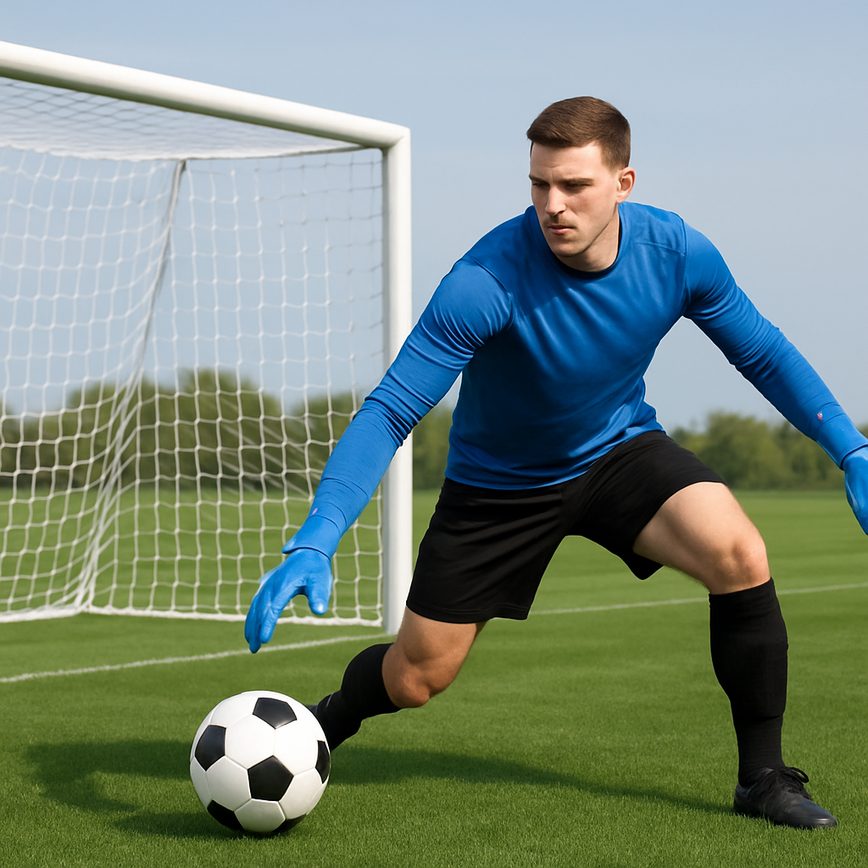
Another key strategy is to employ a counter-press immediately after losing possession, disrupting the opposition’s press and regaining control quickly. This constant counter-press makes it riskier for opponents to commit numbers forward and maintains the balance in midfield, helping to neutralize pressing threats.
Teams can also switch the point of attack rapidly, either by long diagonal balls or by playing out from the back using players who are comfortable receiving under pressure and capable of progressing play intelligently. Goalkeepers and defenders with composure and vision are paramount in these scenarios to maintain possession and launch attacks safely despite heavy pressure.
In summary, adapting to a high press involves patience, smart positioning, and tactical awareness to break the press and capitalize on opportunities, ensuring the team maintains control while playing out from the back.
Minimizing Errors and Risks
When playing out from the back, minimizing errors and managing risks are crucial to maintaining possession and building effective attacks. One practical tip is to focus on safe passing, which means selecting passing options that are less likely to be intercepted by opponents. This includes opting for short, controlled passes to teammates positioned in open spaces rather than attempting risky long balls under pressure.
Players should maintain constant communication and situational awareness to avoid unnecessary mistakes. By scanning the field and anticipating opponents’ movements, players can reduce the chance of possession loss. It’s essential to practice precise ball control and develop quick decision-making skills to react confidently under pressure.
A well-organized defensive shape also supports risk management. Defenders and midfielders must provide reliable passing outlets, enabling the team to retain the ball even in tight situations. Encouraging the goalkeeper to be an active participant in play by distributing the ball accurately helps to minimize errors in the buildup phase as well.
Finally, incorporating drills that simulate game scenarios and pressure situations during training will enhance players’ comfort levels when executing this style. This approach reduces errors, improves risk management, and ultimately helps maintain possession, allowing the team to control the game from the back with confidence.
One effective way to break the high press is by using quick, precise passing combined with movement off the ball. This creates passing lanes and forces the pressing team to shift, potentially opening up spaces previously closed. Utilizing wide players to stretch the opponents horizontally can also reduce the effectiveness of the press by pulling pressuring players out of their compact shape.
Another key strategy is to employ a counter-press immediately after losing possession, disrupting the opposition’s press and regaining control quickly. This constant counter-press makes it riskier for opponents to commit numbers forward and maintains the balance in midfield, helping to neutralize pressing threats.
Teams can also switch the point of attack rapidly, either by long diagonal balls or by playing out from the back using players who are comfortable receiving under pressure and capable of progressing play intelligently. Goalkeepers and defenders with composure and vision are paramount in these scenarios to maintain possession and launch attacks safely despite heavy pressure.
In summary, adapting to a high press involves patience, smart positioning, and tactical awareness to break the press and capitalize on opportunities, ensuring the team maintains control while playing out from the back.
Minimizing Errors and Risks
When playing out from the back, minimizing errors and managing risks are crucial to maintaining possession and building effective attacks. One practical tip is to focus on safe passing, which means selecting passing options that are less likely to be intercepted by opponents. This includes opting for short, controlled passes to teammates positioned in open spaces rather than attempting risky long balls under pressure.
Players should maintain constant communication and situational awareness to avoid unnecessary mistakes. By scanning the field and anticipating opponents’ movements, players can reduce the chance of possession loss. It’s essential to practice precise ball control and develop quick decision-making skills to react confidently under pressure.
A well-organized defensive shape also supports risk management. Defenders and midfielders must provide reliable passing outlets, enabling the team to retain the ball even in tight situations. Encouraging the goalkeeper to be an active participant in play by distributing the ball accurately helps to minimize errors in the buildup phase as well.
Finally, incorporating drills that simulate game scenarios and pressure situations during training will enhance players’ comfort levels when executing this style. This approach reduces errors, improves risk management, and ultimately helps maintain possession, allowing the team to control the game from the back with confidence.
One effective way to break the high press is by using quick, precise passing combined with movement off the ball. This creates passing lanes and forces the pressing team to shift, potentially opening up spaces previously closed. Utilizing wide players to stretch the opponents horizontally can also reduce the effectiveness of the press by pulling pressuring players out of their compact shape.
Another key strategy is to employ a counter-press immediately after losing possession, disrupting the opposition’s press and regaining control quickly. This constant counter-press makes it riskier for opponents to commit numbers forward and maintains the balance in midfield, helping to neutralize pressing threats.
Teams can also switch the point of attack rapidly, either by long diagonal balls or by playing out from the back using players who are comfortable receiving under pressure and capable of progressing play intelligently. Goalkeepers and defenders with composure and vision are paramount in these scenarios to maintain possession and launch attacks safely despite heavy pressure.
In summary, adapting to a high press involves patience, smart positioning, and tactical awareness to break the press and capitalize on opportunities, ensuring the team maintains control while playing out from the back.
Minimizing Errors and Risks
When playing out from the back, minimizing errors and managing risks are crucial to maintaining possession and building effective attacks. One practical tip is to focus on safe passing, which means selecting passing options that are less likely to be intercepted by opponents. This includes opting for short, controlled passes to teammates positioned in open spaces rather than attempting risky long balls under pressure.
Players should maintain constant communication and situational awareness to avoid unnecessary mistakes. By scanning the field and anticipating opponents’ movements, players can reduce the chance of possession loss. It’s essential to practice precise ball control and develop quick decision-making skills to react confidently under pressure.
A well-organized defensive shape also supports risk management. Defenders and midfielders must provide reliable passing outlets, enabling the team to retain the ball even in tight situations. Encouraging the goalkeeper to be an active participant in play by distributing the ball accurately helps to minimize errors in the buildup phase as well.
Finally, incorporating drills that simulate game scenarios and pressure situations during training will enhance players’ comfort levels when executing this style. This approach reduces errors, improves risk management, and ultimately helps maintain possession, allowing the team to control the game from the back with confidence.
Understanding Playing Out from the Back
Playing out from the back is a fundamental soccer strategy that involves the goalkeeper and defenders initiating attack plays by maintaining possession and carefully progressing the ball upfield. Instead of launching long balls up the pitch or clearing under pressure, teams that employ this tactic focus on controlled build-up play starting from their defensive third. This approach demands technical skill, composure, and excellent communication among defenders and midfielders to evade the opposing team’s pressure and create meaningful attacking opportunities.
The significance of playing out from the back lies in its ability to reshape defensive tactics by transforming the backline from a purely defensive unit into a key part of attacking transitions. By involving defenders in the build-up, teams can better control the tempo of the game and reduce the risk of turnovers in dangerous areas. Moreover, this strategy helps in drawing opponents out of position, opening spaces in midfield and attack for creative players to exploit, thereby enhancing overall team cohesion and attacking fluidity.
In terms of overall team strategy, playing out from the back impacts how a team structures its formation and movement on the field. Teams often position fullbacks and center-backs with the ability to pass accurately and carry the ball forward when necessary. Midfielders play a crucial role as outlets receiving short passes and facilitating transitions to advanced positions. Defensively, this approach requires a disciplined pressing system to recover possession quickly if the build-up play is disrupted, making it a balance between patience in ball handling and urgency in defensive response.
Adopting playing out from the back as a core tactic can elevate a team’s playing style by promoting possession-based soccer and reducing reliance on chance or counter-attacks. It encourages players to develop technical skills and tactical awareness while forcing opponents to adjust their defensive strategies in response. Successful implementation of this soccer strategy often distinguishes teams that control matches and dictate play from those that rely purely on reactive or physical approaches.
Definition and Importance
Playing out from the back is a fundamental soccer tactic that involves a team building their attack starting from the defensive zone, typically involving the goalkeeper and defenders initiating precise and controlled passes. This approach contrasts with simply clearing the ball long to midfield or forward players. The primary goal of playing out from the back is to maintain possession, control the tempo of the game, and strategically advance the ball upfield through coordinated, short passes.
The importance of this tactic for modern football teams cannot be overstated. It allows teams to bypass high pressing opponents by carefully navigating out of defensive pressure, reducing the risk of losing possession in dangerous areas. Moreover, by effectively playing out from the back, teams can create more structured and fluid attacks, as it encourages defenders and midfielders to be actively involved in the buildup phase. This style demands technical skill, composure, and tactical awareness from players, making it a hallmark of possession-based and progressive football teams.
In essence, the definition and importance of playing out from the back highlight its role in enabling teams to maintain control, resist opposition pressure, and implement sophisticated soccer tactics that ultimately enhance their competitive edge in modern football.
Benefits of Playing Out from the Back
Playing out from the back offers several key benefits that significantly contribute to a team’s overall performance. One of the primary advantages is maintaining possession. By carefully building play from the defensive line, teams can keep control of the ball, reducing the risk of turnovers in dangerous areas. This possession-based approach allows players to find passing options and create attacking opportunities with greater calm and precision.
Another important benefit is relieving pressure. When a team is under intense opposition press, playing out from the back can help ease this burden by moving the ball strategically through defenders and midfielders. This tactic disrupts the opposition’s pressing structure and gives the defending team more time to organize and find openings in the opponent’s formation.
Furthermore, playing out from the back enables a team to control the pace of the game. By dictating the tempo, the team can slow down or accelerate play according to the match situation, maintaining tactical flexibility. Controlling the pace also allows the team to conserve energy and manage the flow of the game more effectively. Overall, these benefits highlight how playing out from the back is essential for teams aiming to dominate possession, relieve pressure, and exercise control over the match dynamics.
Techniques and Tactical Approaches
Playing out from the back requires a blend of precise techniques and well-organized tactical approaches to maintain possession and build attacks methodically. One of the fundamental techniques includes short, accurate passing patterns that help players evade high pressing opponents. Goalkeepers and defenders often initiate play with simple passes to nearby teammates, emphasizing calmness under pressure and spatial awareness. Mastering these passing patterns allows teams to control the tempo and invite opponents to move out of position.
Tactically, teams adopt specific formations and roles that facilitate playing out from the back effectively. Central defenders usually split wide to create passing lanes, while full-backs push up to offer wide outlets. Midfielders dropping deep provide additional passing options, creating triangles and diamonds in the defensive third. This spatial structure forces opposing forwards to stretch, leaving gaps that can be exploited with quick, incisive passes.
Player roles within these tactical setups are crucial. The goalkeeper acts not only as a shot-stopper but also as an essential playmaker, capable of delivering long or short passes to initiate attack phases. Central defenders need both composure and technical skill to distribute the ball properly or carry it forward when space permits. Meanwhile, defensive midfielders contribute by offering themselves as safe outlets and progressing the ball through the lines.
Some teams employ a progressive build-up strategy, using deliberate passing sequences that gradually move the ball from the back into midfield zones before launching more direct attacks. Others favor quick transitions with fewer touches, exploiting the momentary disorganization of the opponent’s press. Both approaches rely heavily on communication and understanding of each player’s role and positioning to maintain cohesion.
Overall, the combination of precise techniques, like well-executed passing patterns, and thoughtful tactical approaches that emphasize strategic player roles, enables teams to play out from the back successfully. When executed well, these elements give teams control over possession, reduce risks of turnovers, and serve as a strong foundation for constructing offensive moves.
Role of Goalkeepers and Defenders
In the tactical approach of playing from the back, the role of the goalkeeper and defenders is fundamental. The goalkeeper is not just a last line of defense but the first initiator of attacks. With precise ball distribution, the goalkeeper sets the tempo and direction of play, often opting for short, controlled passes to defenders rather than long clearances. This careful positioning and vision allow the team to retain possession and build up play smoothly from their own half.
Defenders complement this effort by maintaining strategic positioning that offers multiple passing options, both laterally and forward. Center-backs are crucial in reading the game and providing safe outlets for the goalkeeper, while full-backs push wider to stretch the opposition, creating space for constructive plays. Their ability to execute accurate and timely passes under pressure ensures fluid movement and minimizes turnovers.
Strong communication and composure are essential traits for both goalkeepers and defenders when playing from the back. Their combined skills in positioning and ball distribution not only fortify the team’s defensive structure but also enable the seamless transition from defense to attack. This coordination is the cornerstone of modern football strategies emphasizing possession and control starting right from the goalkeeper’s role through to the defensive line.
Passing Patterns and Movement
Effective progression from defense to attack relies heavily on well-practiced passing patterns combined with intelligent off-the-ball movement. These elements allow teams to maintain possession while gradually advancing the ball upfield in a controlled manner. Triangles are a fundamental concept, creating natural passing lanes and providing multiple options for the player in possession. By positioning themselves to form triangles, players enhance support play, ensuring that the ball carrier rarely faces pressure without a passing outlet.
Common passing patterns include short, quick passes that move the ball across the defensive line and midfield, breaking the opponents’ pressing structure. Off-the-ball movement complements these patterns as players constantly reposition to receive the ball in spaces where they can turn or distribute forward effectively. This dynamic movement not only opens up angles for passing but also disrupts defensive marking, creating opportunities to bypass the first line of pressure.
Support play is crucial throughout this process; teammates must time their runs and adjustments to remain options for the ball carrier. Coordinated off-the-ball runs behind the defensive line can add an extra dimension, enabling more direct attacking passes when the team is ready to accelerate their forward momentum. Together, passing patterns and off-the-ball movement build the foundation for a smooth transition from defense to attack, increasing chances of retaining possession and creating scoring opportunities.
Challenges and How to Overcome Them
Playing out from the back is a tactical approach that comes with several challenges that teams must manage carefully. One of the primary difficulties is dealing with pressing teams who apply immediate pressure on defenders, aiming to force mistakes and regain possession quickly. This intense pressure increases the risk for defenders, who must maintain composure and make precise decisions under duress to avoid costly errors.
Another significant challenge is risk management. Teams must balance the desire to build attacks methodically from the back with the need to stay secure defensively. Poor execution or miscommunication during this phase can lead to turnovers in dangerous areas, often resulting in scoring opportunities for the opposition. Teams need to train extensively to develop clear passing lanes and support structures that minimize these risks.
Mistakes, such as misplaced passes or poor ball control, are common when under heavy pressure. This can undermine confidence and disrupt team rhythm. To overcome this, teams implement strategies like shortening passing options, involving midfielders dropping deeper, or switching play quickly to avoid predictable patterns. Good goalkeepers also play a crucial role in organizing the defense and acting as a final safe outlet.
Effective overcoming of these challenges involves a combination of tactical awareness, technical skills, and team cohesion. Coaches often emphasize patience and composure, encouraging players to trust their technique and decision-making processes. Teams also invest time in practicing situational drills to simulate pressing scenarios and improve their reaction to pressure.
In addition, many teams adopt a proactive approach to risk management by integrating a variety of passing options and encouraging off-the-ball movement to create space. This disrupts the pressing team’s shape and creates opportunities to bypass their initial line of pressure. Communication, both verbal and non-verbal, is another key element in coordinating effective play out from the back under pressure.
In summary, the main challenges when playing out from the back include managing the pressing intensity of opponents, minimizing mistakes, and effectively balancing risk. Overcoming these obstacles requires a strategic combination of technical training, tactical planning, and clear communication, enabling teams to maintain possession and build attacks safely from their defensive third.
Dealing with High Press
When facing teams that employ a high press to disrupt playing out from the back, it is crucial to adapt tactics that can effectively counter the pressure. The first step is to recognize the intensity and organization of the opponent’s press, allowing the team to anticipate and prepare for moments of vulnerability under pressure.
One effective way to break the high press is by using quick, precise passing combined with movement off the ball. This creates passing lanes and forces the pressing team to shift, potentially opening up spaces previously closed. Utilizing wide players to stretch the opponents horizontally can also reduce the effectiveness of the press by pulling pressuring players out of their compact shape.
Another key strategy is to employ a counter-press immediately after losing possession, disrupting the opposition’s press and regaining control quickly. This constant counter-press makes it riskier for opponents to commit numbers forward and maintains the balance in midfield, helping to neutralize pressing threats.
Teams can also switch the point of attack rapidly, either by long diagonal balls or by playing out from the back using players who are comfortable receiving under pressure and capable of progressing play intelligently. Goalkeepers and defenders with composure and vision are paramount in these scenarios to maintain possession and launch attacks safely despite heavy pressure.
In summary, adapting to a high press involves patience, smart positioning, and tactical awareness to break the press and capitalize on opportunities, ensuring the team maintains control while playing out from the back.
Minimizing Errors and Risks
When playing out from the back, minimizing errors and managing risks are crucial to maintaining possession and building effective attacks. One practical tip is to focus on safe passing, which means selecting passing options that are less likely to be intercepted by opponents. This includes opting for short, controlled passes to teammates positioned in open spaces rather than attempting risky long balls under pressure.
Players should maintain constant communication and situational awareness to avoid unnecessary mistakes. By scanning the field and anticipating opponents’ movements, players can reduce the chance of possession loss. It’s essential to practice precise ball control and develop quick decision-making skills to react confidently under pressure.
A well-organized defensive shape also supports risk management. Defenders and midfielders must provide reliable passing outlets, enabling the team to retain the ball even in tight situations. Encouraging the goalkeeper to be an active participant in play by distributing the ball accurately helps to minimize errors in the buildup phase as well.
Finally, incorporating drills that simulate game scenarios and pressure situations during training will enhance players’ comfort levels when executing this style. This approach reduces errors, improves risk management, and ultimately helps maintain possession, allowing the team to control the game from the back with confidence.
One effective way to break the high press is by using quick, precise passing combined with movement off the ball. This creates passing lanes and forces the pressing team to shift, potentially opening up spaces previously closed. Utilizing wide players to stretch the opponents horizontally can also reduce the effectiveness of the press by pulling pressuring players out of their compact shape.
Another key strategy is to employ a counter-press immediately after losing possession, disrupting the opposition’s press and regaining control quickly. This constant counter-press makes it riskier for opponents to commit numbers forward and maintains the balance in midfield, helping to neutralize pressing threats.
Teams can also switch the point of attack rapidly, either by long diagonal balls or by playing out from the back using players who are comfortable receiving under pressure and capable of progressing play intelligently. Goalkeepers and defenders with composure and vision are paramount in these scenarios to maintain possession and launch attacks safely despite heavy pressure.
In summary, adapting to a high press involves patience, smart positioning, and tactical awareness to break the press and capitalize on opportunities, ensuring the team maintains control while playing out from the back.
Minimizing Errors and Risks
When playing out from the back, minimizing errors and managing risks are crucial to maintaining possession and building effective attacks. One practical tip is to focus on safe passing, which means selecting passing options that are less likely to be intercepted by opponents. This includes opting for short, controlled passes to teammates positioned in open spaces rather than attempting risky long balls under pressure.
Players should maintain constant communication and situational awareness to avoid unnecessary mistakes. By scanning the field and anticipating opponents’ movements, players can reduce the chance of possession loss. It’s essential to practice precise ball control and develop quick decision-making skills to react confidently under pressure.
A well-organized defensive shape also supports risk management. Defenders and midfielders must provide reliable passing outlets, enabling the team to retain the ball even in tight situations. Encouraging the goalkeeper to be an active participant in play by distributing the ball accurately helps to minimize errors in the buildup phase as well.
Finally, incorporating drills that simulate game scenarios and pressure situations during training will enhance players’ comfort levels when executing this style. This approach reduces errors, improves risk management, and ultimately helps maintain possession, allowing the team to control the game from the back with confidence.
Understanding Playing Out from the Back
Playing out from the back is a fundamental soccer strategy that involves the goalkeeper and defenders initiating attack plays by maintaining possession and carefully progressing the ball upfield. Instead of launching long balls up the pitch or clearing under pressure, teams that employ this tactic focus on controlled build-up play starting from their defensive third. This approach demands technical skill, composure, and excellent communication among defenders and midfielders to evade the opposing team’s pressure and create meaningful attacking opportunities.
The significance of playing out from the back lies in its ability to reshape defensive tactics by transforming the backline from a purely defensive unit into a key part of attacking transitions. By involving defenders in the build-up, teams can better control the tempo of the game and reduce the risk of turnovers in dangerous areas. Moreover, this strategy helps in drawing opponents out of position, opening spaces in midfield and attack for creative players to exploit, thereby enhancing overall team cohesion and attacking fluidity.
In terms of overall team strategy, playing out from the back impacts how a team structures its formation and movement on the field. Teams often position fullbacks and center-backs with the ability to pass accurately and carry the ball forward when necessary. Midfielders play a crucial role as outlets receiving short passes and facilitating transitions to advanced positions. Defensively, this approach requires a disciplined pressing system to recover possession quickly if the build-up play is disrupted, making it a balance between patience in ball handling and urgency in defensive response.
Adopting playing out from the back as a core tactic can elevate a team’s playing style by promoting possession-based soccer and reducing reliance on chance or counter-attacks. It encourages players to develop technical skills and tactical awareness while forcing opponents to adjust their defensive strategies in response. Successful implementation of this soccer strategy often distinguishes teams that control matches and dictate play from those that rely purely on reactive or physical approaches.
Definition and Importance
Playing out from the back is a fundamental soccer tactic that involves a team building their attack starting from the defensive zone, typically involving the goalkeeper and defenders initiating precise and controlled passes. This approach contrasts with simply clearing the ball long to midfield or forward players. The primary goal of playing out from the back is to maintain possession, control the tempo of the game, and strategically advance the ball upfield through coordinated, short passes.
The importance of this tactic for modern football teams cannot be overstated. It allows teams to bypass high pressing opponents by carefully navigating out of defensive pressure, reducing the risk of losing possession in dangerous areas. Moreover, by effectively playing out from the back, teams can create more structured and fluid attacks, as it encourages defenders and midfielders to be actively involved in the buildup phase. This style demands technical skill, composure, and tactical awareness from players, making it a hallmark of possession-based and progressive football teams.
In essence, the definition and importance of playing out from the back highlight its role in enabling teams to maintain control, resist opposition pressure, and implement sophisticated soccer tactics that ultimately enhance their competitive edge in modern football.
Benefits of Playing Out from the Back
Playing out from the back offers several key benefits that significantly contribute to a team’s overall performance. One of the primary advantages is maintaining possession. By carefully building play from the defensive line, teams can keep control of the ball, reducing the risk of turnovers in dangerous areas. This possession-based approach allows players to find passing options and create attacking opportunities with greater calm and precision.
Another important benefit is relieving pressure. When a team is under intense opposition press, playing out from the back can help ease this burden by moving the ball strategically through defenders and midfielders. This tactic disrupts the opposition’s pressing structure and gives the defending team more time to organize and find openings in the opponent’s formation.
Furthermore, playing out from the back enables a team to control the pace of the game. By dictating the tempo, the team can slow down or accelerate play according to the match situation, maintaining tactical flexibility. Controlling the pace also allows the team to conserve energy and manage the flow of the game more effectively. Overall, these benefits highlight how playing out from the back is essential for teams aiming to dominate possession, relieve pressure, and exercise control over the match dynamics.
Techniques and Tactical Approaches
Playing out from the back requires a blend of precise techniques and well-organized tactical approaches to maintain possession and build attacks methodically. One of the fundamental techniques includes short, accurate passing patterns that help players evade high pressing opponents. Goalkeepers and defenders often initiate play with simple passes to nearby teammates, emphasizing calmness under pressure and spatial awareness. Mastering these passing patterns allows teams to control the tempo and invite opponents to move out of position.
Tactically, teams adopt specific formations and roles that facilitate playing out from the back effectively. Central defenders usually split wide to create passing lanes, while full-backs push up to offer wide outlets. Midfielders dropping deep provide additional passing options, creating triangles and diamonds in the defensive third. This spatial structure forces opposing forwards to stretch, leaving gaps that can be exploited with quick, incisive passes.
Player roles within these tactical setups are crucial. The goalkeeper acts not only as a shot-stopper but also as an essential playmaker, capable of delivering long or short passes to initiate attack phases. Central defenders need both composure and technical skill to distribute the ball properly or carry it forward when space permits. Meanwhile, defensive midfielders contribute by offering themselves as safe outlets and progressing the ball through the lines.
Some teams employ a progressive build-up strategy, using deliberate passing sequences that gradually move the ball from the back into midfield zones before launching more direct attacks. Others favor quick transitions with fewer touches, exploiting the momentary disorganization of the opponent’s press. Both approaches rely heavily on communication and understanding of each player’s role and positioning to maintain cohesion.
Overall, the combination of precise techniques, like well-executed passing patterns, and thoughtful tactical approaches that emphasize strategic player roles, enables teams to play out from the back successfully. When executed well, these elements give teams control over possession, reduce risks of turnovers, and serve as a strong foundation for constructing offensive moves.
Role of Goalkeepers and Defenders
In the tactical approach of playing from the back, the role of the goalkeeper and defenders is fundamental. The goalkeeper is not just a last line of defense but the first initiator of attacks. With precise ball distribution, the goalkeeper sets the tempo and direction of play, often opting for short, controlled passes to defenders rather than long clearances. This careful positioning and vision allow the team to retain possession and build up play smoothly from their own half.
Defenders complement this effort by maintaining strategic positioning that offers multiple passing options, both laterally and forward. Center-backs are crucial in reading the game and providing safe outlets for the goalkeeper, while full-backs push wider to stretch the opposition, creating space for constructive plays. Their ability to execute accurate and timely passes under pressure ensures fluid movement and minimizes turnovers.
Strong communication and composure are essential traits for both goalkeepers and defenders when playing from the back. Their combined skills in positioning and ball distribution not only fortify the team’s defensive structure but also enable the seamless transition from defense to attack. This coordination is the cornerstone of modern football strategies emphasizing possession and control starting right from the goalkeeper’s role through to the defensive line.
Passing Patterns and Movement
Effective progression from defense to attack relies heavily on well-practiced passing patterns combined with intelligent off-the-ball movement. These elements allow teams to maintain possession while gradually advancing the ball upfield in a controlled manner. Triangles are a fundamental concept, creating natural passing lanes and providing multiple options for the player in possession. By positioning themselves to form triangles, players enhance support play, ensuring that the ball carrier rarely faces pressure without a passing outlet.
Common passing patterns include short, quick passes that move the ball across the defensive line and midfield, breaking the opponents’ pressing structure. Off-the-ball movement complements these patterns as players constantly reposition to receive the ball in spaces where they can turn or distribute forward effectively. This dynamic movement not only opens up angles for passing but also disrupts defensive marking, creating opportunities to bypass the first line of pressure.
Support play is crucial throughout this process; teammates must time their runs and adjustments to remain options for the ball carrier. Coordinated off-the-ball runs behind the defensive line can add an extra dimension, enabling more direct attacking passes when the team is ready to accelerate their forward momentum. Together, passing patterns and off-the-ball movement build the foundation for a smooth transition from defense to attack, increasing chances of retaining possession and creating scoring opportunities.
Challenges and How to Overcome Them
Playing out from the back is a tactical approach that comes with several challenges that teams must manage carefully. One of the primary difficulties is dealing with pressing teams who apply immediate pressure on defenders, aiming to force mistakes and regain possession quickly. This intense pressure increases the risk for defenders, who must maintain composure and make precise decisions under duress to avoid costly errors.
Another significant challenge is risk management. Teams must balance the desire to build attacks methodically from the back with the need to stay secure defensively. Poor execution or miscommunication during this phase can lead to turnovers in dangerous areas, often resulting in scoring opportunities for the opposition. Teams need to train extensively to develop clear passing lanes and support structures that minimize these risks.
Mistakes, such as misplaced passes or poor ball control, are common when under heavy pressure. This can undermine confidence and disrupt team rhythm. To overcome this, teams implement strategies like shortening passing options, involving midfielders dropping deeper, or switching play quickly to avoid predictable patterns. Good goalkeepers also play a crucial role in organizing the defense and acting as a final safe outlet.
Effective overcoming of these challenges involves a combination of tactical awareness, technical skills, and team cohesion. Coaches often emphasize patience and composure, encouraging players to trust their technique and decision-making processes. Teams also invest time in practicing situational drills to simulate pressing scenarios and improve their reaction to pressure.
In addition, many teams adopt a proactive approach to risk management by integrating a variety of passing options and encouraging off-the-ball movement to create space. This disrupts the pressing team’s shape and creates opportunities to bypass their initial line of pressure. Communication, both verbal and non-verbal, is another key element in coordinating effective play out from the back under pressure.
In summary, the main challenges when playing out from the back include managing the pressing intensity of opponents, minimizing mistakes, and effectively balancing risk. Overcoming these obstacles requires a strategic combination of technical training, tactical planning, and clear communication, enabling teams to maintain possession and build attacks safely from their defensive third.
Dealing with High Press
When facing teams that employ a high press to disrupt playing out from the back, it is crucial to adapt tactics that can effectively counter the pressure. The first step is to recognize the intensity and organization of the opponent’s press, allowing the team to anticipate and prepare for moments of vulnerability under pressure.
One effective way to break the high press is by using quick, precise passing combined with movement off the ball. This creates passing lanes and forces the pressing team to shift, potentially opening up spaces previously closed. Utilizing wide players to stretch the opponents horizontally can also reduce the effectiveness of the press by pulling pressuring players out of their compact shape.
Another key strategy is to employ a counter-press immediately after losing possession, disrupting the opposition’s press and regaining control quickly. This constant counter-press makes it riskier for opponents to commit numbers forward and maintains the balance in midfield, helping to neutralize pressing threats.
Teams can also switch the point of attack rapidly, either by long diagonal balls or by playing out from the back using players who are comfortable receiving under pressure and capable of progressing play intelligently. Goalkeepers and defenders with composure and vision are paramount in these scenarios to maintain possession and launch attacks safely despite heavy pressure.
In summary, adapting to a high press involves patience, smart positioning, and tactical awareness to break the press and capitalize on opportunities, ensuring the team maintains control while playing out from the back.
Minimizing Errors and Risks
When playing out from the back, minimizing errors and managing risks are crucial to maintaining possession and building effective attacks. One practical tip is to focus on safe passing, which means selecting passing options that are less likely to be intercepted by opponents. This includes opting for short, controlled passes to teammates positioned in open spaces rather than attempting risky long balls under pressure.
Players should maintain constant communication and situational awareness to avoid unnecessary mistakes. By scanning the field and anticipating opponents’ movements, players can reduce the chance of possession loss. It’s essential to practice precise ball control and develop quick decision-making skills to react confidently under pressure.
A well-organized defensive shape also supports risk management. Defenders and midfielders must provide reliable passing outlets, enabling the team to retain the ball even in tight situations. Encouraging the goalkeeper to be an active participant in play by distributing the ball accurately helps to minimize errors in the buildup phase as well.
Finally, incorporating drills that simulate game scenarios and pressure situations during training will enhance players’ comfort levels when executing this style. This approach reduces errors, improves risk management, and ultimately helps maintain possession, allowing the team to control the game from the back with confidence.
One effective way to break the high press is by using quick, precise passing combined with movement off the ball. This creates passing lanes and forces the pressing team to shift, potentially opening up spaces previously closed. Utilizing wide players to stretch the opponents horizontally can also reduce the effectiveness of the press by pulling pressuring players out of their compact shape.
Another key strategy is to employ a counter-press immediately after losing possession, disrupting the opposition’s press and regaining control quickly. This constant counter-press makes it riskier for opponents to commit numbers forward and maintains the balance in midfield, helping to neutralize pressing threats.
Teams can also switch the point of attack rapidly, either by long diagonal balls or by playing out from the back using players who are comfortable receiving under pressure and capable of progressing play intelligently. Goalkeepers and defenders with composure and vision are paramount in these scenarios to maintain possession and launch attacks safely despite heavy pressure.
In summary, adapting to a high press involves patience, smart positioning, and tactical awareness to break the press and capitalize on opportunities, ensuring the team maintains control while playing out from the back.
Minimizing Errors and Risks
When playing out from the back, minimizing errors and managing risks are crucial to maintaining possession and building effective attacks. One practical tip is to focus on safe passing, which means selecting passing options that are less likely to be intercepted by opponents. This includes opting for short, controlled passes to teammates positioned in open spaces rather than attempting risky long balls under pressure.
Players should maintain constant communication and situational awareness to avoid unnecessary mistakes. By scanning the field and anticipating opponents’ movements, players can reduce the chance of possession loss. It’s essential to practice precise ball control and develop quick decision-making skills to react confidently under pressure.
A well-organized defensive shape also supports risk management. Defenders and midfielders must provide reliable passing outlets, enabling the team to retain the ball even in tight situations. Encouraging the goalkeeper to be an active participant in play by distributing the ball accurately helps to minimize errors in the buildup phase as well.
Finally, incorporating drills that simulate game scenarios and pressure situations during training will enhance players’ comfort levels when executing this style. This approach reduces errors, improves risk management, and ultimately helps maintain possession, allowing the team to control the game from the back with confidence.
Understanding Playing Out from the Back
Playing out from the back is a fundamental soccer strategy that involves the goalkeeper and defenders initiating attack plays by maintaining possession and carefully progressing the ball upfield. Instead of launching long balls up the pitch or clearing under pressure, teams that employ this tactic focus on controlled build-up play starting from their defensive third. This approach demands technical skill, composure, and excellent communication among defenders and midfielders to evade the opposing team’s pressure and create meaningful attacking opportunities.
The significance of playing out from the back lies in its ability to reshape defensive tactics by transforming the backline from a purely defensive unit into a key part of attacking transitions. By involving defenders in the build-up, teams can better control the tempo of the game and reduce the risk of turnovers in dangerous areas. Moreover, this strategy helps in drawing opponents out of position, opening spaces in midfield and attack for creative players to exploit, thereby enhancing overall team cohesion and attacking fluidity.
In terms of overall team strategy, playing out from the back impacts how a team structures its formation and movement on the field. Teams often position fullbacks and center-backs with the ability to pass accurately and carry the ball forward when necessary. Midfielders play a crucial role as outlets receiving short passes and facilitating transitions to advanced positions. Defensively, this approach requires a disciplined pressing system to recover possession quickly if the build-up play is disrupted, making it a balance between patience in ball handling and urgency in defensive response.
Adopting playing out from the back as a core tactic can elevate a team’s playing style by promoting possession-based soccer and reducing reliance on chance or counter-attacks. It encourages players to develop technical skills and tactical awareness while forcing opponents to adjust their defensive strategies in response. Successful implementation of this soccer strategy often distinguishes teams that control matches and dictate play from those that rely purely on reactive or physical approaches.
Definition and Importance
Playing out from the back is a fundamental soccer tactic that involves a team building their attack starting from the defensive zone, typically involving the goalkeeper and defenders initiating precise and controlled passes. This approach contrasts with simply clearing the ball long to midfield or forward players. The primary goal of playing out from the back is to maintain possession, control the tempo of the game, and strategically advance the ball upfield through coordinated, short passes.
The importance of this tactic for modern football teams cannot be overstated. It allows teams to bypass high pressing opponents by carefully navigating out of defensive pressure, reducing the risk of losing possession in dangerous areas. Moreover, by effectively playing out from the back, teams can create more structured and fluid attacks, as it encourages defenders and midfielders to be actively involved in the buildup phase. This style demands technical skill, composure, and tactical awareness from players, making it a hallmark of possession-based and progressive football teams.
In essence, the definition and importance of playing out from the back highlight its role in enabling teams to maintain control, resist opposition pressure, and implement sophisticated soccer tactics that ultimately enhance their competitive edge in modern football.
Benefits of Playing Out from the Back
Playing out from the back offers several key benefits that significantly contribute to a team’s overall performance. One of the primary advantages is maintaining possession. By carefully building play from the defensive line, teams can keep control of the ball, reducing the risk of turnovers in dangerous areas. This possession-based approach allows players to find passing options and create attacking opportunities with greater calm and precision.
Another important benefit is relieving pressure. When a team is under intense opposition press, playing out from the back can help ease this burden by moving the ball strategically through defenders and midfielders. This tactic disrupts the opposition’s pressing structure and gives the defending team more time to organize and find openings in the opponent’s formation.
Furthermore, playing out from the back enables a team to control the pace of the game. By dictating the tempo, the team can slow down or accelerate play according to the match situation, maintaining tactical flexibility. Controlling the pace also allows the team to conserve energy and manage the flow of the game more effectively. Overall, these benefits highlight how playing out from the back is essential for teams aiming to dominate possession, relieve pressure, and exercise control over the match dynamics.
Techniques and Tactical Approaches
Playing out from the back requires a blend of precise techniques and well-organized tactical approaches to maintain possession and build attacks methodically. One of the fundamental techniques includes short, accurate passing patterns that help players evade high pressing opponents. Goalkeepers and defenders often initiate play with simple passes to nearby teammates, emphasizing calmness under pressure and spatial awareness. Mastering these passing patterns allows teams to control the tempo and invite opponents to move out of position.
Tactically, teams adopt specific formations and roles that facilitate playing out from the back effectively. Central defenders usually split wide to create passing lanes, while full-backs push up to offer wide outlets. Midfielders dropping deep provide additional passing options, creating triangles and diamonds in the defensive third. This spatial structure forces opposing forwards to stretch, leaving gaps that can be exploited with quick, incisive passes.
Player roles within these tactical setups are crucial. The goalkeeper acts not only as a shot-stopper but also as an essential playmaker, capable of delivering long or short passes to initiate attack phases. Central defenders need both composure and technical skill to distribute the ball properly or carry it forward when space permits. Meanwhile, defensive midfielders contribute by offering themselves as safe outlets and progressing the ball through the lines.
Some teams employ a progressive build-up strategy, using deliberate passing sequences that gradually move the ball from the back into midfield zones before launching more direct attacks. Others favor quick transitions with fewer touches, exploiting the momentary disorganization of the opponent’s press. Both approaches rely heavily on communication and understanding of each player’s role and positioning to maintain cohesion.
Overall, the combination of precise techniques, like well-executed passing patterns, and thoughtful tactical approaches that emphasize strategic player roles, enables teams to play out from the back successfully. When executed well, these elements give teams control over possession, reduce risks of turnovers, and serve as a strong foundation for constructing offensive moves.
Role of Goalkeepers and Defenders
In the tactical approach of playing from the back, the role of the goalkeeper and defenders is fundamental. The goalkeeper is not just a last line of defense but the first initiator of attacks. With precise ball distribution, the goalkeeper sets the tempo and direction of play, often opting for short, controlled passes to defenders rather than long clearances. This careful positioning and vision allow the team to retain possession and build up play smoothly from their own half.
Defenders complement this effort by maintaining strategic positioning that offers multiple passing options, both laterally and forward. Center-backs are crucial in reading the game and providing safe outlets for the goalkeeper, while full-backs push wider to stretch the opposition, creating space for constructive plays. Their ability to execute accurate and timely passes under pressure ensures fluid movement and minimizes turnovers.
Strong communication and composure are essential traits for both goalkeepers and defenders when playing from the back. Their combined skills in positioning and ball distribution not only fortify the team’s defensive structure but also enable the seamless transition from defense to attack. This coordination is the cornerstone of modern football strategies emphasizing possession and control starting right from the goalkeeper’s role through to the defensive line.
Passing Patterns and Movement
Effective progression from defense to attack relies heavily on well-practiced passing patterns combined with intelligent off-the-ball movement. These elements allow teams to maintain possession while gradually advancing the ball upfield in a controlled manner. Triangles are a fundamental concept, creating natural passing lanes and providing multiple options for the player in possession. By positioning themselves to form triangles, players enhance support play, ensuring that the ball carrier rarely faces pressure without a passing outlet.
Common passing patterns include short, quick passes that move the ball across the defensive line and midfield, breaking the opponents’ pressing structure. Off-the-ball movement complements these patterns as players constantly reposition to receive the ball in spaces where they can turn or distribute forward effectively. This dynamic movement not only opens up angles for passing but also disrupts defensive marking, creating opportunities to bypass the first line of pressure.
Support play is crucial throughout this process; teammates must time their runs and adjustments to remain options for the ball carrier. Coordinated off-the-ball runs behind the defensive line can add an extra dimension, enabling more direct attacking passes when the team is ready to accelerate their forward momentum. Together, passing patterns and off-the-ball movement build the foundation for a smooth transition from defense to attack, increasing chances of retaining possession and creating scoring opportunities.
Challenges and How to Overcome Them
Playing out from the back is a tactical approach that comes with several challenges that teams must manage carefully. One of the primary difficulties is dealing with pressing teams who apply immediate pressure on defenders, aiming to force mistakes and regain possession quickly. This intense pressure increases the risk for defenders, who must maintain composure and make precise decisions under duress to avoid costly errors.
Another significant challenge is risk management. Teams must balance the desire to build attacks methodically from the back with the need to stay secure defensively. Poor execution or miscommunication during this phase can lead to turnovers in dangerous areas, often resulting in scoring opportunities for the opposition. Teams need to train extensively to develop clear passing lanes and support structures that minimize these risks.
Mistakes, such as misplaced passes or poor ball control, are common when under heavy pressure. This can undermine confidence and disrupt team rhythm. To overcome this, teams implement strategies like shortening passing options, involving midfielders dropping deeper, or switching play quickly to avoid predictable patterns. Good goalkeepers also play a crucial role in organizing the defense and acting as a final safe outlet.
Effective overcoming of these challenges involves a combination of tactical awareness, technical skills, and team cohesion. Coaches often emphasize patience and composure, encouraging players to trust their technique and decision-making processes. Teams also invest time in practicing situational drills to simulate pressing scenarios and improve their reaction to pressure.
In addition, many teams adopt a proactive approach to risk management by integrating a variety of passing options and encouraging off-the-ball movement to create space. This disrupts the pressing team’s shape and creates opportunities to bypass their initial line of pressure. Communication, both verbal and non-verbal, is another key element in coordinating effective play out from the back under pressure.
In summary, the main challenges when playing out from the back include managing the pressing intensity of opponents, minimizing mistakes, and effectively balancing risk. Overcoming these obstacles requires a strategic combination of technical training, tactical planning, and clear communication, enabling teams to maintain possession and build attacks safely from their defensive third.
Dealing with High Press
When facing teams that employ a high press to disrupt playing out from the back, it is crucial to adapt tactics that can effectively counter the pressure. The first step is to recognize the intensity and organization of the opponent’s press, allowing the team to anticipate and prepare for moments of vulnerability under pressure.
One effective way to break the high press is by using quick, precise passing combined with movement off the ball. This creates passing lanes and forces the pressing team to shift, potentially opening up spaces previously closed. Utilizing wide players to stretch the opponents horizontally can also reduce the effectiveness of the press by pulling pressuring players out of their compact shape.
Another key strategy is to employ a counter-press immediately after losing possession, disrupting the opposition’s press and regaining control quickly. This constant counter-press makes it riskier for opponents to commit numbers forward and maintains the balance in midfield, helping to neutralize pressing threats.
Teams can also switch the point of attack rapidly, either by long diagonal balls or by playing out from the back using players who are comfortable receiving under pressure and capable of progressing play intelligently. Goalkeepers and defenders with composure and vision are paramount in these scenarios to maintain possession and launch attacks safely despite heavy pressure.
In summary, adapting to a high press involves patience, smart positioning, and tactical awareness to break the press and capitalize on opportunities, ensuring the team maintains control while playing out from the back.
Minimizing Errors and Risks
When playing out from the back, minimizing errors and managing risks are crucial to maintaining possession and building effective attacks. One practical tip is to focus on safe passing, which means selecting passing options that are less likely to be intercepted by opponents. This includes opting for short, controlled passes to teammates positioned in open spaces rather than attempting risky long balls under pressure.
Players should maintain constant communication and situational awareness to avoid unnecessary mistakes. By scanning the field and anticipating opponents’ movements, players can reduce the chance of possession loss. It’s essential to practice precise ball control and develop quick decision-making skills to react confidently under pressure.
A well-organized defensive shape also supports risk management. Defenders and midfielders must provide reliable passing outlets, enabling the team to retain the ball even in tight situations. Encouraging the goalkeeper to be an active participant in play by distributing the ball accurately helps to minimize errors in the buildup phase as well.
Finally, incorporating drills that simulate game scenarios and pressure situations during training will enhance players’ comfort levels when executing this style. This approach reduces errors, improves risk management, and ultimately helps maintain possession, allowing the team to control the game from the back with confidence.
One effective way to break the high press is by using quick, precise passing combined with movement off the ball. This creates passing lanes and forces the pressing team to shift, potentially opening up spaces previously closed. Utilizing wide players to stretch the opponents horizontally can also reduce the effectiveness of the press by pulling pressuring players out of their compact shape.
Another key strategy is to employ a counter-press immediately after losing possession, disrupting the opposition’s press and regaining control quickly. This constant counter-press makes it riskier for opponents to commit numbers forward and maintains the balance in midfield, helping to neutralize pressing threats.
Teams can also switch the point of attack rapidly, either by long diagonal balls or by playing out from the back using players who are comfortable receiving under pressure and capable of progressing play intelligently. Goalkeepers and defenders with composure and vision are paramount in these scenarios to maintain possession and launch attacks safely despite heavy pressure.
In summary, adapting to a high press involves patience, smart positioning, and tactical awareness to break the press and capitalize on opportunities, ensuring the team maintains control while playing out from the back.
Minimizing Errors and Risks
When playing out from the back, minimizing errors and managing risks are crucial to maintaining possession and building effective attacks. One practical tip is to focus on safe passing, which means selecting passing options that are less likely to be intercepted by opponents. This includes opting for short, controlled passes to teammates positioned in open spaces rather than attempting risky long balls under pressure.
Players should maintain constant communication and situational awareness to avoid unnecessary mistakes. By scanning the field and anticipating opponents’ movements, players can reduce the chance of possession loss. It’s essential to practice precise ball control and develop quick decision-making skills to react confidently under pressure.
A well-organized defensive shape also supports risk management. Defenders and midfielders must provide reliable passing outlets, enabling the team to retain the ball even in tight situations. Encouraging the goalkeeper to be an active participant in play by distributing the ball accurately helps to minimize errors in the buildup phase as well.
Finally, incorporating drills that simulate game scenarios and pressure situations during training will enhance players’ comfort levels when executing this style. This approach reduces errors, improves risk management, and ultimately helps maintain possession, allowing the team to control the game from the back with confidence.
One effective way to break the high press is by using quick, precise passing combined with movement off the ball. This creates passing lanes and forces the pressing team to shift, potentially opening up spaces previously closed. Utilizing wide players to stretch the opponents horizontally can also reduce the effectiveness of the press by pulling pressuring players out of their compact shape.
Another key strategy is to employ a counter-press immediately after losing possession, disrupting the opposition’s press and regaining control quickly. This constant counter-press makes it riskier for opponents to commit numbers forward and maintains the balance in midfield, helping to neutralize pressing threats.
Teams can also switch the point of attack rapidly, either by long diagonal balls or by playing out from the back using players who are comfortable receiving under pressure and capable of progressing play intelligently. Goalkeepers and defenders with composure and vision are paramount in these scenarios to maintain possession and launch attacks safely despite heavy pressure.
In summary, adapting to a high press involves patience, smart positioning, and tactical awareness to break the press and capitalize on opportunities, ensuring the team maintains control while playing out from the back.
Minimizing Errors and Risks
When playing out from the back, minimizing errors and managing risks are crucial to maintaining possession and building effective attacks. One practical tip is to focus on safe passing, which means selecting passing options that are less likely to be intercepted by opponents. This includes opting for short, controlled passes to teammates positioned in open spaces rather than attempting risky long balls under pressure.
Players should maintain constant communication and situational awareness to avoid unnecessary mistakes. By scanning the field and anticipating opponents’ movements, players can reduce the chance of possession loss. It’s essential to practice precise ball control and develop quick decision-making skills to react confidently under pressure.
A well-organized defensive shape also supports risk management. Defenders and midfielders must provide reliable passing outlets, enabling the team to retain the ball even in tight situations. Encouraging the goalkeeper to be an active participant in play by distributing the ball accurately helps to minimize errors in the buildup phase as well.
Finally, incorporating drills that simulate game scenarios and pressure situations during training will enhance players’ comfort levels when executing this style. This approach reduces errors, improves risk management, and ultimately helps maintain possession, allowing the team to control the game from the back with confidence.
Understanding Playing Out from the Back
Playing out from the back is a fundamental soccer strategy that involves the goalkeeper and defenders initiating attack plays by maintaining possession and carefully progressing the ball upfield. Instead of launching long balls up the pitch or clearing under pressure, teams that employ this tactic focus on controlled build-up play starting from their defensive third. This approach demands technical skill, composure, and excellent communication among defenders and midfielders to evade the opposing team’s pressure and create meaningful attacking opportunities.
The significance of playing out from the back lies in its ability to reshape defensive tactics by transforming the backline from a purely defensive unit into a key part of attacking transitions. By involving defenders in the build-up, teams can better control the tempo of the game and reduce the risk of turnovers in dangerous areas. Moreover, this strategy helps in drawing opponents out of position, opening spaces in midfield and attack for creative players to exploit, thereby enhancing overall team cohesion and attacking fluidity.
In terms of overall team strategy, playing out from the back impacts how a team structures its formation and movement on the field. Teams often position fullbacks and center-backs with the ability to pass accurately and carry the ball forward when necessary. Midfielders play a crucial role as outlets receiving short passes and facilitating transitions to advanced positions. Defensively, this approach requires a disciplined pressing system to recover possession quickly if the build-up play is disrupted, making it a balance between patience in ball handling and urgency in defensive response.
Adopting playing out from the back as a core tactic can elevate a team’s playing style by promoting possession-based soccer and reducing reliance on chance or counter-attacks. It encourages players to develop technical skills and tactical awareness while forcing opponents to adjust their defensive strategies in response. Successful implementation of this soccer strategy often distinguishes teams that control matches and dictate play from those that rely purely on reactive or physical approaches.
Definition and Importance
Playing out from the back is a fundamental soccer tactic that involves a team building their attack starting from the defensive zone, typically involving the goalkeeper and defenders initiating precise and controlled passes. This approach contrasts with simply clearing the ball long to midfield or forward players. The primary goal of playing out from the back is to maintain possession, control the tempo of the game, and strategically advance the ball upfield through coordinated, short passes.
The importance of this tactic for modern football teams cannot be overstated. It allows teams to bypass high pressing opponents by carefully navigating out of defensive pressure, reducing the risk of losing possession in dangerous areas. Moreover, by effectively playing out from the back, teams can create more structured and fluid attacks, as it encourages defenders and midfielders to be actively involved in the buildup phase. This style demands technical skill, composure, and tactical awareness from players, making it a hallmark of possession-based and progressive football teams.
In essence, the definition and importance of playing out from the back highlight its role in enabling teams to maintain control, resist opposition pressure, and implement sophisticated soccer tactics that ultimately enhance their competitive edge in modern football.
Benefits of Playing Out from the Back
Playing out from the back offers several key benefits that significantly contribute to a team’s overall performance. One of the primary advantages is maintaining possession. By carefully building play from the defensive line, teams can keep control of the ball, reducing the risk of turnovers in dangerous areas. This possession-based approach allows players to find passing options and create attacking opportunities with greater calm and precision.
Another important benefit is relieving pressure. When a team is under intense opposition press, playing out from the back can help ease this burden by moving the ball strategically through defenders and midfielders. This tactic disrupts the opposition’s pressing structure and gives the defending team more time to organize and find openings in the opponent’s formation.
Furthermore, playing out from the back enables a team to control the pace of the game. By dictating the tempo, the team can slow down or accelerate play according to the match situation, maintaining tactical flexibility. Controlling the pace also allows the team to conserve energy and manage the flow of the game more effectively. Overall, these benefits highlight how playing out from the back is essential for teams aiming to dominate possession, relieve pressure, and exercise control over the match dynamics.
Techniques and Tactical Approaches
Playing out from the back requires a blend of precise techniques and well-organized tactical approaches to maintain possession and build attacks methodically. One of the fundamental techniques includes short, accurate passing patterns that help players evade high pressing opponents. Goalkeepers and defenders often initiate play with simple passes to nearby teammates, emphasizing calmness under pressure and spatial awareness. Mastering these passing patterns allows teams to control the tempo and invite opponents to move out of position.
Tactically, teams adopt specific formations and roles that facilitate playing out from the back effectively. Central defenders usually split wide to create passing lanes, while full-backs push up to offer wide outlets. Midfielders dropping deep provide additional passing options, creating triangles and diamonds in the defensive third. This spatial structure forces opposing forwards to stretch, leaving gaps that can be exploited with quick, incisive passes.
Player roles within these tactical setups are crucial. The goalkeeper acts not only as a shot-stopper but also as an essential playmaker, capable of delivering long or short passes to initiate attack phases. Central defenders need both composure and technical skill to distribute the ball properly or carry it forward when space permits. Meanwhile, defensive midfielders contribute by offering themselves as safe outlets and progressing the ball through the lines.
Some teams employ a progressive build-up strategy, using deliberate passing sequences that gradually move the ball from the back into midfield zones before launching more direct attacks. Others favor quick transitions with fewer touches, exploiting the momentary disorganization of the opponent’s press. Both approaches rely heavily on communication and understanding of each player’s role and positioning to maintain cohesion.
Overall, the combination of precise techniques, like well-executed passing patterns, and thoughtful tactical approaches that emphasize strategic player roles, enables teams to play out from the back successfully. When executed well, these elements give teams control over possession, reduce risks of turnovers, and serve as a strong foundation for constructing offensive moves.
Role of Goalkeepers and Defenders
In the tactical approach of playing from the back, the role of the goalkeeper and defenders is fundamental. The goalkeeper is not just a last line of defense but the first initiator of attacks. With precise ball distribution, the goalkeeper sets the tempo and direction of play, often opting for short, controlled passes to defenders rather than long clearances. This careful positioning and vision allow the team to retain possession and build up play smoothly from their own half.
Defenders complement this effort by maintaining strategic positioning that offers multiple passing options, both laterally and forward. Center-backs are crucial in reading the game and providing safe outlets for the goalkeeper, while full-backs push wider to stretch the opposition, creating space for constructive plays. Their ability to execute accurate and timely passes under pressure ensures fluid movement and minimizes turnovers.
Strong communication and composure are essential traits for both goalkeepers and defenders when playing from the back. Their combined skills in positioning and ball distribution not only fortify the team’s defensive structure but also enable the seamless transition from defense to attack. This coordination is the cornerstone of modern football strategies emphasizing possession and control starting right from the goalkeeper’s role through to the defensive line.
Passing Patterns and Movement
Effective progression from defense to attack relies heavily on well-practiced passing patterns combined with intelligent off-the-ball movement. These elements allow teams to maintain possession while gradually advancing the ball upfield in a controlled manner. Triangles are a fundamental concept, creating natural passing lanes and providing multiple options for the player in possession. By positioning themselves to form triangles, players enhance support play, ensuring that the ball carrier rarely faces pressure without a passing outlet.
Common passing patterns include short, quick passes that move the ball across the defensive line and midfield, breaking the opponents’ pressing structure. Off-the-ball movement complements these patterns as players constantly reposition to receive the ball in spaces where they can turn or distribute forward effectively. This dynamic movement not only opens up angles for passing but also disrupts defensive marking, creating opportunities to bypass the first line of pressure.
Support play is crucial throughout this process; teammates must time their runs and adjustments to remain options for the ball carrier. Coordinated off-the-ball runs behind the defensive line can add an extra dimension, enabling more direct attacking passes when the team is ready to accelerate their forward momentum. Together, passing patterns and off-the-ball movement build the foundation for a smooth transition from defense to attack, increasing chances of retaining possession and creating scoring opportunities.
Challenges and How to Overcome Them
Playing out from the back is a tactical approach that comes with several challenges that teams must manage carefully. One of the primary difficulties is dealing with pressing teams who apply immediate pressure on defenders, aiming to force mistakes and regain possession quickly. This intense pressure increases the risk for defenders, who must maintain composure and make precise decisions under duress to avoid costly errors.
Another significant challenge is risk management. Teams must balance the desire to build attacks methodically from the back with the need to stay secure defensively. Poor execution or miscommunication during this phase can lead to turnovers in dangerous areas, often resulting in scoring opportunities for the opposition. Teams need to train extensively to develop clear passing lanes and support structures that minimize these risks.
Mistakes, such as misplaced passes or poor ball control, are common when under heavy pressure. This can undermine confidence and disrupt team rhythm. To overcome this, teams implement strategies like shortening passing options, involving midfielders dropping deeper, or switching play quickly to avoid predictable patterns. Good goalkeepers also play a crucial role in organizing the defense and acting as a final safe outlet.
Effective overcoming of these challenges involves a combination of tactical awareness, technical skills, and team cohesion. Coaches often emphasize patience and composure, encouraging players to trust their technique and decision-making processes. Teams also invest time in practicing situational drills to simulate pressing scenarios and improve their reaction to pressure.
In addition, many teams adopt a proactive approach to risk management by integrating a variety of passing options and encouraging off-the-ball movement to create space. This disrupts the pressing team’s shape and creates opportunities to bypass their initial line of pressure. Communication, both verbal and non-verbal, is another key element in coordinating effective play out from the back under pressure.
In summary, the main challenges when playing out from the back include managing the pressing intensity of opponents, minimizing mistakes, and effectively balancing risk. Overcoming these obstacles requires a strategic combination of technical training, tactical planning, and clear communication, enabling teams to maintain possession and build attacks safely from their defensive third.
Dealing with High Press
When facing teams that employ a high press to disrupt playing out from the back, it is crucial to adapt tactics that can effectively counter the pressure. The first step is to recognize the intensity and organization of the opponent’s press, allowing the team to anticipate and prepare for moments of vulnerability under pressure.
One effective way to break the high press is by using quick, precise passing combined with movement off the ball. This creates passing lanes and forces the pressing team to shift, potentially opening up spaces previously closed. Utilizing wide players to stretch the opponents horizontally can also reduce the effectiveness of the press by pulling pressuring players out of their compact shape.
Another key strategy is to employ a counter-press immediately after losing possession, disrupting the opposition’s press and regaining control quickly. This constant counter-press makes it riskier for opponents to commit numbers forward and maintains the balance in midfield, helping to neutralize pressing threats.
Teams can also switch the point of attack rapidly, either by long diagonal balls or by playing out from the back using players who are comfortable receiving under pressure and capable of progressing play intelligently. Goalkeepers and defenders with composure and vision are paramount in these scenarios to maintain possession and launch attacks safely despite heavy pressure.
In summary, adapting to a high press involves patience, smart positioning, and tactical awareness to break the press and capitalize on opportunities, ensuring the team maintains control while playing out from the back.
Minimizing Errors and Risks
When playing out from the back, minimizing errors and managing risks are crucial to maintaining possession and building effective attacks. One practical tip is to focus on safe passing, which means selecting passing options that are less likely to be intercepted by opponents. This includes opting for short, controlled passes to teammates positioned in open spaces rather than attempting risky long balls under pressure.
Players should maintain constant communication and situational awareness to avoid unnecessary mistakes. By scanning the field and anticipating opponents’ movements, players can reduce the chance of possession loss. It’s essential to practice precise ball control and develop quick decision-making skills to react confidently under pressure.
A well-organized defensive shape also supports risk management. Defenders and midfielders must provide reliable passing outlets, enabling the team to retain the ball even in tight situations. Encouraging the goalkeeper to be an active participant in play by distributing the ball accurately helps to minimize errors in the buildup phase as well.
Finally, incorporating drills that simulate game scenarios and pressure situations during training will enhance players’ comfort levels when executing this style. This approach reduces errors, improves risk management, and ultimately helps maintain possession, allowing the team to control the game from the back with confidence.

I have been a dedicated student of the game for as long as I can remember, always looking to uncover the stories behind the stats. My weekends revolve around analyzing tactical shifts and emerging talent across various leagues. I write to share that passion and provide a fresh perspective on the sport I love.