

Press resistant midfielders are the quiet architects who keep a team’s rhythm intact when opponents flood the middle with aggressive pressing. Their ability to receive the ball, turn it quickly and maintain possession under intense pressure distinguishes them from more flamboyant playmakers. Coaches value these players because they provide a reliable outlet that prevents turnovers and allows a side to transition from defense to attack without panic. In modern football where high‑press systems dominate, having a midfielder who can operate calmly in tight spaces has become a strategic necessity for clubs aiming for consistent results.
Core traits that define press resistance
Technical proficiency sits at the foundation of every press‑resistant midfielder. A first‑touch that cushions the ball against a defender’s challenge gives the player a moment to assess options and reduces the chance of a hurried pass. Vision complements this skill, as the player must scan the field in a split second and spot teammates making diagonal runs or finding pockets of space. Physical composure, often expressed through a low centre of gravity and balanced stance, helps the player absorb challenges without losing control. Finally, mental resilience ensures that the player does not succumb to the anxiety that a coordinated press can generate, allowing him to stick to the game plan and make intelligent decisions.
Positional awareness amplifies these traits, because a midfielder who knows where the passing lanes open can position himself to receive the ball away from the press. Anticipation of the opponent’s movements enables the player to step into space before the press reaches him, creating a buffer that buys time for teammates to regroup. Discipline in maintaining shape also matters; a press‑resistant midfielder often acts as a pivot, linking the defensive line with the attacking unit while preserving the team’s shape during transitions. Together, these qualities form a toolkit that lets the player thrive when the opposition tries to suffocate the ball.
How tactical systems benefit from press‑resistant players
Teams that employ a high‑press strategy rely on quick ball recovery, yet they also need a safety net to avoid being exposed when the press is bypassed. Press‑resistant midfielders serve as that safety net by offering a reliable outlet that can hold the ball under duress and recycle possession. In a 4‑3‑3 formation, for instance, the central midfielder can receive the ball from the back three, shield it from the advancing press and then feed the wingers or the striker with a well‑timed pass. This continuity in play reduces the number of turnovers that can lead to dangerous defensive transitions.
When a team opts for a possession‑based approach, the presence of a press‑resistant midfielder allows the side to build from the back without resorting to long balls. The midfielder’s ability to retain possession under pressure encourages the defensive line to step up, compressing the space the opponent has to press. This creates a compact unit that can dominate the midfield battle, forcing the opposition to either commit more players forward or settle for a less aggressive press, both of which can be exploited by the team’s creative players.
Bruno Fernandes: A benchmark for composure under pressure
Since joining Manchester United, Bruno Fernandes has become synonymous with calmness in the middle of the park, especially when faced with coordinated pressing from top Premier League sides. His first‑touch often cushions the ball against a defender’s body, allowing him to pivot and find a forward pass within a few seconds. In the 2022‑23 season, Fernandes completed over 2,200 passes with a success rate above 88 percent, a statistic that highlights his reliability even when opponents press high up the pitch.
Beyond raw numbers, Fernandes’ mental approach to the press sets him apart. He consistently looks for the “free” player rather than forcing a risky pass, a habit cultivated through years of playing in tight Portuguese leagues. His ability to draw fouls in dangerous areas also eases the pressure on his teammates, as the opposition’s aggressive approach can be turned into set‑piece opportunities. This blend of technical skill and psychological steadiness makes him a prime example for any club scouting for a press‑resistant midfield presence.
Manu Koné: The understated engine at AS Roma
Manu Koné’s rise at AS Roma illustrates how a player can develop press resistance through disciplined training and game intelligence. Standing at 1.86 metres, Koné uses his physical presence to shield the ball, often turning his back to the press while awaiting a teammate’s movement. During the 2021‑22 Serie A campaign, he logged an average of 78 touches per game, with a pass completion rate close to 90 percent, demonstrating his role as a conduit between defense and attack.
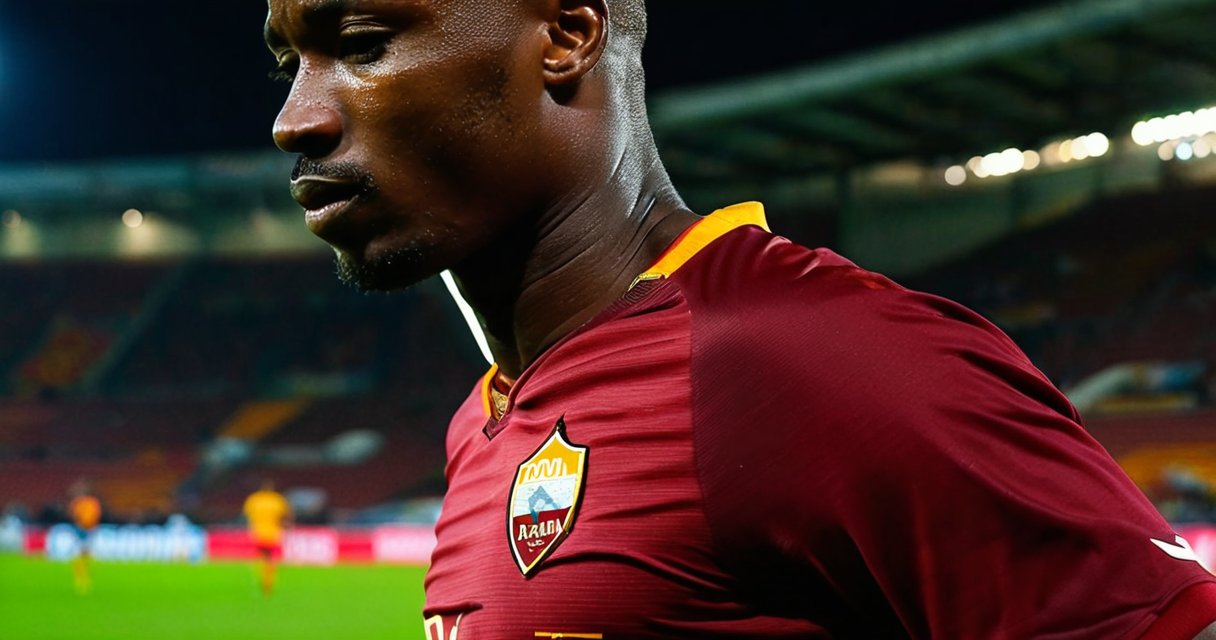
Koné’s off‑the‑ball movement also contributes to his press‑resistant profile. He frequently drops deep to provide an extra passing option for the centre‑backs, creating a triangle that complicates the opponent’s pressing shape. His ability to receive the ball under pressure and quickly release it to a forward or a winger helps Roma maintain possession in the final third, even when faced with a high press from teams like Napoli or Inter Milan. This tactical flexibility is a hallmark of modern midfielders who can adapt to varying levels of opponent intensity.
Sandro Tonali and the blend of physicality and vision
Sandro Tonali, often compared to a younger Andrea Pirlo, combines physical robustness with a keen eye for passing lanes, making him a valuable asset in press‑intense environments. In his stint with AC Milan, Tonali averaged 2.3 key passes per game while maintaining a pass accuracy of 86 percent, figures that underscore his capacity to thread balls through tight spaces. His low centre of gravity and strong core allow him to absorb challenges without losing balance, a trait that proves essential when a team’s back line pushes high.
Tonali’s work rate also adds a defensive dimension to his press‑resistant profile. He frequently tracks back to assist the midfield when the press is broken, ensuring that the team retains its shape and does not become vulnerable to quick counters. This dual role of facilitating forward play while offering defensive cover showcases the versatility required of midfielders who must operate under constant pressure from opponents seeking to disrupt the rhythm of play.
Carlos Baleba: Emerging talent with a calm approach
Carlos Baleba has attracted attention from several top clubs due to his composed demeanor in the midfield. While still developing his game, Baleba’s performances for Brighton have already highlighted his ability to retain possession against aggressive pressing. In the 2023‑24 season, he completed 1,800 passes with a success rate of 87 percent, often delivering the ball to attackers in the final third despite tight marking. His calmness under pressure is evident in his willingness to hold the ball for a few extra seconds, allowing teammates to find space.

Baleba’s training routine emphasizes ball‑control drills that simulate high‑press scenarios, enabling him to improve his reaction time and decision‑making. Coaches have noted his tendency to use his body to shield the ball, a technique that reduces the likelihood of losing possession when surrounded by opponents. As he continues to mature, Baleba’s blend of technical skill and mental composure positions him as a promising option for clubs seeking a midfielder who can anchor the team against relentless pressing tactics.
Training methods that develop press resistance
Practices that replicate high‑press conditions are essential for nurturing press‑resistant midfielders. Small‑sided games with a limited number of touches force players to think quickly and protect the ball under pressure. Coaches often introduce “press‑first” drills where a defender applies immediate pressure after the ball is played, compelling the midfielder to execute a shielded pass or a quick turn. Repetition of these scenarios builds muscle memory and reduces the instinctive panic that can lead to turnovers.
Technical drills that focus on first‑touch control, such as receiving a pass with the sole of the foot while a defender closes in, sharpen the player’s ability to cushion the ball. Vision exercises, like “open‑space” drills where midfielders must identify and feed a moving target within a limited time frame, enhance their scanning capabilities. Combining these drills with video analysis of elite press‑resistant midfielders allows players to internalize the decision‑making patterns of professionals like Fernandes, Koné and Tonali.
Scouting for the perfect press‑resistant midfielder
When clubs search for a press‑resistant midfielder, they prioritize statistical indicators that reflect composure under pressure. Metrics such as pass completion under pressure, touches per game, and the number of times a player successfully shields the ball are scrutinized. Additionally, scouting reports focus on a player’s body language during high‑intensity phases; a relaxed posture and steady eye contact often signal confidence and the capacity to handle pressing.
Beyond numbers, clubs evaluate a player’s adaptability to different tactical systems. A midfielder who thrives in a 4‑3‑3 formation may need to adjust his positioning when the team switches to a 3‑5‑2, and this flexibility is a key attribute for press resistance. Interviews with coaches and teammates also provide insight into a player’s mental toughness, as those who can maintain focus after conceding a goal or during a sustained press are more likely to succeed at the highest level. By combining quantitative data with qualitative observations, clubs can identify midfielders who will reinforce their ability to withstand aggressive pressing tactics.

I have been a dedicated student of the game for as long as I can remember, always looking to uncover the stories behind the stats. My weekends revolve around analyzing tactical shifts and emerging talent across various leagues. I write to share that passion and provide a fresh perspective on the sport I love.